
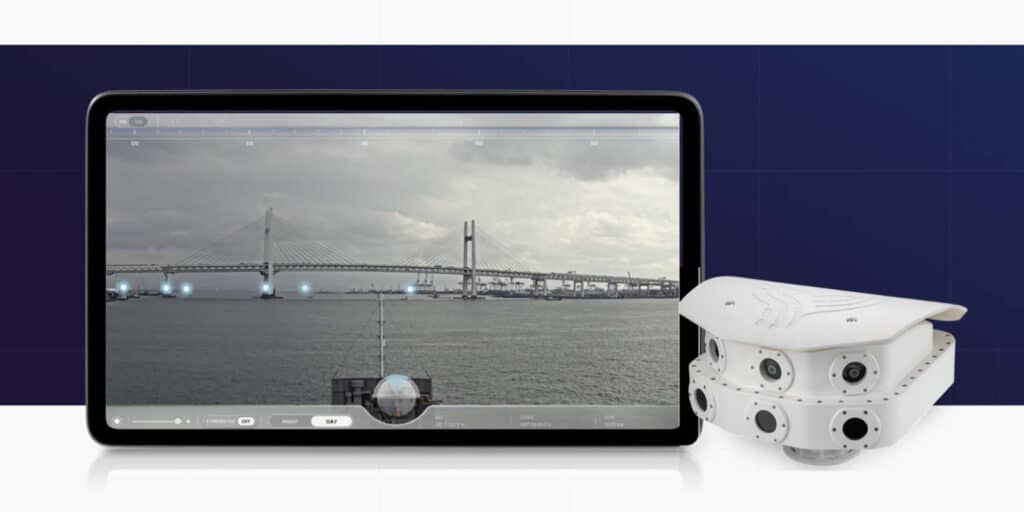
Maritime platform developer Orca AI and NYK Line have kicked off a research trial of new safety systems for autonomous vessels – equipping a ship with artificial intelligence (AI) that recognizes other boats to guide its way through heavy sea traffic safely.
Orca AI’s recent partnership with the Japanese shipping company NYK Line (Nippon Yusen Kabushiki Kaisha) marks one of the most on-the-edge tests of AI guidance in global shipping history yet.
NYK Line, founded in 1885, boasts a fleet of nearly 800 vessels, including cruise ships, conventional container ships, and tankers. Now that Orca AI and NYK Line have joined forces, we are one step closer toward a global shipping network organized, guided, and monitored by AI.
Enhancing Collision Avoidance Systems
Orca AI, based in Israel, was founded in 2018 by two naval tech experts. It designs software platforms with extreme specificity for maritime vessels. The developer combines existing safety systems with sensors to enhance the navigation and safety of ships steering through crowded (sometimes dangerous) waterways.
The company’s ultimate goal is to enable autonomous cargo ships to navigate the abundant waters worldwide without sacrificing safety. Orca AI’s recent press release details how the trial will proceed. On August 30, the company’s AI-based recognition system was installed on an NYK vessel and has collected data since then. One significant navigational bonus is the collision avoidance capabilities enhancement, functioning as an extra pair of “eyes” on the lookout for other ships and objects in the sea.
Improved Visibility At Sea
During foggy or inclement weather, Orca AI’s recognition system offers improved visibility at sea, compensating for the limits of human vision. This enables the ship’s captain to make more informed decisions while navigating their cargo across the oceans.
Human navigators usually use ordinary binoculars to watch out for potentially hazardous objects while traveling at sea. “Nearly 4,000 maritime accidents occur annually and are caused by low situational awareness in congested areas, lack of office visibility regarding misses and risk patterns, and insufficient data available for handling potential incidents,” according to Orca AI’s press release.
This trial will review the Orca system’s efficiency in automatically identifying dangerous targets and other vessels that the human eye may overlook. This is particularly common at night when human vision is useless at sea.
Orca AI’s system uses vision sensors paired with thermal cameras, which are supported via AI-powered algorithms that function without exhaustion to maintain awareness continually and alert the crew of any danger.
AI Yarden Gross, Orca CEO and Co-Founder said:
The challenges faced by the maritime industry are numerous, and there is a continual need to make shipping safer, sustain trade, and protect the maritime environment. By adopting an Automatic Ship Target Recognition System and embracing technology, we can create a connected maritime industry that can protect crew and cargo by identifying risks straight away.
Indeed, we are still many years away from scaling AI navigation systems to entire fleets of cargo containers, let alone massive cruise ship fleets. However, it won’t be long before many automated vessels implementing AI recognition software are seen across the world’s oceans.

Other Autonomous Ships
In 2018, researchers at the Norwegian University of Science and Technology developed a self-driving fully-electric ferry, slated to launch sometime this year.
Erik Dyrkoren, the CEO of Zeabuz, the company building and operating the boat, said it works “like an elevator.” A canal separates the port and the city center. Passengers on either side can press a button to summon the boat to their side. The ferry wirelessly charges while sitting idle at the dock, waiting for someone to press the button.
The boat can fit 12 passengers and bicycles. It takes less than a minute to cross the canal. Usually, the journey would take pedestrians 15 minutes on foot.
Earlier this year, Amsterdam’s more than 60 miles (100 kilometers) of waterways began trialing prototypes of futuristic, fully autonomous EV boats, dubbed Roboats. The small autonomous vessels will perform tasks such as transporting passengers and collecting garbage, alleviating the pressure off of the city’s narrow streets.
The prototype Roboats have orange propellers and four thrusters that are fully powered by an electric battery. It has top speeds of 4 mph (6 kph) and can run for 12-24 hours, depending on the weight of the cargo.


