
Tomato plants require more nutrients than most crops – primarily because they have long growth periods – thus, farmers apply significant amounts of chemical fertilizer to their fields or gardens. While chemical fertilizers boost tomato yields, there are several downfalls. Some of these include:
- It’s time-consuming and expensive
- It reduces beneficial microbe populations in the soil
- It reduces fruit quality
- It causes pollution as excess fertilizer leaks out of the soil and into the waterways
To remedy this, scientists at China’s Southwest University (SWU) turned to Ceriporia lacerata fungus, which is known for causing tree wood to rot – but is harmless to tomatoes. In a new study, the team added the fungus to agricultural soil, allowing the tomatoes to be grown using significantly less fertilizer.

When Ceriporia fungus is growing on trees and is present in the soil, it releases enzymes such as phosphatases and proteases to obtain nutrients from the immediate environment. This causes nutrients to free up (including those delivered beforehand in fertilizer), which would otherwise be “locked up” within the soil’s naturally occurring compounds. Plants can then absorb those nutrients.
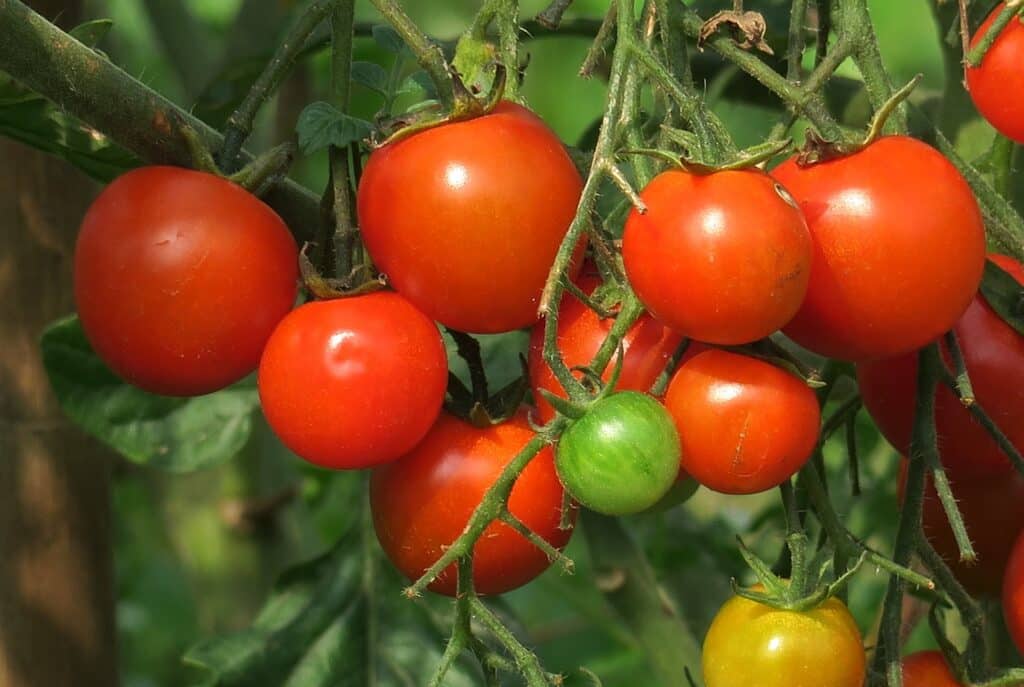
The SWU team added the HG2011 strain of Ceriporia lacerate to fertilized and unfertilized soil in field tests. The results showed that the supplement improved the nutrient uptake and the yield of tomato plants growing in that soil. Remarkably, the fungus also enhanced the fruit’s nutritional value and flavor by increasing its sugar-to-acid ratio along with its soluble vitamin C and sugar content.
The next step will be to see composts incorporating the fungus create a low-cost supplement, which would lead to a reduction in traditional fertilizer use. A paper on the research, led by Jianguo Huang, was published on March 31, 2021, in the Journal of Agricultural and Food Chemistry.
Last year, we saw several eco-friendly fertilizer alternatives, including one that turns dairy waste into phosphate-rich fertilizer and another that teaches you how to make organic fertilizer from scratch using bananas.


