
The world’s most massive liquid air battery, which will store renewable energy and cut carbon emissions from fossil-fuel power plants, is already under construction near Manchester in the UK.
The project, known as the CryoBattery, is the first commercial battery of its kind. When it’s completed, it will help the country store renewable energy, with 250-megawatt hours of electricity. That’s almost double the amount the Tesla battery in South Australia (the world’s most massive chemical battery) can store.
Kwasi Kwarteng, the UK Energy & Clean Growth Minister, said:
This revolutionary new Cryobattery facility will form a key part of our push towards net zero, bringing greater flexibility to Britain’s electricity grid and creating green-collar jobs in Greater Manchester. Projects like these will help us realize the full value of our world-class renewables, ensuring homes and businesses can still be powered by green energy, even when the sun is not shining, and the wind is not blowing.
The CyroBattery is scheduled to be completed by 2022 and will be able to power up to 200,000 homes for five hours each day. The company can do this at half the cost of lithium-ion batteries while releasing zero emissions in the process.
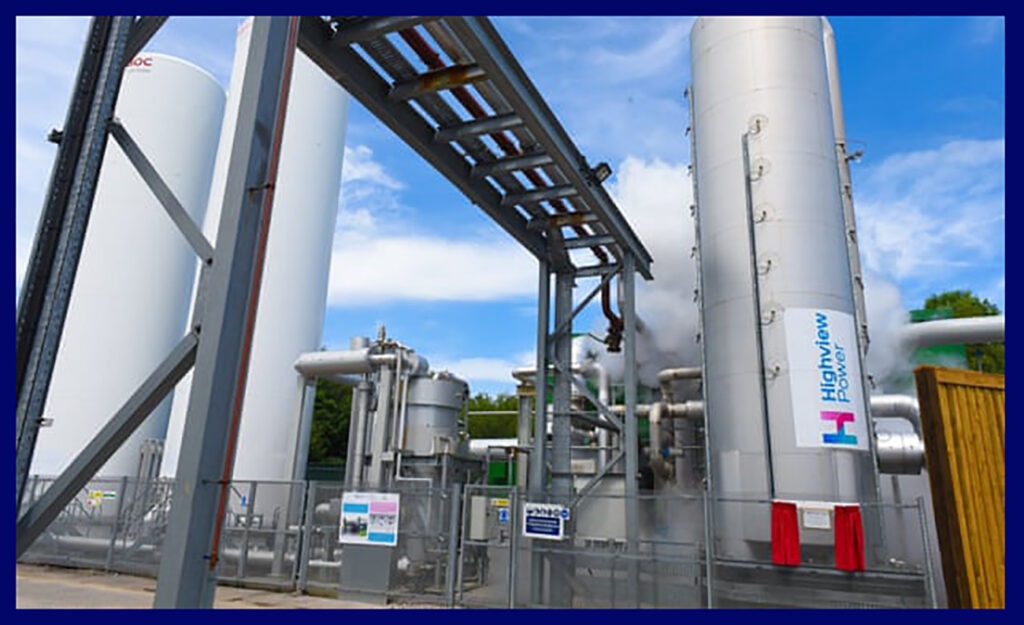
The government explained:
The CryoBattery works by using electricity to cool and compress air, turning it into liquid and storing it in industrial-sized containers. It then feeds the liquid through a turbine, turning it back into electricity and pumping it back into the grid when it is needed.
The UK government is funding the project with £10 million, and the battery is being developed by Carlton Highview Storage, a partnership between power station developer Carlton Power and energy storage firm Highview Power Storage.
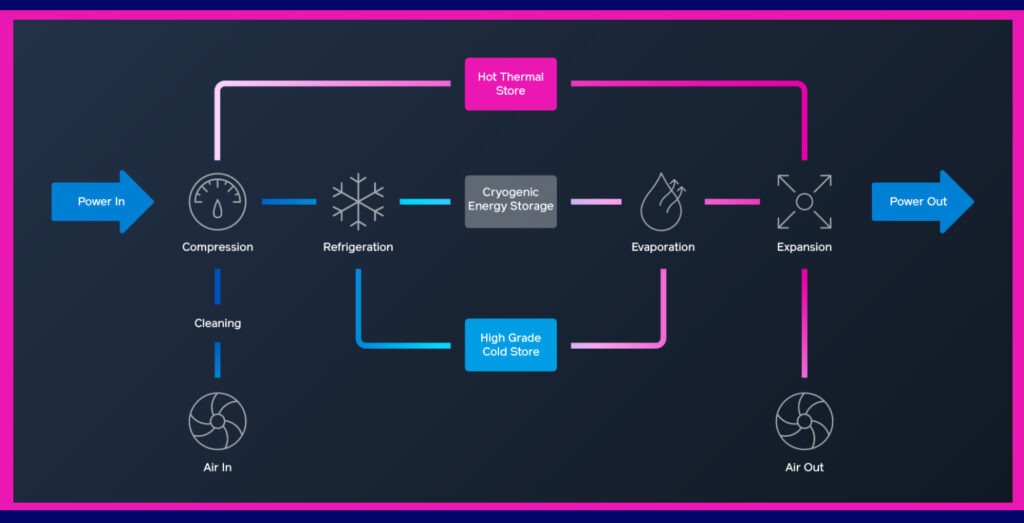
Javier Cavada, the chief executive at Highview, clarified:
Air is everywhere in the world. The main competitor is really not other storage technologies but fossil fuels, as people still want to continue building gas and coal-fired plants today, strangely enough.
The UK has the world’s largest offshore wind farm and gets a third of its electricity from renewable energy. Storing that energy when it’s not being used can help the UK meet its carbon-neutral goal by 2050.


