
On June 6, 2023, the Nova Kakhovka Dam in southern Ukraine collapsed, unleashing an environmental shockwave across the Dnipro River basin. Originally constructed in the 1950s as part of the Soviet hydroelectric grid, the dam had submerged an immense swath of land known historically as Velykyi Luh, or the Great Meadow. For over 70 years, the Velykyi Luh floodplain forest lay buried beneath the artificially created Kakhovka Reservoir.
After the dam was destroyed during the ongoing war, over 2,000 square kilometers of land were abruptly exposed. What emerged was more than just cracked earth and silt. Within weeks, satellite imagery and field reports began to document signs of natural regeneration on an unprecedented scale.
How a Dam’s Collapse Became an Ecological Catalyst
According to The Guardian, spontaneous ecosystems started to appear across the former reservoir, including wetlands, reedbeds, and groves of sprouting trees. The destruction, while devastating in human terms, created a rare blank slate for nature to assert itself.
What came next defied expectations. Without a blueprint, budget, or bureaucracy, nature rapidly reorganized itself into something new—a landscape both wild and regenerative. In the silence left by receding floodwaters, the land spoke through roots, shoots, and wings.
In doing so, Velykyi Luh has become more than a regional anomaly. It now stands as a living experiment in passive restoration, raising urgent questions about how societies might rethink recovery, resilience, and the role of nature in climate adaptation.

Ukraine’s Accidental Rewilding: Velykyi Luh’s Remarkable Transformation
What is Velykyi Luh?
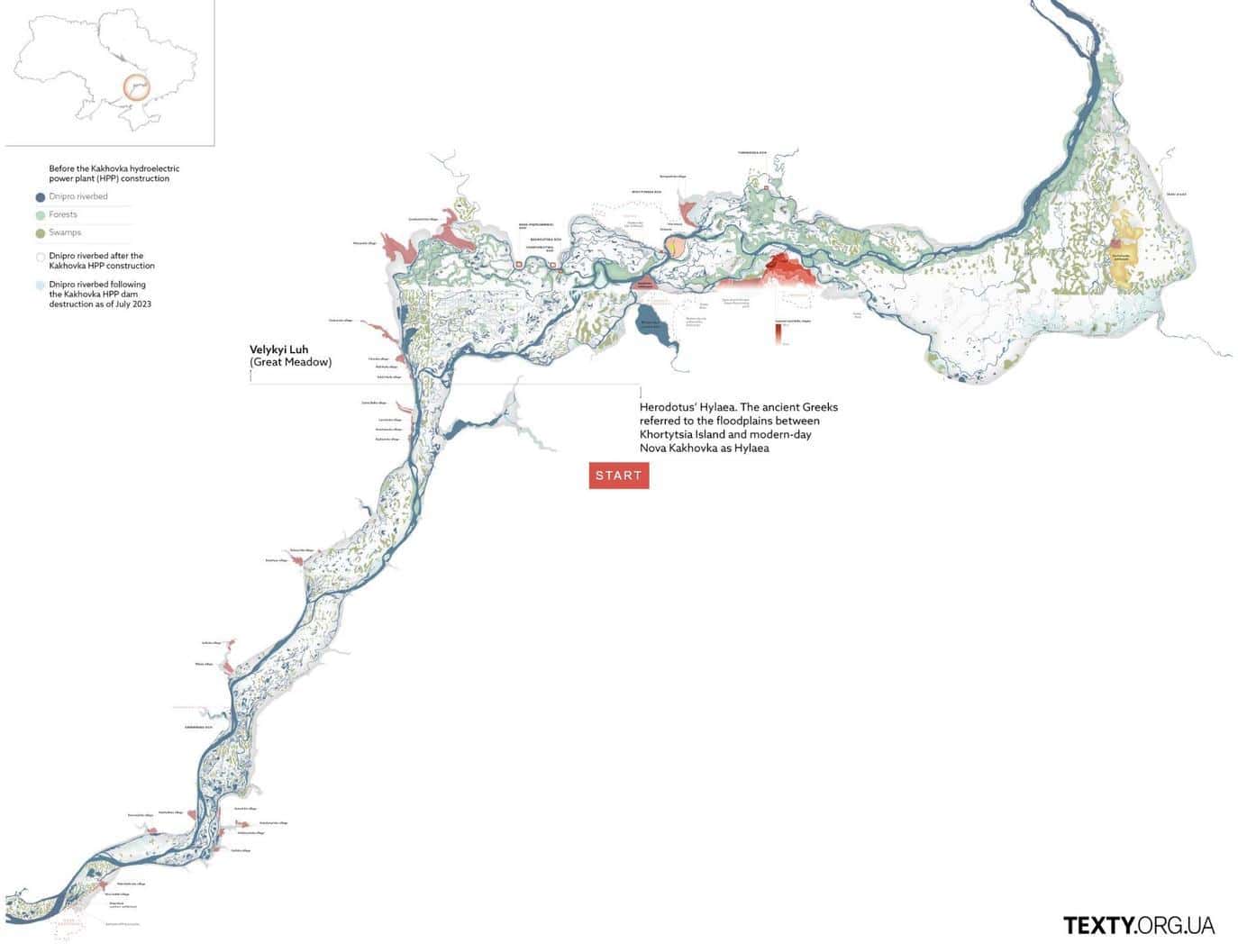
Velykyi Luh, or “The Great Meadow,” is a historic floodplain forest in southern Ukraine that reemerged after the destruction of the Nova Kakhovka Dam in 2023. It had been submerged for over 70 years.
How did the forest regrow so quickly?
The landscape responded with passive restoration. Dormant seed banks and rich soils allowed trees and plants to take root almost immediately, supported by returning wildlife and wetland formation.
Is the new forest safe from pollution?
There are concerns about toxic sediments from decades of industrial use. Scientists have warned that heavy metals like arsenic and zinc could pose long-term risks, requiring monitoring and soil stabilization strategies.
How much carbon can the new forest store?
Estimates suggest hundreds of thousands of tons have already been sequestered. If allowed to mature, Velykyi Luh could become one of Eastern Europe’s most impactful natural carbon sinks.
What happens next?
Ukraine is currently weighing three options: rebuild the dam, preserve the forest, or create a hybrid solution. A temporary moratorium is in place while long-term decisions are being evaluated.
Could such an event happen in other parts of the world?
Yes. Floodplains, drained wetlands, or former reservoirs in many regions could see similar spontaneous restoration if left undisturbed. Velykyi Luh shows that passive rewilding is not just a theory—it’s a scalable model.
Nature’s Response: The Regrowth of Velykyi Luh
What followed the dam collapse was not a slow return but a rapid and determined rewilding. Within a year, well over 500 million trees had taken root. Nearly a third of the exposed terrain evolved into willow and poplar forest, according to the Ukraine War Environmental Consequences Work Group (UWEC).
This transformation was not the result of government programs or conservation grants. Instead, nature responded immediately, tapping into dormant seed banks and drawing from floodplain soil rich in nutrients. Wildlife soon followed. Boar and deer returned from nearby steppes, fish such as sturgeon navigated back upstream, and migratory birds landed on new wetlands forming across the landscape.
The phenomenon echoes a concept often explored in permaculture and ecosystem science: passive restoration. Unlike managed rewilding, passive restoration relies on natural ecological succession to reclaim land. In the case of Velykyi Luh, this process unfolded at record speed.
While the land had been submerged for decades, its ecological memory persisted. The forest, in a very real sense, planted itself.
Carbon, Climate, and Ecosystem Services in Action
How Forests Fight Climate Change
The reemergence of Velykyi Luh offers more than an ecological spectacle—it opens up possibilities for natural climate solutions that rival engineered technologies. As a massive floodplain forest forming organically, Velykyi Luh could become one of the largest carbon sinks in Eastern Europe.
Forests sequester carbon through photosynthesis, absorbing atmospheric carbon dioxide and storing it in biomass and soil. Willow and poplar trees, which dominate the regrowth, are especially efficient at this process. According to data cited by UWEC, the region has already stored hundreds of thousands of tons of carbon and could absorb much more if allowed to mature.
In global terms, if Velykyi Luh were preserved, it could rival other large-scale carbon-rich ecosystems like Scotland’s Flow Country peatlands or Brazil’s Atlantic Forest restoration zones. Its strategic location in a temperate zone further enhances year-round photosynthetic activity, making it a uniquely valuable contributor to global carbon drawdown.
The Ecosystem Services at Work
Beyond carbon capture, the newly forming ecosystem also delivers essential ecosystem services. These include:
- Water retention: New vegetation reduces runoff, aiding in aquifer replenishment.
- Biodiversity support: The area provides habitat for threatened species and reestablishes migration pathways.
- Soil restoration: Roots stabilize sediment and reduce erosion.
Compared to synthetic climate technologies like direct air capture (DAC), Velykyi Luh represents a low-cost, high-impact alternative grounded in natural processes. Its spontaneous rise has become a model of climate resilience driven not by intervention, but by ecological self-correction.

The Carbon Bank Beneath the Meadow
How a Floodplain Forest Became a Climate Asset
When the waters of the Kakhovka Reservoir receded in 2023, what emerged was more than exposed sediment and sprouting vegetation—it was an unplanned climate solution. Velykyi Luh’s rebirth has rapidly become a rare case study in spontaneous carbon capture.
As the floodplain rewilded, hundreds of square kilometers began pulling carbon from the atmosphere, transforming what was once a reservoir floor into a thriving, high-efficiency carbon sink.
How Much Carbon Is Velykyi Luh Capturing?
Estimates suggest that over 700 square kilometers of regrown forest—mostly willow and poplar—are sequestering between 210,000 and 420,000 tons of CO₂ each year, depending on soil moisture and vegetation density. These trees are particularly effective in riparian zones, capturing carbon both above and below ground while also stabilizing soil and reducing runoff. If allowed to mature over the next decade, the area could cumulatively store 2.25 to 3 million tons of CO₂—placing it among the most productive spontaneous carbon sinks in Europe.
What Makes This Carbon Capture Unique?
Unlike engineered carbon capture facilities, Velykyi Luh requires no electricity, machinery, or rare earth materials. It’s passive by design—powered only by ecological succession and time. That makes it not only cost-effective but replicable in other drained or war-affected regions globally.
This natural restoration is also layered with co-benefits: cooling local microclimates, supporting biodiversity, and regenerating groundwater systems. For climate policy strategists and conservationists alike, the floodplain represents a low-cost, high-impact model of climate resilience in action.
Velykyi Luh Carbon Capture Estimates
1. Initial Vegetation Type
- Dominant species: Willow (Salix spp.) and Poplar (Populus spp.)
- Ecosystem type: Floodplain forest and wetland mosaic
- Estimated vegetated area: ~700 km² of 2,100 km² formerly submerged land
2. Carbon Sequestration Rates (per hectare)
From comparable ecosystems:
-
Willow and Poplar floodplain forests:
- 3 to 6 tons CO₂/ha/year average
- Up to 10 tons CO₂/ha/year under optimal wet conditions
-
Wetlands/reeds emerging in adjacent zones:
- 2 to 4 tons CO₂/ha/year average (not accounting for methane variance)
3. Estimated Total Annual Capture (2025 projection)
- Forested area: 70,000 hectares (700 km²)
- Conservative estimate: 3 tons CO₂/ha/year → ~210,000 tons/year
- Optimistic estimate: 6 tons CO₂/ha/year → ~420,000 tons/year
This estimate accounts only for above-ground and below-ground biomass. It does not include soil carbon retention or avoided emissions from sediment stabilization.
4. Long-Term Storage Potential (by 2030)
- If forested area reaches 1,000 km² and continues to mature:
- Estimated sequestration potential: 300,000–600,000 tons CO₂ annually
- Cumulative potential (2025–2030): ~2.25 to 3 million tons of CO₂
Choices Ahead: Three Paths for the Floodplain
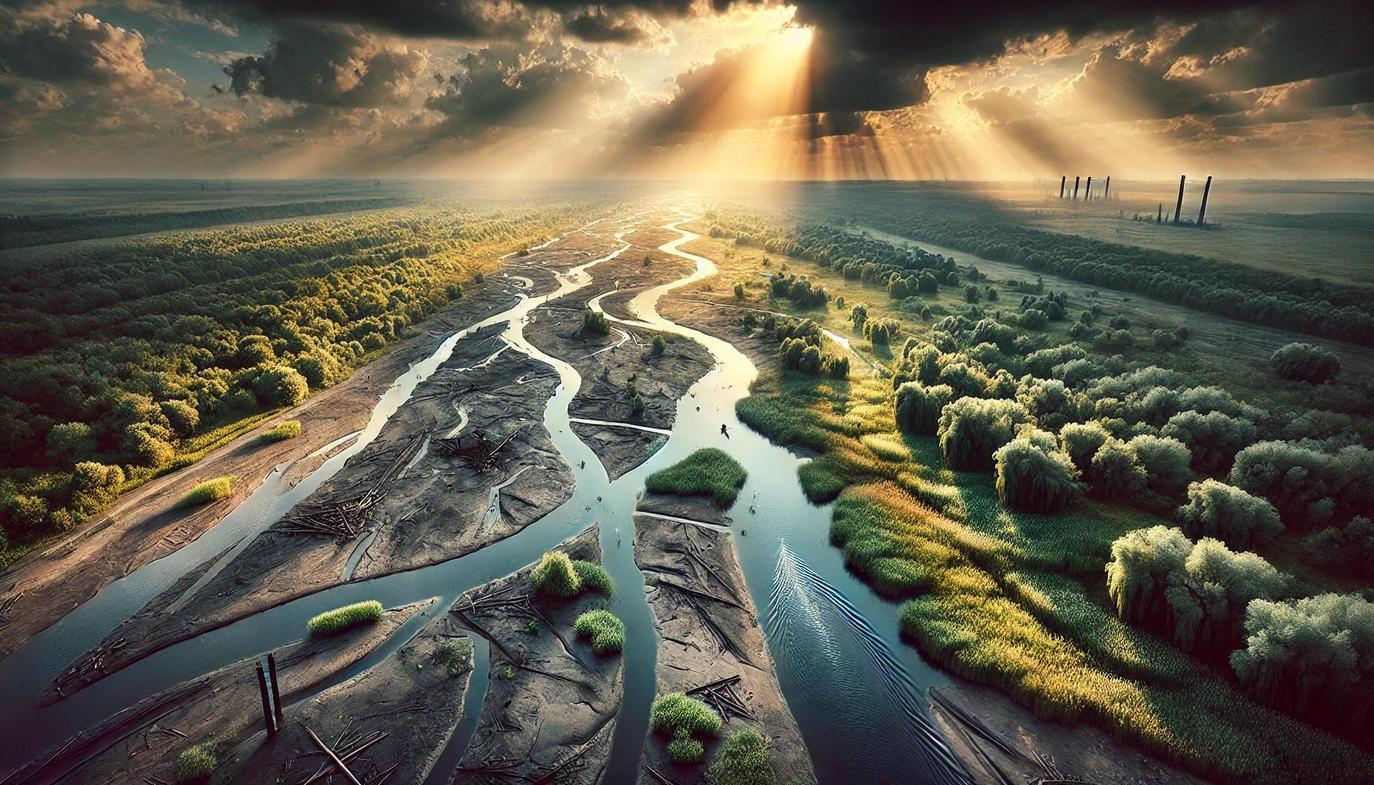
As Ukraine confronts how to manage this unexpected ecological transformation, three distinct options have emerged:
Option 1: Rebuild the Dam and Restore the Reservoir
Reconstructing the Nova Kakhovka Dam would re-flood the area, reestablish hydroelectric capacity, and resume irrigation for agriculture. This path supports economic and infrastructural recovery, especially in war-affected regions where water access is vital.
Option 2: Preserve Velykyi Luh as a Natural Ecosystem
This choice would formalize the spontaneous rewilding as a protected ecological reserve. It aligns with Ukraine’s biodiversity commitments and the European Union’s ecological directives. Advocates believe it would enhance climate resilience and promote ecotourism.
Option 3: Implement a Hybrid Restoration Model
The third option balances development and ecology. It suggests combining selective reservoir restoration with the conservation of key ecological zones, possibly through controlled flooding or buffer management. This compromise model is already gaining traction among Ukrainian environmental planners.
Pros & Cons of Each Scenario
| Scenario |
Rebuilding the Dam |
Preserving the Ecosystem |
Hybrid Approach |
Pros |
Restores hydropower and irrigation systems.
Supports regional agriculture and industrial productivity. |
Strengthens climate resilience through natural carbon capture.
Promotes biodiversity, soil health, and ecotourism potential. Avoids reconstruction costs. |
Balances economic needs and environmental gains.
Provides a framework for phased restoration. |
Cons |
Floods the newly regenerated forest and disrupts ecosystem succession.
Destroys a rare example of spontaneous rewilding and climate restoration. |
May limit water availability for traditional agriculture.
Could face political resistance from industrial stakeholders. |
Requires complex governance and long-term maintenance.
May dilute both ecological benefits and infrastructural efficiency. |
As of mid-2025, Ukraine has yet to commit to a single path. However, a temporary moratorium on land transfers in the region signals that national authorities are carefully weighing the implications. What becomes of Velykyi Luh will not only shape Ukraine’s postwar recovery but could also serve as a global model for nature-based climate resilience.
What Velykyi Luh Means for the Future of Natural Climate Solutions
A Test Case for Passive Rewilding
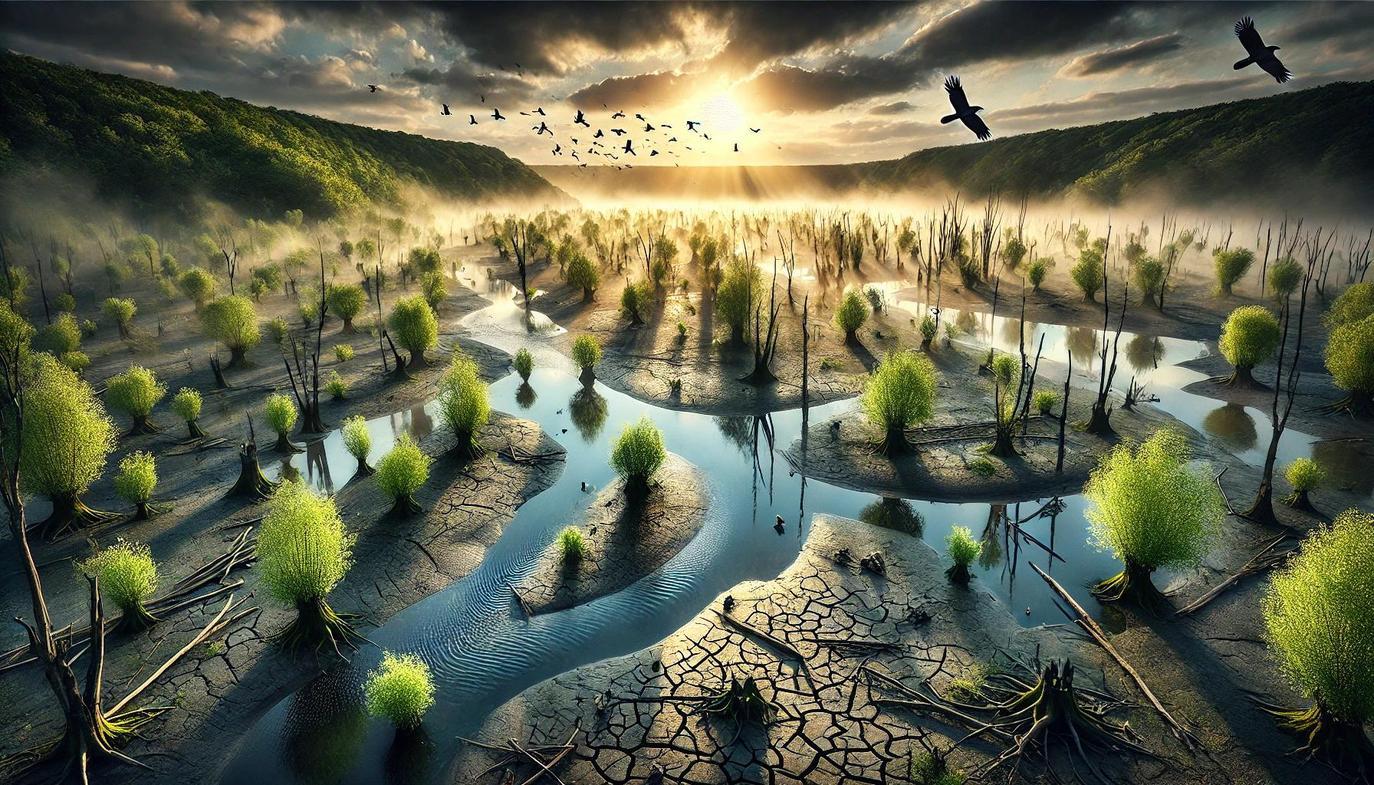
Velykyi Luh represents a rare convergence of crisis and opportunity. It offers tangible evidence that natural systems—given space and time—can deliver powerful, scalable climate solutions. As governments, scientists, and activists debate how to meet carbon goals, the Ukrainian floodplain stands as a living argument for letting nature lead.
Passive rewilding is often sidelined in policy discussions due to its lack of engineered control. Yet in a postwar zone, with little intervention and no restoration funding, Velykyi Luh spontaneously became a climate asset. This challenges traditional models of climate mitigation, especially those reliant on infrastructure-heavy approaches.
Policy Momentum and Global Implications
The success of Velykyi Luh could influence environmental policy across Europe. The site intersects with the EU’s Biodiversity Strategy for 2030, which promotes rewilding and nature-based recovery. It also strengthens arguments for integrating passive restoration into national carbon accounting frameworks.
Experts have suggested that if Ukraine formally protects the area, Velykyi Luh could qualify for funding under programs like the EU’s LIFE Programme or the Green Climate Fund. These mechanisms reward verifiable nature-based carbon removal, which Velykyi Luh increasingly exemplifies.
Moreover, the Ukrainian case could shape future global strategies for post-conflict recovery. Organizations working in regions affected by infrastructure loss may begin to see abandoned or destroyed zones not only as liabilities but as potential rewilding corridors—especially in floodplains, wetlands, or drained lakes.
If preserved, Velykyi Luh could join the ranks of natural climate solutions such as peatland restoration in Scotland or mangrove expansion in Southeast Asia. But its origin—as an unintended consequence of war—makes it uniquely instructive. This forest was not designed. It was released.
A Conflict-Born Forest Holding Climate Promise
Velykyi Luh’s rebirth from a drained reservoir tells a powerful story: that ecological resilience does not require perfection, only a window to return. What grew from exposed silt was not just grass and trees—it was a vision of what’s possible when humanity chooses to coexist with nature.
As Ukraine rebuilds, the decision over Velykyi Luh will serve as a climate referendum. Should we invest in systems we control or protect systems that function without us? There are no easy answers. But if left undisturbed, the Great Meadow may one day become one of Europe’s largest living carbon banks—and a global case study in letting ecosystems lead the way.


