
What if the future of climate resilience, mental well-being, and heritage preservation came not from machines but from moss, trees, and earthworms?
In one of the most ambitious green restoration efforts ever launched in the UK, the National Trust has unveiled plans to regenerate 250,000 hectares of nature-rich landscapes over the next decade. That’s an area larger than Greater London, set to be reborn through peatland rewetting, woodland planting, and the reconnection of fragmented ecosystems. But this isn’t just about carbon and biodiversity—it’s about people. By partnering with mental health charity Mind, the Trust is weaving human wellness into the fabric of the land itself.
This restoration project isn’t simply about preserving nature. It’s about engineering a living infrastructure that supports climate goals, cultural continuity, and everyday emotional well-being.

From Nature Gaps to Networks
For decades, the UK has seen its ecosystems fragmented—shaped by urban sprawl, intensive farming, and industrial development. Peatlands were drained, meadows paved over, and woodlands reduced to isolated green pockets.
That’s changing.
After successfully restoring 25,000 hectares in recent years, the National Trust is scaling up by a factor of ten. The new goal: restore 250,000 hectares by 2035, creating a connected web of peatlands, woodlands, meadows, and salt marshes across England, Wales, and Northern Ireland.
This isn’t confined to protected parks. It includes urban green corridors, community forest zones, and even co-managed lands where private farmers and conservation groups work side-by-side. The Trust envisions a networked landscape where nature is no longer squeezed into the margins but actively woven back into where people live, work, and heal.
Their plan involves:
- Peatland rewetting to lock away carbon and prevent wildfires.
- Planting of over 416,000 native trees, forming ecological corridors.
- Partnerships with over 100 towns and cities to bring nature closer to urban populations.
- A comprehensive “Nature Towns and Cities” initiative, aiming to benefit 10 million people by expanding access to restorative green spaces.
This shift from fragmented habitat to restorative ecosystem infrastructure marks a new model for 21st-century conservation.

Ecosystem Services Landscape
When people hear the word “infrastructure,” they often think of roads, power lines, or sewer systems. But the National Trust’s restoration campaign reframes infrastructure as something much more organic and arguably more essential: living ecosystems that support all life, including ours.
Carbon Sequestration and Soil Regeneration
The UK’s peatlands, once considered wasteland, are now recognized as climate powerhouses. Peat soils store more carbon than all the UK’s forests combined, and damaged peatlands leak it back into the atmosphere. The Trust’s efforts to rewet these peatlands, especially across sites like Marsden Moor, are projected to dramatically reduce greenhouse emissions and restore sponge-like water retention capacity.
These wetland habitats are also critical biodiversity hotspots, supporting species like the curlew, golden plover, and carnivorous sundew plants.
The Trust estimates that its soil restoration alone will support enough earthworm habitat to encircle the planet twice, enriching soil fertility while making agriculture more sustainable.
Woodland Corridors and Urban Forests
The Trust is connecting isolated woods into thriving corridors for wildlife, expanding habitat for badgers, owls, insects, and native plant life. Tree-planting efforts include:
- Lunt in Sefton: 78 hectares acquired to extend a mosaic of forest.
- Killerton Estate: Rewilding pastures for climate-smart grazing.
- Buckland Abbey: Restoring temperate rainforest in the West Country.
But these aren’t just wild spaces. They’re also community forests, often planted with the help of local volunteers, and designed to reduce urban heat, flood risk, and air pollution.
Nature-Based Solutions for Everyday Life
Beyond big-ticket climate metrics, these restorations help solve daily challenges:
- Flood-prone areas become buffer zones.
- Meadows reduce pesticide use by attracting pollinators.
- Wetlands filter toxins, improving downstream water quality.
This is resilience built from the ground up, one tree, one bog, one root system at a time.
Heritage + Nature: Restoring Time’s Layers
What makes this effort uniquely British is the way it combines the past and the future, protecting not just ecosystems but also the stories and identities woven into the land.
The Trust isn’t merely greening landscapes; it’s reconnecting them to centuries of cultural memory.
Restoration of Iconic Historical Sites
The 250,000-ha vision encompasses the revitalization of numerous heritage structures and the ecosystems they inhabit.
- Bath Assembly Rooms: A Georgian architectural gem now surrounded by revitalized gardens.
- Charterhouse in Coventry: Medieval monastery grounds integrated into biodiversity corridors.
- Gawthorpe Hall: A Renaissance mansion framed by rewilded parkland, where sheep once grazed monocultures.
Each site becomes a living museum, where visitors can walk through history while being immersed in a rewilded sensory landscape—birds singing, bees buzzing, bogs quietly sequestering carbon.
Emotional and Cultural Continuity
This approach delivers more than beauty or climate metrics. It offers a sense of place and belonging in a world often characterized by digital detachment and environmental anxiety. By fusing ecological regeneration with heritage conservation, the Trust is inviting people to participate in something bigger than themselves, a story that reaches both backward and forward in time.
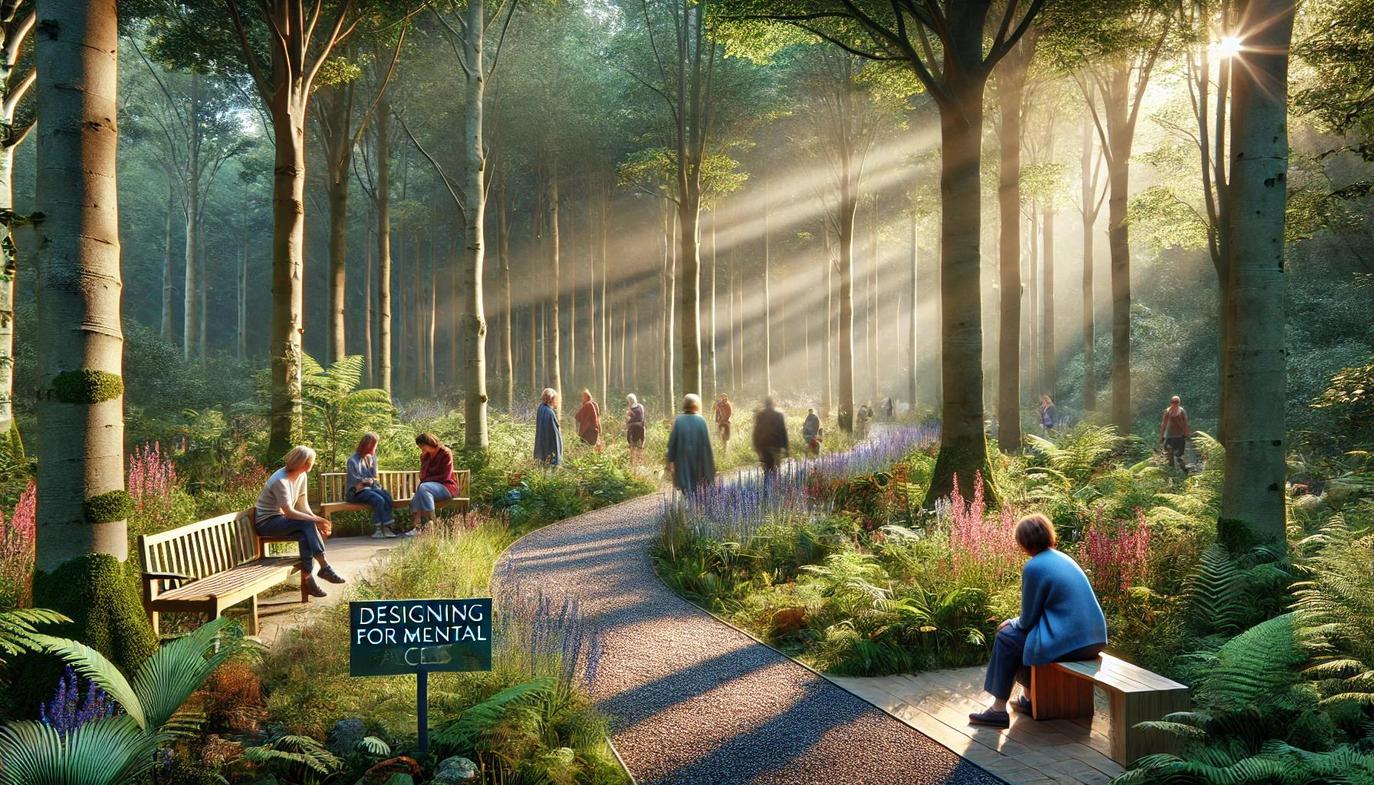
Designing for Mental Health Access
While climate targets often dominate headlines, this restoration project has another equally important goal: mental wellness. In an era where nearly one in four people in the UK experience a mental health issue each year, green space isn’t just nice to have; it’s essential.
The Mind Partnership: Healing Through Nature
To address this, the National Trust has partnered with the mental health charity Mind in a groundbreaking collaboration. Together, they’re embedding mental health support directly into the landscape design, through accessible walking routes, quiet rewilded spaces, and restorative nature immersion programs.
This includes:
- Designated “quiet woods” for reflection and respite
- Training for staff to better understand mental health needs
- Co-creation of wellness retreats in places like Sharpham Estate in Devon, where a rewilded farm now hosts nature therapy retreats for frontline workers
The idea is simple yet powerful: if we design landscapes with emotional healing in mind, we can shift public health outcomes.
Tackling Inequity in Access
Nature is proven to reduce stress, anxiety, and depression. But not everyone has equal access to it.
That’s why the “Nature Towns and Cities” initiative is so pivotal. Targeting 100 towns and cities, the Trust plans to bring nature to 10 million more people—especially those in urban areas who live far from green space.
This shift from remote nature preserves to urban-integrated ecosystems is a game-changer. Because true wellness isn’t just about wild places; it’s about making nature a part of daily life.
Community Climate Forests
Restoration doesn’t work without people. That’s why the National Trust is turning its vision into a movement of local stewardship, empowering everyday citizens to become caretakers of their own green futures.
Adopt-a-Plot and Grassroots Action
Through the Adopt-a-Plot program, individuals, families, schools, and even businesses can sponsor small pieces of the landscape being restored. This builds direct personal connection—and a sense of purpose.
Whether it’s planting trees, restoring a meadow, or rewetting bogs, people aren’t just watching change; they’re making it happen.
Volunteers and Apprenticeships
More than 100,000 volunteers support the Trust annually, and many are now helping to rewild land, sow seeds, and monitor wildlife. The Trust also funds youth apprenticeships focused on ecological restoration, equipping the next generation with climate-smart careers in conservation and land management.
These aren’t just feel-good initiatives. They are boots-on-the-ground operations with tangible ecological benefits. At sites like Killerton and Croft Castle, volunteers have helped regenerate soil and plant diverse hedgerows, boosting pollinators and preventing erosion.
Building Living, Breathing Community Spaces
These forests and meadows aren’t fenced-off reserves. They’re shared spaces designed for walking, gathering, learning, and grieving. They become part of the social fabric. That’s what makes them climate forests, not just tree plantations.

Measuring Impact: Metrics & Accountability
Big promises require big proof. Fortunately, this project is built on measurable goals and transparent reporting.
Environmental Metrics
- Carbon Capture: Restored peatlands are projected to absorb millions of tons of CO₂, with long-term monitoring of emission reductions.
- Tree Counts: Over 416,000 trees already planted in the first wave, mapped and geo-tagged to track growth and biodiversity impact.
- Habitat Diversity: Areas restored include a mix of:
- 9,000 ha of blanket bog
- 5,000 ha of wood-pasture
- 3,500 ha of meadows
- 2,500 ha of lowland woodland
- 1,500 ha of heathland
Social Metrics
- People Reached: 10 million projected beneficiaries through the Nature Towns program.
- Mental Health Outcomes: In partnership with Mind, new monitoring tools will assess the link between nature access and mental health improvements in pilot communities.
Alignment with National Goals
The project aligns with UK policy goals to:
- Protect 30% of land for nature by 2030
- Restore 35,000 ha of peatland by 2025
- Meet Net-Zero 2050 emissions targets
Accountability is part of the strategy. Progress reports will be public, and sites are encouraged to welcome citizen science efforts—letting locals help gather biodiversity and soil health data.

A Model for Future Living
At its core, this project is a blueprint for the future—where infrastructure isn’t only concrete and steel but living systems that serve both people and the planet.
Replicable and Scalable
Other countries watching the UK can learn from this model:
- Start with climate impact: target carbon-rich habitats like peatlands.
- Embed social equity: partner with mental health and access advocacy groups.
- Involve people: empower volunteers, schools, and donors with clear roles.
This is what climate optimism looks like in action. A multi-decade, community-driven transformation of landscapes that heal ecosystems, nurture the soul, and honor the past.
Your Questions Answered: How Nature, Heritage, and Health Intersect in Britain’s Restoration Plan
Why Is Peatland Restoration So Important?
Peatlands are dense carbon sinks. If healthy, they store CO₂; if damaged, they leak it. Rewetting peatlands can be more effective than planting trees in some areas.
What Makes a “Community Climate Forest” Different From Just Planting Trees?
These forests are co-designed with local communities, intended to serve ecological, social, and emotional needs—not just hit carbon targets.
How Can I Get Involved?
You can volunteer, donate to the Adopt-a-Plot program, or participate in community planting days via the National Trust website.
Why Is Mental Health Part of an Ecological Project?
Nature is proven to reduce stress and depression. By designing green spaces for accessibility and therapeutic use, the Trust is addressing both ecological and public health crises.
Will These Restorations Help Tackle Climate Change?
Yes. Through carbon sequestration, biodiversity protection, and climate-adaptive land use, the restoration acts as nature-based climate infrastructure.


