
Aside from aesthetics, the benefits of having abundant and well-planned green spaces in urban areas are far-reaching. Parks, tree-lined streets, landscaping, planters, and urban forests also translate to a decreased crime rate, increased revenue for the city, rising property value, and lower energy costs. In addition, these green areas provide shelter to wildlife and boost the happiness, health, and well-being of city dwellers.
Cities that have taken urban forestry to the next level:
Austin, Texas — Austin’s urban forest currently has more than 33 million trees covering 18% of the city, with a diverse tree canopy and an urban forest management ‘master’ plan. In addition, private companies are funding tree-planting campaigns for energy-saving and environmental purposes.
Dallas, Texas — On the southern outskirts of the heavily urbanized area of south Dallas, Texas, lies a forested urban park called the Great Trinity Forest. It is recognized as the U.S.’s largest urban forest.

Charlotte, N.C. — Uptown Charlotte, the city’s downtown area, has several large parks, including the 5.4-acre Romare Bearden Park, 4.6-acre First Ward Park, 5.5-acre Marshall Park, and 16.5-acre Frazier Park (the largest park in the Uptown neighborhood). Other recreation attractions include an urban ‘pocket park’ called The Green and the U.S. National Whitewater Center. The city previously estimated that its tree-lined streets provided over $900,000 in energy savings per year.
Charlotte has solid, comprehensive management plans with tree ordinances designed to protect public and private trees. TreesCharlotte is a public/private initiative that was established in 2012 to grow and diversify Charlotte’s urban forest by:
- Growing Charlotte’s tree canopy.
- Promoting tree stewardship.
- Educating residents on how to plant and preserve trees.
The nonprofit aims to plant at least 5,000 trees per year while educating inhabitants about the importance of a robust urban canopy.
Nebraska — Nebraska National Forest is the largest man-made forest in the U.S. The 141,864-acre- (222-sq mile) forest lies in several counties within the state of Nebraska and is a popular destination for campers year-round.
New York — New York City is made up of 19.5% parkland. As of 2020, NYC held 44,509 acres of an urban tree canopy, with 24% of its land covered in trees. The city has a series of management plans, including many that focus on green infrastructure and wetlands. NYC has 5.2 million trees and 168 different tree species as of 2020.
Portland, Oregon — Portland is known for its parks, bicycle paths, and bridges. The city’s main attractions include a 5,000-plus-acre park with 70 miles of trails and a botanical garden with nearly 1,000 species of trees and shrubs.
Sacramento, California — Sacramento, known as the “City of Trees,” is the capital of California. Its tree-planting culture began in the mid-19th century when Gold Rush-era settlers realized the city was scorching hot. The only native trees were oaks, which were cut down to build homes. Therefore, trees were planted for shade, not for beauty.
Many settlers chose to plant trees they knew, such as maples, elms, and plane trees, from their homes in the Midwest and East. However, exotic species were added over the years, including Chinese pistache, zelkova, liquidambar, Japanese maples, and other species, such as cottonwood, black oaks, native oaks, and sycamores. This has led to Sacramento’s urban forest being one of the leafiest in the nation, with trees covering 20% of the 100-square-mile city.
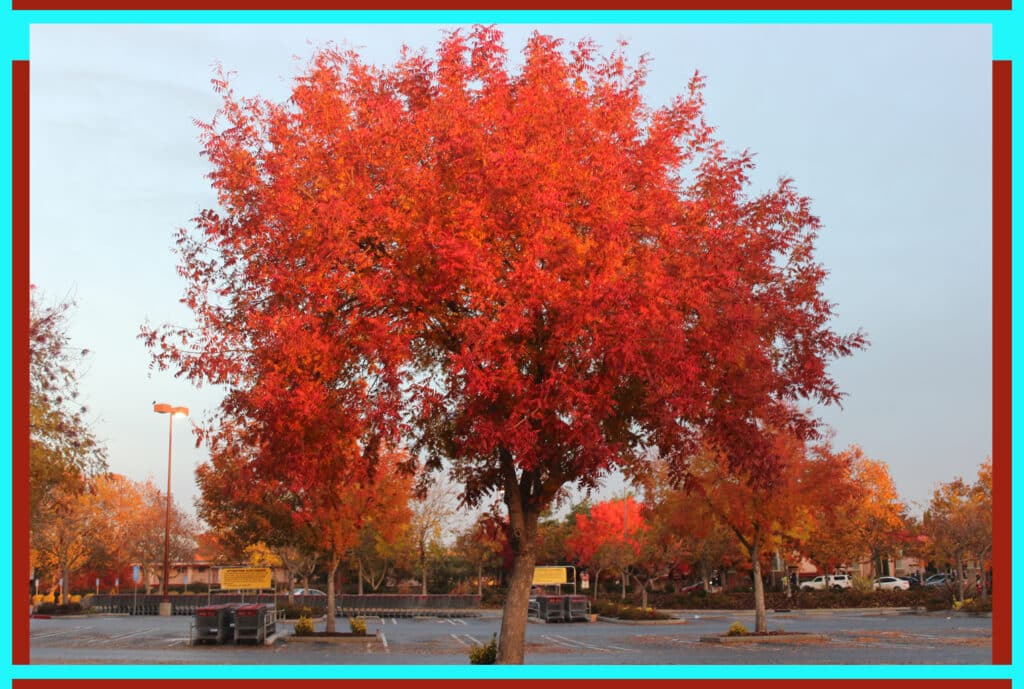
One neighborhood to witness the city’s incredible canopy is in Land Park, where – at 32% coverage – that area has the most trees in the town. Some main attractions include a 33-mile bike trail and the charming ‘Capitol Park’ surrounding Sacramento, home to 450 varieties of trees and flowering shrubs.
Sacramento has a strong volunteer base. Every year, Sacramento Municipal Utility District (SMUD) and the Sacramento Tree Foundation plant thousands of trees on private property, providing shade to homes and reducing energy demand.
Here are some fun facts about California: It has the world’s tallest tree, the oldest tree globally, and the world’s most giant tree.

- The Hyperion is a coastal redwood (Sequoia sempervirens) located somewhere in the heart of Redwood National Park in California. It measures 380.1 ft (115.85 m), making it the world’s tallest known living tree.
- Methuselah is a Great Basin bristlecone pine that is 4,852 years old (as of 2021). Its exact location is undisclosed for its safety, but it lies somewhere high in the White Mountains of Inyo County in eastern California.
- General Sherman is a massive sequoia tree located in the Giant Forest of Sequoia National Park in Tulare County, California. It is, by volume, the largest known living single-stem tree on Earth. It measures 83.8 meters (275 ft) high, a diameter of 7.7 m (25 ft), a bole volume of approx. 1,487 m3 (52,513 cu ft) is estimated to be around 2,300 to 2,700 years old.
Washington, D.C. — The U.S. capital’s National Mall and its monuments and memorials feature 17,000 trees. The city also houses the nation’s first urban park, called Rock Creek Park, as part of its roughly 7,000 acres of parkland and has two major rivers that flow through the district.
According to World Resources Institute, DC’s urban tree canopy is nearly 35%, with almost 2 million trees across the city. These trees remove up to 540 tons of pollution, store 526,000 tons of carbon and reduce energy costs in buildings by $2.6 million each year, resulting in an estimated $96,000 in avoided carbon emissions per year.

London — London is the capital of England and the U.K. The city offers a great dose of nature, as it’s made of 40% public green space, including 3,000 parks of varying sizes. In addition, London’s 388,400 acres of urban forests comprise over 8 million trees, making the city one of the greenest urban hubs on the planet.
Johannesburg, South Africa — Some sources claim that the world’s largest man-made urban forest is in Johannesburg, South Africa. However, others doubt this claim due to satellite images revealing how developed the city is with buildings and roads. Regardless, Johannesburg is still a densely wooded city with reportedly 6 million trees planted throughout streets and private properties.
Rio de Janeiro, Brazil —The Tijuca National Park, established in 1961, is possibly the world’s largest urban forest. The Tijuca Forest comprises 3,953 hectares of reclaimed land that was previously cleared for coffee and coal production. Impressively, this sprawling forest was replanted by hand.
Today, the Tijuca park is home to various nature trails, cascading waterfalls, wildlife, breath-taking viewpoints, and incredible landmarks (like the world-famous Christ the Redeemer statue). The wildlife park population includes many insects, birds, howler monkeys, ocelots, and other endangered species of the Amazon rainforest.

Tree Cities of The World Program
In March 2020, the Arbor Day Foundation and the FAO announced the first cities to be recognized for their dedicated commitment to urban forestry management via the Tree Cities of the World program. Each city had to meet five fundamental standards for managing forests and city trees to earn recognition.
Dan Lambe, the Arbor Day Foundation’s president, commented:
“We applaud all of the cities that have earned Tree City designation. They are leaders when it comes to planning and managing their urban forests. Many of the recognized cities have gone above and beyond to use trees as part of their green infrastructure. This distinction is a celebration of their creativity and sustainability in creating healthier urban spaces.”
Fifty-nine cities earned this international title, including New York, USA; Toronto, Canada; Guadalajara, Mexico; Campo Grande, Brazil; Birmingham, United Kingdom; Paris, France; and Auckland, New Zealand. The complete list is available on the Tree Cities of the World program’s website.

The Tree Cities of the World initiative is a partnership between the Arbor Day Foundation and FAO launched in 2019. It’s designed to connect cities across the globe in a new network dedicated to adopting the most successful approaches to managing urban forests and trees.
Hiroto Mitsugi, assistant director-general at FAO, said:
“We congratulate the first cities to be recognized for 2019, our inaugural year. Together, these Tree Cities form a new global network of urban forestry leaders who share the same values for city trees and forests. We are proud to recognize these cities for their actions toward healthier, greener places to live.”
You can visit the Tree Cities of the World website for more information on the program and see how your city can become involved. If we all contribute to planting more greenery, we will achieve a cleaner, healthier, safer, and brighter future.


