Researchers have found that green space in urban areas can reduce violent crime, gun violence, stress, and can lead to safer communities and improved health. At the same time, poorly maintained and badly designed green space can help encourage and spread crime.
A team of scientists at Cornell University assembled a review of research on the relationship between crime and nature in urban areas. They found several patterns that can potentially help guide urban design, promote safe neighborhoods, and improve the quality of life.
Hessam Sadatsafavi, one of the researchers of the study, said:
How to control violent crime is a polarizing issue. We are interested to see, as designers whose work is to shape the physical environment, if it’s possible for us to contribute to this conversation and to take some actions to see if we, personally, can contribute to reducing crime.
The team gathered the findings of previous studies that looked at the effects of various forms of green space on criminal behavior and crime. They first considered over 14,000 papers, but after sorting through them all, they were left with 45 done in the US, which offered the most related insights into how nature could improve public safety.
Some of these include nine studies that looked at the effect of green space on gun violence and six that found greenery reduced crime. “There is evidence that greening interventions at the urban level reduce violent crime, specifically gun violence,” noted Sadatsafavi.
Sadatsafavi explained:
By looking at all these studies, we were able to propose possible pathways [to reduce crime and] put together an overall picture of why this is happening, both in terms of gun violence and in terms of the overall crime rate.
The researchers published their findings in the International Journal of Environmental Research and Public Health. The team’s next steps are to develop design guidelines so that communities around the world can have less crime.
Sadatsafavi said:
Our next goal as a team is to develop design guidelines for, say, how a community garden or small community park should be designed, to improve the positive effects of the green space and provide practical, hands-on information for people who are in the field, whether landscape architects or people who are starting their own community garden.
However, some other studies point out that trees are primarily responsible for these benefits from green space, as they are good for our mental health and social well-being. One study found that people living in proximity to trees had a more robust brain structure more capable of handling stress. At the same time, another study looked at Chicago’s crime data, calculating a score for each register tract.
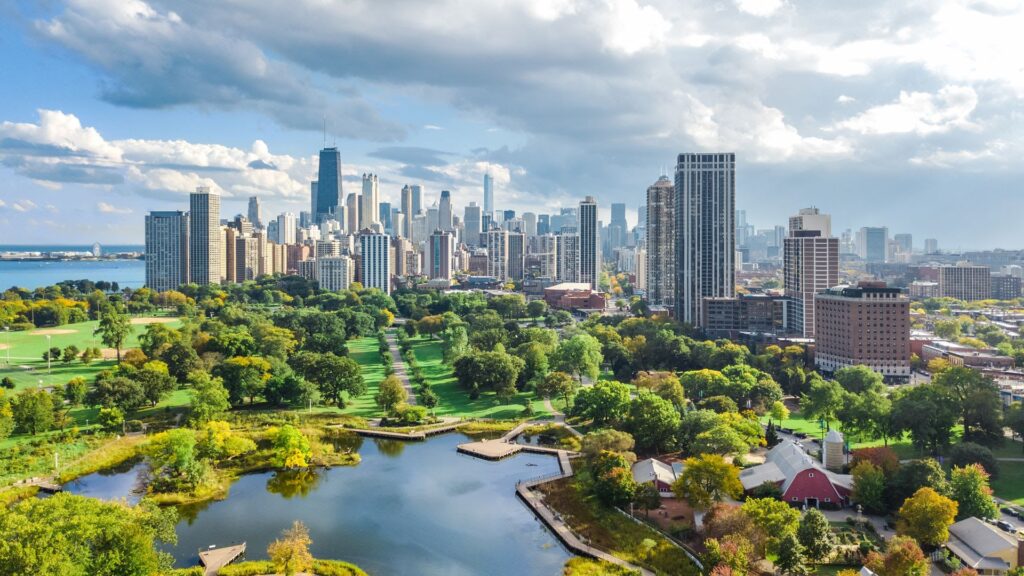
The researchers compared that score to the percentage of park space and tree canopy cover enclosed in each tract. For every 10% increase in tree cover, crime rates dropped in several categories—10.3% for battery, and 11.3% for robbery, assaults, and narcotics crimes.
Besides reducing stress and crime, being around trees may also improve our health. Previous studies have shown that spending even minimal amounts of time in forests provide benefits to our immune systems. Specifically, with elderly patients who suffered from chronic obstructive pulmonary disease. When these patients visited forests, they experienced better immune function, including:
- Decreased granzyme B expressions
- Decreased perforin expressions
- Decreased pro-inflammatory cytokines
It’s not clear why trees improve immunity, but researchers think it has to do with certain aromatic compounds they release.