
Artificial intelligence is transforming how people discover products across retail ecosystems. What began as simple rule-based recommendations—”Customers who bought this also liked that”—has evolved into a network of adaptive learning systems operating in real time. These engines no longer just match items; they read context, intent, timing, and even stock levels to surface suggestions that feel timely and personal.
The results are not just noticeable—they are measurable. Retailers are seeing higher conversion rates, fewer abandoned carts, and stronger average order values when recommendations truly reflect what users are looking for. Behind these gains lies a deeper shift: smarter algorithms, richer behavioral data, and cleaner infrastructure working together to make product discovery feel effortless—and effective.
Understanding the Foundation: Data as the Input Layer
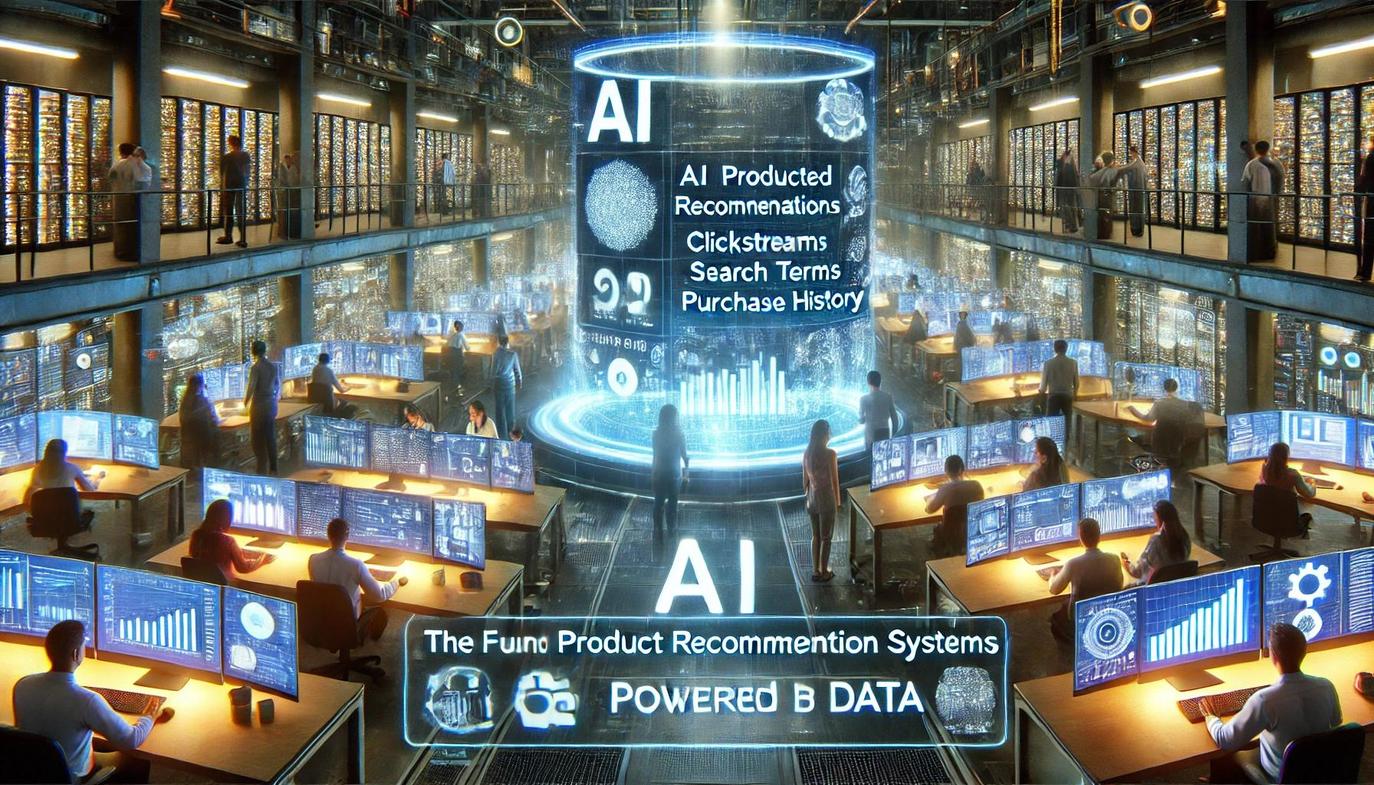
Every AI-driven recommendation engine begins with a wide range of structured and unstructured data inputs. These contribute to an evolving profile of user intent and include:
- Clickstream data
- Past purchase history
- Search terms and session duration
- Return behavior and device type
Transaction logs, product metadata, and inventory feeds are also integrated to complete the input model.
Effective systems treat data as a layered asset. Rather than prioritizing quantity, they focus on context. A high click-through rate without a transaction provides one set of insights, while a short session with an immediate purchase provides another. Quality recommendation systems classify these signals in real time, generating representations that adapt over time.
Data architecture must support velocity and scale. Batch pipelines cannot respond to session-level changes. Recommendation infrastructure requires event-driven ingestion and low-latency inference. Systems must support feature stores, model refresh, and feedback loops across all channels—web, mobile, and in-store, if applicable.

Exploring The Core Models of Recommendation Engines
Recommendation engines in retail fall into distinct categories, depending on how they map relationships between users and products.
1. Collaborative Filtering
This method identifies patterns across user-item interactions. It recommends products based on the behavior of similar users. Collaborative filtering systems are effective when user history is rich. They struggle in cold-start scenarios without purchase or click data.
2. Content-Based Filtering
This approach focuses on product attributes. It matches user profiles with items that share similar characteristics—color, brand, material, price range, or category. Content-based methods work well in early user journeys but may lack diversity in long-term exposure.
3. Hybrid Systems
Most production-grade systems blend collaborative and content-based filtering. They use model ensembles to balance personalization with diversity. Rule-based constraints are layered on top to enforce inventory limits, region-specific availability, or promotional campaigns.
4. Contextual Bandits and Reinforcement Models
Advanced systems use exploration-exploitation strategies to serve recommendations while learning user preferences in real time. These systems dynamically adjust the ranking of recommendations within a session based on engagement signals. They work well for homepages, search suggestions, and promotion sliders. To build such dynamic, generative systems, retailers are increasingly leveraging Generative AI development solutions that enable intelligent, real-time personalization at scale.

Strategic Applications of AI Across the Retail Funnel
AI-driven recommendations support more than product carousels. Their utility spans the customer lifecycle and the retail funnel.
1. Product Detail Pages (PDP)
Recommendations on PDPs guide accessory selection, bundling, and alternate items in case of low availability. The system must account for current stock, delivery timelines, and compatibility. High-performing models here combine intent signals from the ongoing session with cohort-level historical data.
2. Cart Pages
Recommendations on cart pages influence upsell and cross-sell. Timing is critical. The system must detect hesitation, predict drop-off, and offer relevant add-ons without interrupting purchase flow. These systems require fine-tuned latency and integration with fulfillment logic.
3. Post-Purchase Journeys
AI engines drive value after checkout. They surface reorder prompts, warranty options, product care guides, and community content. These systems connect transactional history with lifecycle models, building long-term engagement without adding friction.
4. Email and Push Campaigns
Campaign-based recommendations differ from session-level prompts. These systems generate item lists based on engagement recency, seasonal factors, and promotion eligibility. AI-driven segmentation ensures that each user receives content tied to their interaction history rather than a generic blast.
5. In-Store Kiosks and Apps
For omnichannel retailers, AI extends to physical environments. In-store apps recommend items based on store-level inventory, proximity sensors, and scan history. These systems integrate real-time location data with profile-level preferences, ensuring consistency between digital and physical interactions.
Operational Considerations for Implementation
Engineering an AI-powered recommendation system involves choices beyond model architecture.
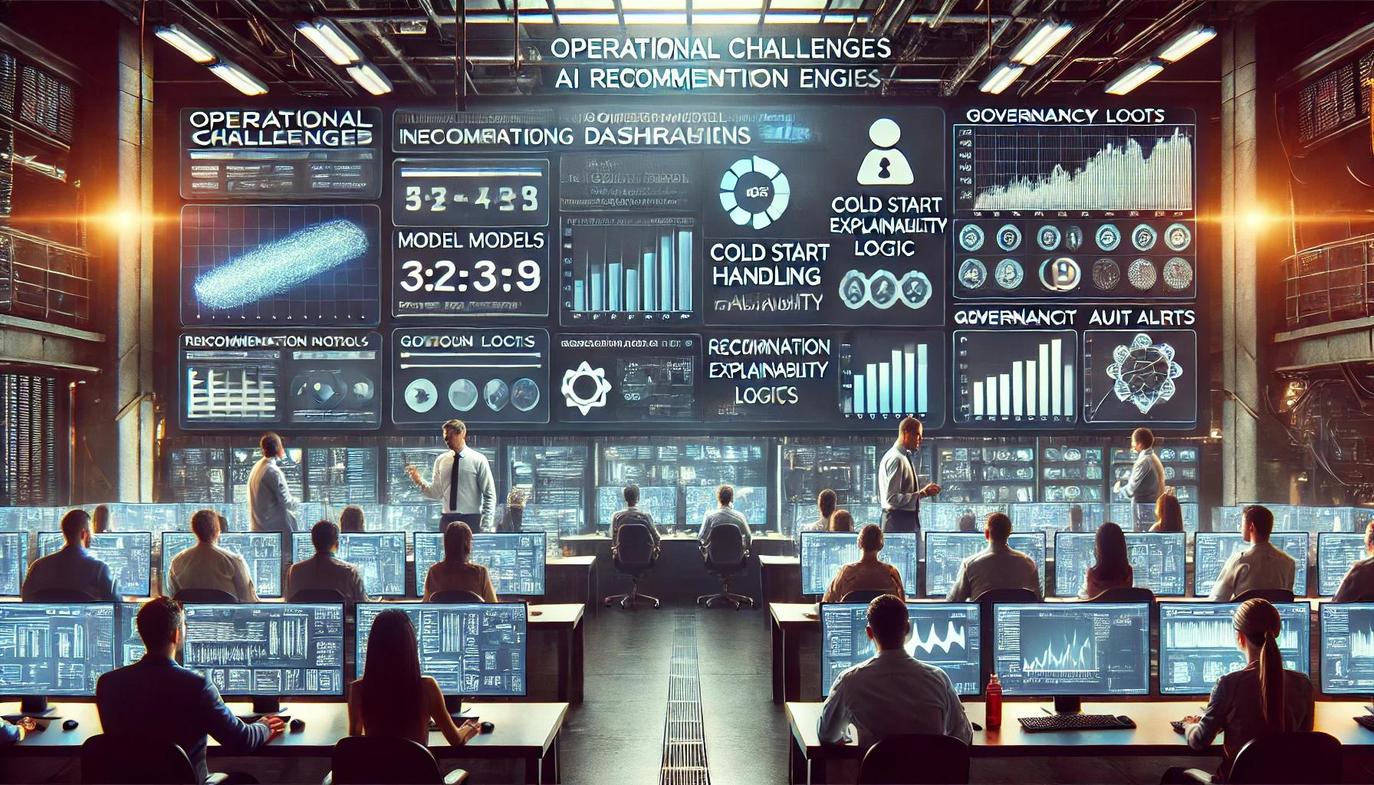
1. Cold Start Management
New users and new products require fallback logic. Rule-based ranking, category popularity, and editorial curation fill the gap until behavioral data becomes available. AI systems must transition smoothly from rules to inference as data density grows.
2. Performance Monitoring
Real-time dashboards track model precision, conversion lift, dwell time, and average order value. Offline metrics such as recall and NDCG help tune model refresh cycles. Business teams must access these insights through interpretable interfaces, not model code.
3. Governance and Explainability
Recommendations in regulated categories—financial services, health, or kids’ products—require interpretability. Systems must log feature contributions, training data versions, and override history. This ensures audit readiness and protects against biased outcomes.
4. Feedback Loops
AI models improve with feedback. Retail systems capture both implicit signals (scroll depth, exit points) and explicit feedback (dislike buttons, “not relevant” filters). These signals must map to model adjustments in a structured and timely manner.
Infrastructure Patterns That Support Scale
Scalable recommendation engines depend on robust infrastructure:
- Data pipelines for event capture (Kafka, Pub/Sub), processing (Spark, Flink), and storage (BigQuery, Snowflake)
- Model training environments that separate experimentation from deployment (MLflow, SageMaker, Vertex AI)
- Feature stores to version and reuse engineered inputs
- Serving layers with real-time inference (TensorFlow Serving, TorchServe, or bespoke APIs)
- Monitoring layers with alerting tied to business KPIs
AI recommendations only succeed at scale when infrastructure enforces speed, flexibility, and recoverability.

AI-Powered Product Recommendations Companies for Retail
Engineering effective recommendation systems in retail involves more than machine learning. It requires scalable infrastructure, real-time data pipelines, and precise orchestration between backend systems, customer behavior, and inventory logic. The following companies have built and deployed recommendation platforms that serve millions of users, with measurable improvements in engagement, conversion, and operational efficiency.
1. GeekyAnts: San Francisco, CA
GeekyAnts has built AI-powered recommendation solutions tailored for retail environments using real-time data, hybrid cloud infrastructure, and predictive personalization models. Their team has implemented systems that adapt to live inventory status, session-level behavior, and regional availability, delivering hyper-targeted product suggestions across mobile and web.
In one of their recent initiatives, GeekyAnts explored how immersive commerce and cloud-based recommendation layers can anticipate user preferences before explicit search intent. They have also engineered modular retail platforms that balance on-site performance with scalable cloud-backed intelligence, enabling faster response cycles and higher system availability. Their work reflects a structured approach to machine learning pipelines, user context modeling, and product taxonomy alignment.
2. Lucidworks: San Francisco, CA
Lucidworks specializes in AI-powered discovery platforms that help retailers deliver contextually aware, personalized recommendations at scale. Their flagship product, Fusion, uses real-time behavioral signals to tune product rankings based on purchase intent, past interactions, and relevance modeling. They work with Fortune 100 retailers to improve catalog discoverability, cart efficiency, and guided search flows.
Their recommendation layer supports adaptive learning, multi-channel integration, and segment-aware targeting. Lucidworks also offers predictive merchandising features that adjust product exposure based on seasonal trends and in-session engagement metrics. Their platform operates across both B2C and B2B retail use cases with high-availability cloud deployment.
3. Algolia: San Mateo, CA
Algolia provides rapid, scalable AI search and recommendation APIs used by thousands of retailers globally. Their recommendation engine leverages collaborative filtering, vector-based similarity models, and clickstream data to personalize product feeds. The platform supports low-latency inference with sub-100 ms response times and flexible A/B testing of recommendation logic.
Retail clients use Algolia to deploy a range of features, including homepage personalization, “frequently bought together” logic, and multi-dimensional filtering on product lists. Their platform includes user segmentation, behavior-based ranking, and API-native integration with inventory and CMS systems. Their tools are designed to plug into existing product catalogs without large ML engineering overhead.

From Personalization to Prediction: The New Era of Retail AI
The evolution of AI product recommendations marks a fundamental shift in retail strategy, moving from simple personalization to predictive, context-aware engagement. A well-engineered recommendation engine is no longer a peripheral feature; it is a core component of the digital ecosystem that directly influences conversion, customer loyalty, and revenue. It transforms vast streams of behavioral data into a seamless discovery experience that feels both intuitive and intelligent.
Ultimately, the retailers poised to lead are those who treat their recommendation systems as dynamic, strategic assets. This requires a commitment to robust data infrastructure, continuous model refinement, and a clear vision for how AI can anticipate customer needs. When executed correctly, these systems do more than just suggest products; they build a resilient, adaptive retail model ready for the future.
Frequently Asked Questions About AI Recommendation Engines
What Is The “Cold Start” Problem In Recommendation Systems?
The “cold start” problem occurs when a recommendation engine has insufficient data to provide relevant suggestions. This happens with new users (no interaction history) or new products (no engagement data). Effective systems manage this by initially relying on non-personalized data, such as product popularity or content-based attributes, before transitioning to personalized recommendations as data becomes available.
How Do Hybrid Recommendation Systems Work?
Hybrid systems combine multiple recommendation techniques, most commonly collaborative filtering (relying on similar users’ behavior) and content-based filtering (relying on product attributes). This approach leverages the strengths of both methods to provide more accurate and diverse recommendations, overcoming the limitations of a single model.
Why Is Real-Time Data Processing Important For Retail AI?
Real-time data processing allows recommendation engines to adapt instantly to a user’s in-session behavior, such as clicks, searches, and cart additions. This enables the system to provide timely and contextually relevant suggestions that can significantly increase engagement and conversion rates, which is not possible with slower, batch-based processing.


