
Major trials to suck climate-warming carbon dioxide out of the air using various methods – including peat, trees, charcoal, and rock chips – are set to begin across the UK. They’re all part of a £30 million project funded by UK Research and Innovation, aiming to find the most effective and affordable strategy. Over 100 hectares (247 acres) of land will be used, making this one of the most extensive trials in the world.
Cameron Hepburn, a professor at the University of Oxford and leader of the coordination of the trials, said:
This is seriously exciting and pretty much world-leading. Nobody wants to be in the situation of having to suck so much CO2 from the atmosphere. But that’s where we are – we’ve delayed [climate action] for too long.
However, cutting emissions from fossil fuel burning as fast as possible remains vital to tackling global heating. There’s no suggestion that [CO2 removal] is a substitute for reducing our emissions.
Some CO2 will have to be removed from the atmosphere (in addition to reducing and eliminating emissions) if the UK is to reach net-zero by mid-century because the country failed to cut emissions in the past rapidly.
The Trials
Peatlands
Degraded peatlands in the Pennines and West Wales will be re-wetted and replanted. A restored peatland could absorb 10 tons of CO2/ha/year and prevent the loss of about 30T of CO2/ha/year. Renewed peatland will also help flood prevention, water quality, and wildlife.
Enhanced Rock Weathering
Farms in Devon, Hertfordshire, and mid-Wales will test rock chips that absorb CO2 as they break down in the soil. They’ll spread the basalt chips on arable and grazing land. The chemical reactions that degrade the rock trap CO2 in carbonate minerals. As many as 13 tons of CO2 could be locked up per hectare each year. The rock chips can also help replenish essential plant nutrients and reverse acidification in degraded soils.
Hepburn said:
The joy is that if it does sequester CO2 and lead to enhanced agricultural productivity, then everybody’s laughing.
Biochar
Special charcoal called biochar (produced from wood or organic waste) will be buried on former mine sites, sewage disposal sites, railway embankments, and open fields. Biochar also increases soil’s ability to hold water and nutrients and can help prevent run-off of pesticides and fertilizers. The trial will add 200 tons of the material to 12 hectares (29.7 acres) of arable grasslands and fields, making it the most comprehensive biochar trial to date.
Perennial Bioenergy Crops
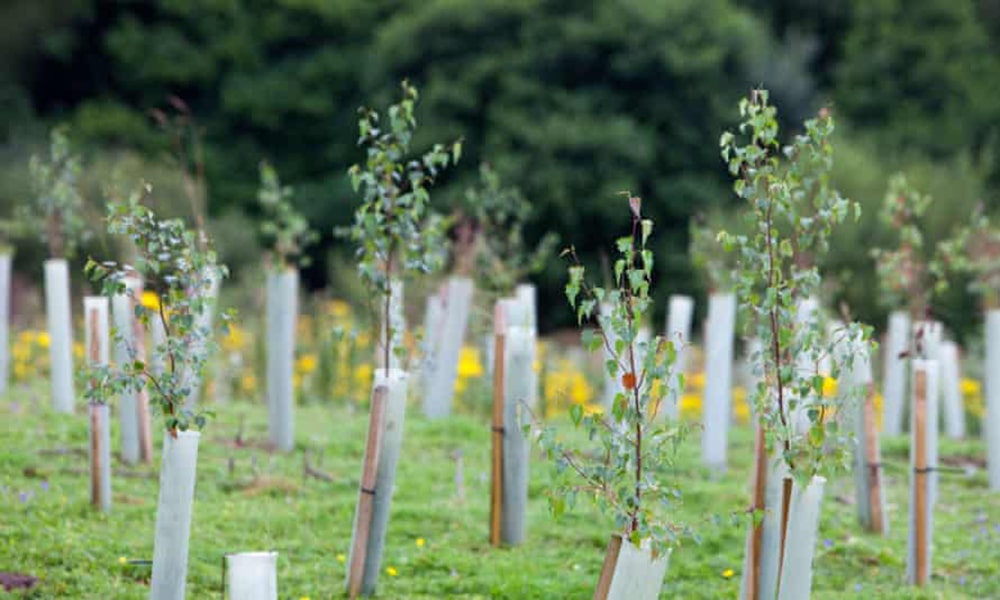
Trials to pinpoint the best large-scale ways to employ trees to capture carbon will occur on National Trust and Ministry of Defense land. These include measuring the carbon removal potential of energy crops such as miscanthus grass and willow on a commercial scale for the first time. They will burn the crops for energy (fuel for power stations) and bury the CO2 emissions underground. They will plant 20 hectares. They estimate that the crops will sequester 11-18 tons of CO2 annually.
Ian Bateman, a professor at the University of Exeter who is leading these trials, said:
Trees represent the most cost-effective way of removing CO2 from the atmosphere while also delivering benefits such as enhancing biodiversity and recreational and health improvements. But planting trees can have disastrous consequences if they are planted on peat and release carbon, for example.
The trials will test how to plant the right tree in the right place. The trees will be measured and surveyed by drone, and carbon buildup in the soils will be checked. Up to 13T CO2e/ha/year could be stored, and you can start now – you just need land and plants. There is huge potential to make an immediate difference towards the goal of net-zero by 2050.
Intergovernmental Panel on Climate Change scientists concluded that there’s no way of keeping the global temperature rise to the Paris Accord target of 1.5°C without cutting emissions and sequestering billions of tons of CO2 annually by 2050.
The UK’s official climate advisers estimate the country will have to remove about 100 million tons of CO2 every year by 2050 to reach net zero. Furthermore, it will be difficult to cut all emissions from sectors like farming, aviation, and cement by mid-century – so carbon removal is essential.


