
New renewable energy projects, like the most recently approved offshore wind farms in Europe, will likely become the cheapest kind of power to produce. The savings could result in lower electricity bills for electricity consumers. The reduction benefits will begin in the mid-2020s when the latest round of offshore wind farms in the UK starts producing power.
In the past, clean energy may have pushed up bills due to projects being subsidized by government support schemes (government paying companies to produce energy). Now such projects are set to undercut fossil fuels and, therefore, operate with “negative subsidies” (companies paying the money back to the government), which will push down bills. The reason being that the cost of installing and running solar and wind energy projects has fallen dramatically. Imperial College London researchers led the international team that conducted this analysis.
Lead researcher Dr. Malte Jansen, from Imperial’s Centre for Environmental Policy, said:
Offshore wind power will soon be so cheap to produce that it will undercut fossil-fueled power stations and may become the cheapest form of energy for the UK. Energy subsidies used to push up energy bills, but within a few years, cheap renewable energy will see them brought down for the first time. This is an astonishing development.
The analysis focused on examining a series of government auctions for offshore wind farms across five European countries (including the UK) that took place between February 2015 and September 2019. At these events, companies that seek to build wind farms can bid by stating the price at which they’ll sell the electricity they produce to the government.
If a company bids higher than the wholesale price for electricity on the UK market when the wind farm goes online, then the government will top up the cost with a subsidy. If the bid is less, later, the company will pay the government back the difference instead – which is a “negative subsidy.” When the government gets the payback, homes, and businesses pay less for electricity.
Dr. Iain Staffell, from Imperial’s Centre for Environmental Policy, said:
The price of offshore wind power has plummeted in only a matter of a decade, surprising many in the field. The UK auctions in September 2019 gave prices that were around a third lower than those of the last round in 2017, and two-thirds lower than we saw in 2015.
This amazing progress has been made possible by new technology, economies of scale and efficient supply chains around the North Sea, but also by a decade of concerted policymaking designed to reduce the risk for investing in offshore wind, which has made financing these huge billion-pound projects much cheaper.
These new wind farms set the stage for the rapid expansion needed to meet the government’s target of producing 30 percent of the UK’s energy needs from offshore wind by 2030. Offshore wind will be pivotal in helping the UK, and more broadly the world, to reach net-zero carbon emissions, with the added bonus of reducing consumers’ energy bills.
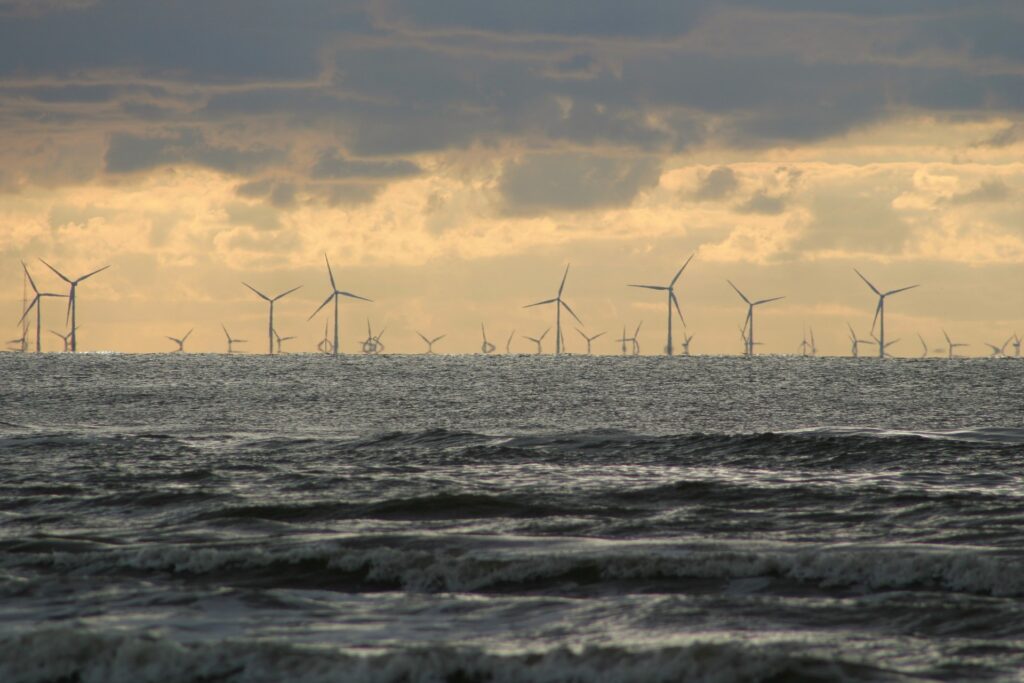
However, projects haven’t only become cheaper now because they cost less to install and run. Other reasons the price of offshore wind has fallen so rapidly include the ability to build turbines farther out at sea, the engineering advancements to make the turbines ever larger, and the fact that the farms themselves are getting larger. The bigger a turbine, the more wind energy it can harness. Also, there are more consistent wind speeds the higher you go. Combine that with more turbines being built overall, and you get massive savings.
And the “success story” of the offshore wind sector doesn’t stop there! It’s also creating hundreds of thousands of jobs, according to the UK government, and the growing skills and expertise of these people can be exported around the world.
A spokesperson for the Department of Business, Energy and Industrial Strategy told The Independent:
The offshore wind sector is a major British success story, with the UK now home to the world’s largest wind farms powering millions of homes each year. Today’s report shows there are further benefits coming down the track, with the offshore wind playing a key part of our drive to provide cleaner, greener electricity and create hundreds of thousands of green-collar jobs in the supply chain.
The next level now is to harness this success to develop even more ambitious projects, such as producing green hydrogen fuels using the wind power on-site. Hydrogen fuel has quickly become an essential player in the race to decarbonize as it can replace natural gas used for heating homes and the petrol used in transportation.


