
The art of painting forgery (if we can call it an art, considering it’s illegal) is, by no standards, a new phenomenon. Even Michelangelo, who can be regarded as one of the founders of the Renaissance, resorted to the act of forgery. He sold a piece that, indeed, was his creation, but he buried it to make it appear older. The buyer was a cardinal who eventually figured out that his item was artificially aged and demanded a refund. However, the incident was ultimately praised as a statement of “triumph over antiquity.”
History is made up of astonishing masquerades that emerged from humankind’s desire to metamorphose into creators or simply to leave a mark by doing something great with their time on earth. You may argue that we now live in a world where everything is similar, but that doesn’t necessarily mean there is a problem. The primary concern arises when an object improperly asserts a false history of production, which it does not possess.
Misrepresentation can mislead potential buyers and undermine the value of authentic artworks. Understanding the distinction between genuine and counterfeit items is crucial for anyone looking to invest in original pieces.
Certainly, if you’ve started to grow an interest in art, it won’t be long until you find yourself measuring the empty spaces of your walls, checking how much you have left for hanging art pieces. In that case, you probably wouldn’t be pleased to buy a fraud, so this article is here to help you understand what should be considered to ensure you’re buying original ones.
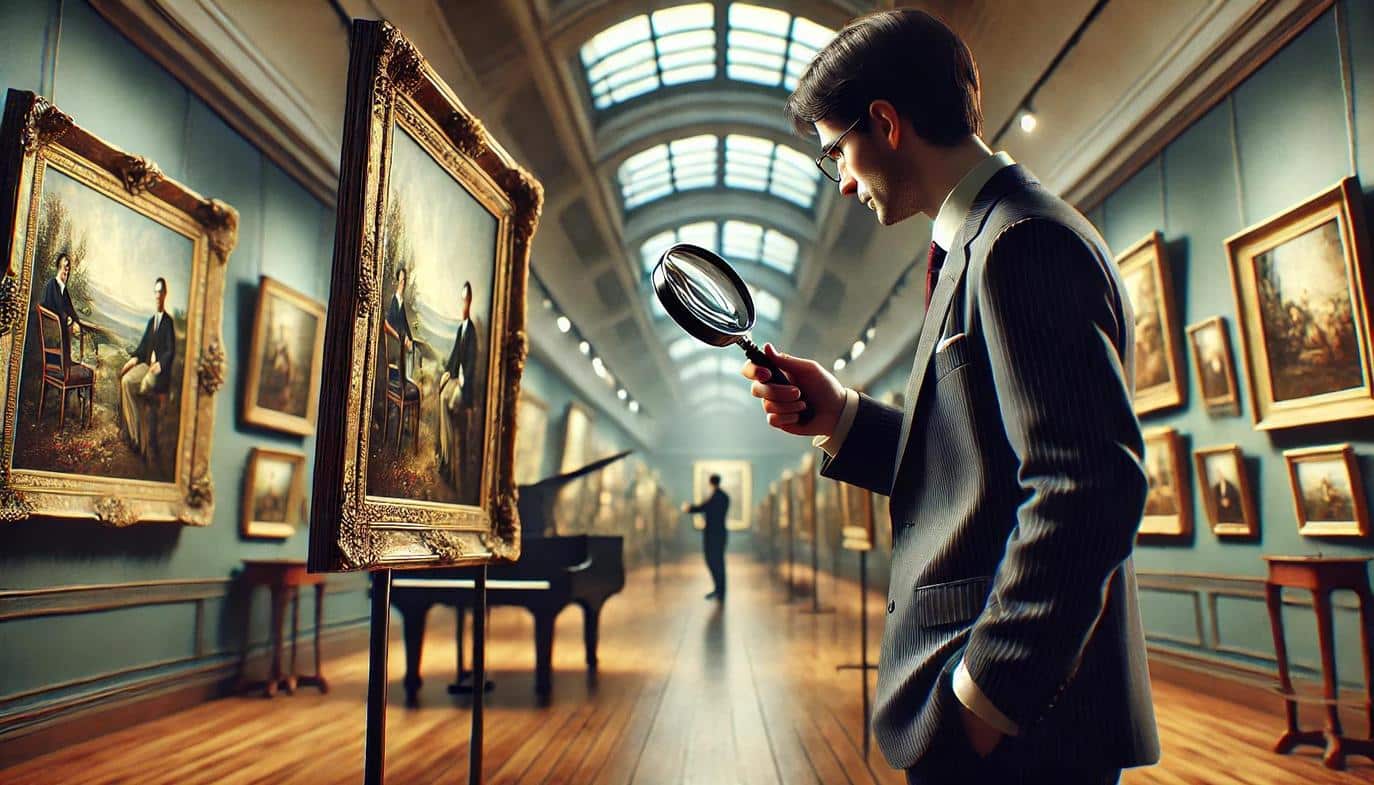
What should you look for when purchasing an original painting?
The art world provides numerous practical tips and valuable insights that assist collectors in making informed decisions when purchasing original works. The process of verifying the legitimacy of a piece has become increasingly accessible in today’s digitally advanced environment. Therefore, it is essential to explore the key steps to follow when investing in authentic art.
Authenticity
A genuine COA (certificate of authenticity) can be easily differentiated from a fake one, considering it contains precise details about the painting. Key details that establish the legitimacy of a painting include the artist’s name, the title of the artwork, and the date of creation.
Information such as the dimensions, edition number, and the artist’s signature plays a crucial role. Provenance details and the qualifications of the individual issuing the certificate are also important factors for verification. Collectively, these elements ensure the authenticity of the artwork.
The quality of paper used for a Certificate of Authenticity (COA) holds significant importance. Legitimate certificates consistently utilize high-quality, acid-free paper. If the COA begins to yellow or deteriorate over time, this may indicate that the artwork is not authentic.
The condition of the certificate is a critical red flag that should not be overlooked. Being aware of this detail is essential for all buyers, especially those looking to avoid unscrupulous sellers.
Artist Reputation
You’re about to buy an art piece, with the following two options to choose from:
- An artist with proven auction records, transparent gallery sales, and a positive history that gives you confidence in its authenticity and value.
- An artist with no traceable history, no publications, and no auction results that leaves you uncertain about its origins and legitimacy.
The smart choice would be to go for reputable artists, as they usually document their works, making it easier to verify authenticity and track ownership history.
Artists like Erik Skoldberg, known for their distinctive style and consistent body of work, exemplify the value of investing in reputable creators whose art holds both aesthetic and financial credibility.
Legitimacy of Seller
It is undoubtedly a striking mistake to not carefully check your art dealer’s history, past sales, and customer reviews. Back in the day, revealing the identity of a counterparty was problematic because the confidentiality concerns in the market were quite inscrutable. Today, however, auction houses, galleries, and online platforms are very transparent, often providing seller histories using tools like provenance tracking and blockchain authentication.
In short, the difference between an amateur seller and a legitimate one lies in:
- Industry reputation
- Provenance
- Transparency in Sales and Customer Experience
- Payment Methods and Return Policies
Once you carefully explore a platform and conduct due diligence, it means you’re ready to shop. There are lots of stunning original paintings for sale in the digital world, and they will be waiting for you to find them.

What are some scientific methods used for detecting art forgeries?
Since ancient times, forgeries have plagued the art world. Science has become a redoubtable tool in unveiling art forgeries, but remember, they cannot prove that a work is authentic. Deep analyses are crucial for determining the authenticity of a painting and identifying any potential forgeries. Here are some of the key scientific methods used for recognizing art forgeries:
Microscopy
Even though microscopy has served as an indispensable tool for centuries, and it’s not necessarily the product of an advanced digitalized world, modern microscopy has developed new ways of seeing the world. An optical microscope can tell you lots of details about a painting just by glancing at a small paint sample from the painting. But the stereo microscope provides an investigator with detailed insights into the layering of paint on a canvas. Upon close examination, one can determine if the paint application occurred later than an artist or art dealer has claimed.
Neutron Activation Autoradiography
Neutrons are used to irradiate the paintings, revealing the pigment’s distribution, which contains activated radioactive elements from the painting’s layers. Autoradiography can reveal whether the pigments used in a painting were available at the time of its creation. If the analysis indicates that the pigments were inaccessible during that period, it serves as clear evidence of forgery. Such findings are critical for verifying the authenticity of an artwork.
X-Ray Technology
Art forgers continuously seek ways to create convincing fakes. Experienced individuals in the art industry understand that attempting to replicate an old painting on a new canvas is a clear error, as microscopy can easily expose its lack of age. As a result, forgers often choose to paint over older artworks with lesser value, thereby producing a more valuable counterfeit. However, X-ray technology reveals the truth behind these fraudulent efforts. No matter how skillfully a forgery is executed, advanced imaging techniques will expose any deceit.
Your Path to Authentic Art Ownership
Purchasing original art is not just about acquiring a beautiful piece for your home; it is about making a thoughtful investment that reflects both your personal taste and the cultural significance of the artwork. By implementing the strategies discussed throughout this article, such as verifying certificates of authenticity, understanding the artist’s background, and assessing the reputation of the seller, you can confidently curate a collection that adds value to your life.
The contemporary art market offers numerous resources to guide you in your journey to select genuine works. Whether you are a seasoned collector or a first-time buyer, taking the time to research and connect with reputable galleries and platforms can greatly enhance your experience. Using scientific techniques for authenticity verification helps ensure that your investment holds its value over time.
As you engage with the art world, remember that each piece has a story to tell and a history worth preserving. Surrounding yourself with original artwork enriches your living space and cultivates a deeper appreciation for creativity and craftsmanship. Embrace this opportunity to foster connections with artists and their work, ensuring that your collection is both meaningful and authentic. By prioritizing authenticity in your art purchases, you contribute to a vibrant cultural landscape that celebrates genuine artistic expression.


