
Healthcare has always been about more than hospitals and clinics. At its core, it is about people — their access to care, their ability to stay informed, and the strength of the communities they live in. In recent years, a meaningful shift has taken place as community-based initiatives reshape how healthcare is delivered and experienced. These efforts are not replacing traditional medicine; they are expanding it, filling the gaps that formal systems often leave behind, and meeting people where they are.
Why Education Sits at the Heart of Community Health
One of the most powerful forces driving community health forward is education. When people understand their own health — the risks they face, the options available to them, and the importance of early intervention — they are far better equipped to make decisions that protect their wellbeing. This is not just about reading pamphlets in a waiting room. It involves sustained, targeted efforts to bring health literacy and public awareness campaigns into neighborhoods, schools, workplaces, and homes.
Health education specialists working at the community level dedicate their careers to exactly this kind of work. They assess the needs of specific populations, develop programs tailored to those needs, and ensure that the right information reaches the right people. Their training reflects the complexity of their role. Those who pursue formal education in this field often explore public health concentrations that align their studies with specific community needs — areas such as community health, health education and communication, or maternal and child health — before stepping into roles that demand both scientific knowledge and genuine human connection.
When education is treated as a pillar of community health rather than an afterthought, the impact is substantial. Communities with higher levels of health literacy tend to engage more proactively with healthcare services, experience better outcomes, and put less strain on emergency resources. Educating people is not just a kind gesture; it is one of the most practical investments a community can make.
Community Health Workers: The Connective Tissue
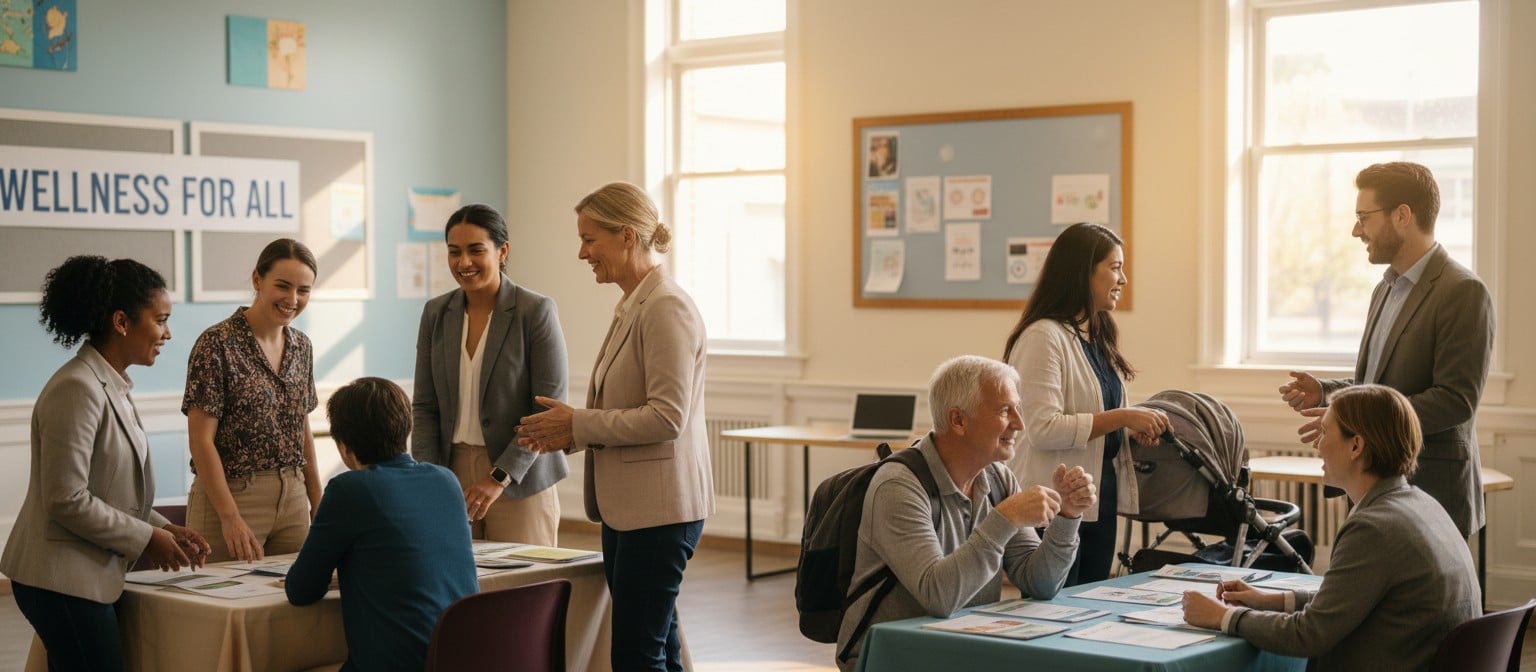
Community health workers occupy a unique and often underappreciated role in the healthcare system. They are not physicians or nurses, but they are frequently the first point of meaningful contact between a person and the broader health system. They listen, they advocate, they connect. For individuals navigating difficult circumstances — whether due to poverty, language barriers, or distrust of formal institutions — a community health worker can be the difference between accessing care and avoiding it entirely.
These professionals are trusted precisely because they are embedded in the communities they serve. They attend the same events, know the same families, and understand the cultural context in a way that outside providers often cannot. This trust is not something that can be manufactured or imported from elsewhere. It develops over time and through consistency, and it becomes the foundation on which effective healthcare outreach is built.
The value of this model has become increasingly recognized by healthcare systems and public health agencies, many of which now actively partner with community organizations to extend their reach.
Addressing the Social Determinants of Health
Modern healthcare increasingly acknowledges that illness does not exist in a vacuum. Where a person lives, what they eat, whether they have stable housing, and whether they feel safe in their neighborhood all influence their health in measurable ways. These are known as the social determinants of health, and addressing them is one of the central goals of community-based initiatives.
Local organizations have taken the lead in confronting these factors directly. Food access programs bring fresh produce to underserved neighborhoods. Housing advocacy groups work to reduce the chronic stress that comes with unstable living conditions. Mental health outreach teams engage with individuals who would otherwise fall through the cracks of the traditional system.
None of these efforts are glamorous in the conventional sense. They do not make headlines the way medical breakthroughs do. But they quietly change lives, often in ways that ripple outward for years. A child who grows up in a neighborhood with access to healthy food and safe outdoor spaces is less likely to develop chronic conditions in adulthood. A family that receives timely mental health support is more likely to remain stable and functional. The prevention is invisible; the cost of not preventing is not.
Building Trust Between Communities and Healthcare Providers
One persistent challenge in healthcare delivery is the gap in trust between providers and the communities they serve. This gap is particularly pronounced in communities that have historically experienced neglect, discrimination, or inadequate care. It cannot be closed through marketing campaigns or goodwill statements alone. It requires sustained, honest engagement over time.
Community-based initiatives play a critical role here. When health outreach is driven by community members themselves rather than imposed from outside, it carries a very different kind of authority. People are more willing to seek care, speak honestly about their symptoms, and follow through with treatment plans when they trust the person or organization guiding them. Building that trust is slow work, but its effects on health outcomes are real and lasting.
Healthcare providers who invest in genuine community partnerships often find that their services become more effective as a result. Patients who feel seen and respected are more engaged in their own care. Preventive services become more accessible.

The Road Ahead
The momentum behind community-based healthcare initiatives continues to grow, and for good reason. Traditional healthcare systems alone cannot address the full scope of what it means for a population to be healthy. It takes educators, outreach workers, advocates, and organizers working alongside clinicians to create the kind of comprehensive care that communities truly need.
This does not mean that community-based work should remain informal or underfunded. If anything, its proven impact makes a compelling case for greater investment, stronger training pipelines, and deeper institutional partnerships. The healthcare challenges of the coming decades — aging populations, growing rates of chronic illness, and widening health disparities — will not be solved inside hospital walls alone. The solutions will be found in neighborhoods, in schools, and in the relationships that communities build around health.


