
Researchers at the NIHR Guy’s and St Thomas’ Biomedical Research Centre (BRC) developed a new technique to treat Crohn’s Disease by using a patients’ own modified cells. It has been proven to be effective in experiments using human cells. This is great news for anyone suffering from Crohn’s as it is a highly inconvenient lifelong condition.

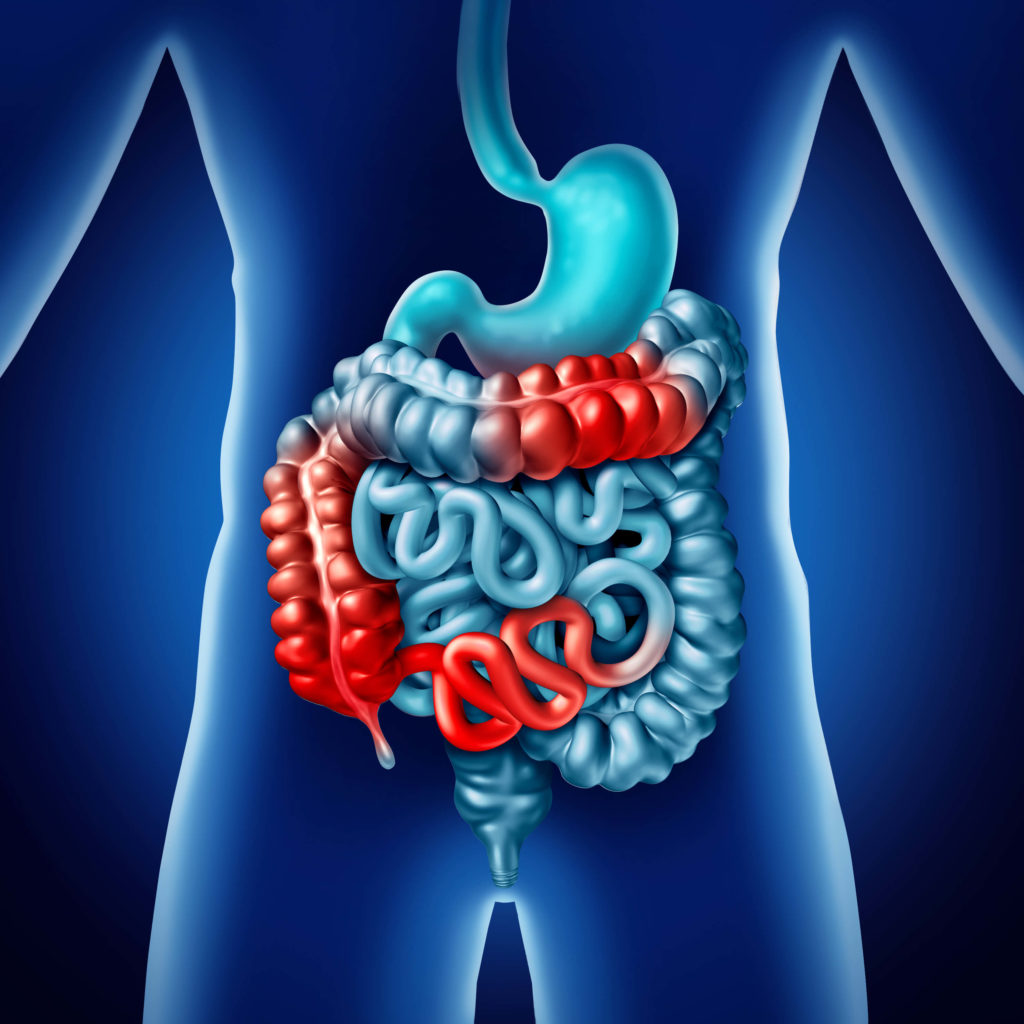
The disease causes parts of the digestive system to become severely inflamed, causing a range of symptoms such as diarrhea, stomach aches, tiredness, and weight loss. Such symptoms make it very difficult for an inflicted individual to go about their day normally. This debilitating condition is estimated to affect around 620,000 people in the UK alone. Fortunately, clinical trial of the treatment are expected to start in the next six months. The proposed Tribute Trial will test whether the treatment is safe and effective for treating Crohn’s disease.
Professor Graham Lord, who recently took up a role as Vice-President and Dean of the Faculty of Biology, Medicine and Health at the University of Manchester, and was previously Director of our BRC, led the research. He said:
“It’s a real home-grown treatment in the sense that we started with observing cells and tissues donated by patients at Guy’s and St Thomas’, have developed a treatment, and are now starting to undertake trials, all at the Trust. It shows how central patients are to research, helping to create a treatment that might help thousands more people.”
White Blood Cells
The technique was developed by first studying white blood cells taken from patients who have Crohn’s disease, and comparing them to cells of healthy people. Next, the cell therapy specialists in the BRC took their findings to the lab along with some Crohn’s patients’ cells. The findings enabled them to grow the patients’ cells in a special culture so that they behave more like cells from healthy people. Thus, the treatment was developed. The research is published in the journal Gastroenterology.
The Study Findings:
- Specialized white blood cells called regulatory T cells from Crohn’s patients produced less of a gut-specific protein called integrin α4β7 than regulatory T cells from healthy people.
- Working with the specialists at the NIHR Guy’s and St Thomas’ BRC’s Advanced Therapies Manufacturing Platform, they developed a cell therapy technique based on these findings.
- This technique involves developing cells from the Crohn’s disease patients with a molecule called RAR568, which restores healthy levels of integrin α4β7.
- The cells are then given back to patients by intravenous infusion.
Current Treatments
The current treatment is unreliable. This new therapy using a patients’ own cells should prove to be much more effective and consistent. Dr. Peter Irving, a consultant gastroenterologist and co-author on the paper, said:
“While the treatments available for Crohn’s disease have increased over recent years, they only work in some patients. In addition, the treatments have potentially serious side effects in some patients. This research paves the way for a trial of using patients’ own cells to treat their Crohn’s disease and we look forward to offering people the chance to take part in the very near future.”
The Next Frontier
The researchers are highly confident in this new treatment. Professor Lord said:
“This is the next frontier in cell therapy, as we’re going beyond treating the symptoms of Crohn’s disease, and trying to reset the immune system to address the condition.”
Others are hailing the treatment as well. For example, 50-year-old Rachel Sawyer, a communications manager from southeast London, says it will be a total game changer for people suffering from Crohn’s. She was diagnosed with Crohn’s disease in 2000 and treated at Guy’s and St Thomas’, and although her condition is now under control, she supports other people who have Crohn’s and runs an advocacy Twitter account for the disease. She said:
“One of the worst things for me was the unpredictability, particularly around needing the toilet in a hurry. Having Crohn’s completely re-routes your daily life and makes it hard to do the normal things most of us take for granted like going out socially or taking public transport. Even now, the fear of it is never really far from my mind.
Another difficult thing is the stigma associated with bowel disease. It’s difficult to talk and be open about it, even with family and friends. I found life very isolating and challenging at times – and that’s something so many people with Crohn’s experience, regardless of whether they were diagnosed years ago or last month. For people diagnosed young, it can impact on the formative years of their life.
Anything that could help people with Crohn’s have the confidence to go out and get back to being the people they were destined to be would be a game-changer.”


