
Operating a modern small business means maintaining a digital footprint that is active every second of the day. While this constant connectivity drives growth, it also places your critical assets in the crosshairs of sophisticated cyber-adversaries who specifically target smaller enterprises, often assuming their defences are porous. Securing your perimeter is no longer just a technical requirement; it is a fundamental pillar of operational continuity that demands a proactive, informed approach from every member of your team.
For Australian entrepreneurs, the landscape is shifting towards integrated intelligence. Utilising resources like the Microsoft Intelligent Security Association (MISA) allows local businesses to tap into a global ecosystem of elite data protection. Blending cutting-edge technology with rigorous staff protocols allows you to transform your office from a vulnerable target into a resilient fortress capable of withstanding the most persistent digital threats.
If you are a business owner with a busy office that is online 24/7, how thoroughly do your office employees grasp the subtle mechanics of modern hacking? If they have not been trained on what to look for, they could easily fall into one of the many traps that hackers set.
Here are five cybersecurity tips for small business owners.
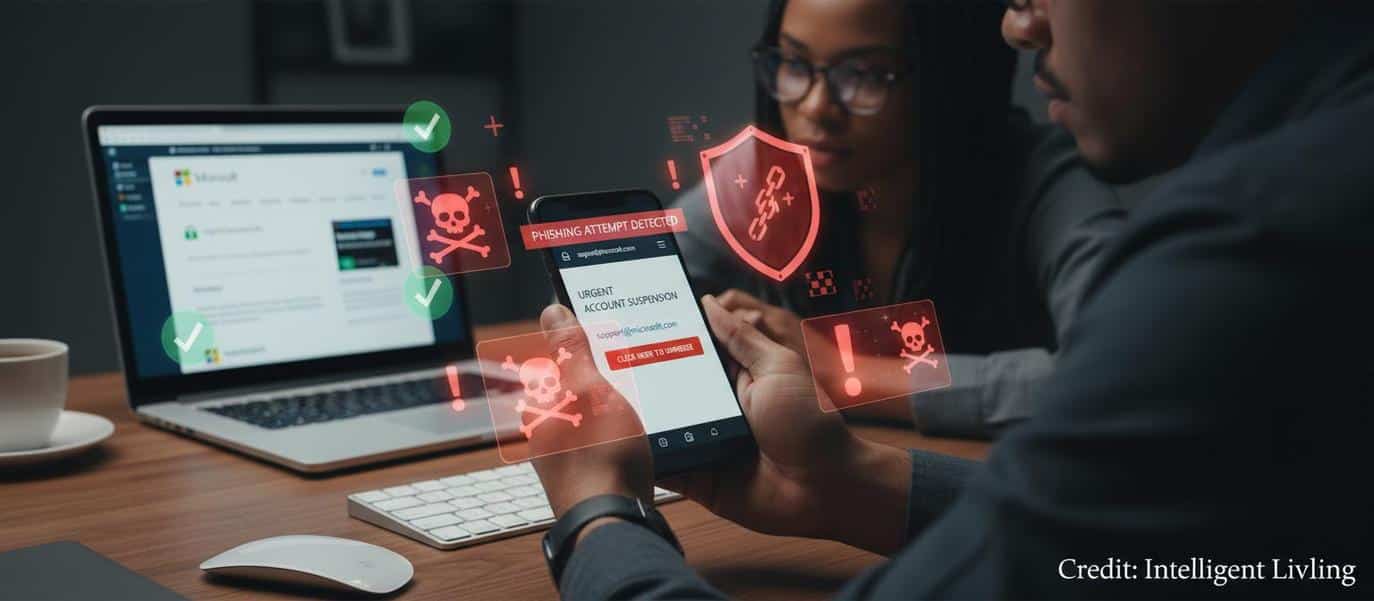
1. Prevent Phishing Attacks by Verifying Email Integrity
Legitimate service providers and financial institutions rarely prompt users to navigate via unsolicited email links, so this is an immediate red flag. Recognising a fraudulent interface requires a sharp eye for specific inconsistencies. Phishing attempts often manifest through several distinct deceptive layers:
- Exact visual replication of familiar corporate landing pages.
- Subtle URL deviations, such as transposed characters or incorrect domains.
- Urgent or threatening language designed to bypass critical thinking.
- Hidden redirection links that mask the true destination of the click.
Training your team to look for these markers prevents them from mistaking a malicious clone for a legitimate service provider, creating an essential human firewall. The best cyber-protection can be employed using MISA (Microsoft Intelligent Security Association), which is cutting-edge data protection that operates 24/7. This is a technique that has been used for many years, mainly because it works, so make sure a trainer visits your office and delivers a session on common hacking techniques.
2. Secure Your Local Storage Against Malicious Email Attachments
Receiving an unsolicited email containing a .exe attachment is a critical warning sign of a virus. A single inadvertent double-click is enough to deploy the payload onto your local storage. Once established, this malicious code will execute its programmed routine without further authorisation.
A file attachment can act as a Trojan Horse, concealing malicious code within a seemingly benign document. These hidden threats often remain dormant until a specific user action triggers their deployment.
3. Prioritise Strategic Small Business Data Protection
If an entrepreneur has never lost financial data that led to fraud, they seem to think it is something that happens to others, when everyone is fair game, particularly for teams with limited technical familiarity or dedicated IT oversight. Consider the operational and reputational fallout of informing valued customers that their financial data was compromised on your server; this is a scenario no business owner wants to navigate.
4. Enforce Strict Access Control for Cloud and LAN Networks
If you run a Local Area Network (LAN) or use the cloud, do not allow staff to log in with their personal devices, as they could contain harmful code. Implementing a comprehensive hardware policy is vital for maintaining network integrity. You can secure your environment by adopting the following protocols:
- Scanning all physical USB connections for embedded malware.
- Restricting Bluetooth visibility to authorised devices only.
- Quarantining suspicious code automatically before it reaches the LAN.
These automated defences provide the best protection against physical intrusion vectors. Click here for top tips on cable management.
5. Identify Zero-Day Threats Through Regular Database Updates
Antivirus programmes rely on existing databases to identify signatures; consequently, zero-day threats often go undetected. Maintaining a weekly update schedule is essential to ensure your software recognises the latest digital deception.
Engaging a local cybersecurity specialist to implement MISA-aligned safety protocols is a strategic investment in your team’s capability. A focused four-hour session is sufficient for equipping your staff with the critical eye needed to spot digital deception.
Hackers are deeply interested in the vulnerabilities of small businesses. They target all types of digital data, which is frequently sold to illicit broker agencies on the dark web. Consult a cybersecurity specialist to determine how a Managed SOC can best serve your specific operational needs.

Cultivating a Culture of Resilience with MISA and Managed SOC
Building a secure business environment requires more than just installing software; it necessitates a fundamental shift in how your organisation perceives digital risk. When you prioritise cybersecurity tips for small businesses, you are essentially investing in the long-term trust of your clientele. Implementing a robust framework—enhanced by the Microsoft Intelligent Security Association (MISA)—ensures that your data remains shielded behind multiple layers of collaborative intelligence, providing peace of mind in an increasingly volatile online world.
Your ultimate defensive strength lies in the synergy between your technical tools and your human talent. By consistently updating your anti-virus databases and engaging in regular hacking techniques training, you empower your employees to act as the first line of defence. Committing to these proactive data protection steps ensures your small business remains competitive, secure, and equipped to navigate the complexities of the digital future.
Expert FAQ on Small Business Data Protection
What is MISA and how does it protect my business?
MISA, or the Microsoft Intelligent Security Association, is a collaborative ecosystem of independent software vendors and managed security service providers that have integrated their solutions with Microsoft security products to provide better defence.
How often should I train my staff on hacking techniques?
Internal training should be conducted at least quarterly or whenever new digital threats emerge to ensure your team can recognise evolving phishing and social engineering tactics.
Is a Local Area Network (LAN) safer than the cloud?
Neither is inherently ‘safer’; both require specific security protocols, such as encrypted connections for your LAN and multi-factor authentication for all cloud-based assets.
Why is updating an anti-virus database weekly so important?
New malware strains are released daily, and a weekly update ensures your software has the latest ‘signatures’ required to identify and quarantine these specific malicious codes.
Can a cybersecurity specialist help with Managed SOC?
Yes, a specialist can design a Managed Security Operations Center (SOC) tailored to your small business, providing 24/7 monitoring and rapid incident response.


