
In the icy depths of the Southern Ocean, far beyond the reach of sunlight and human settlement, scientists aboard the Schmidt Ocean Institute’s R/V Falkor (too) have uncovered a thriving world of color and life. During a 35-day expedition to the South Sandwich Islands, researchers discovered vibrant coral gardens and new species flourishing around hydrothermal vents on the seafloor. These discoveries challenge our assumptions about where life can exist and highlight how little we truly understand about Earth’s deep oceans.
Even in the cold, volatile terrain of underwater volcanoes, life finds a way. With temperatures near freezing and the seafloor laced with geologically active vents, the region is an unlikely sanctuary for fragile coral species. Yet these thriving ecosystems not only exist—they are bursting with life, offering scientists a glimpse into biology at the edge of the possible.
Fast Facts About the South Sandwich Coral Discovery
- Location: Quest and Kemp Calderas, near the South Sandwich Islands in the Southern Ocean
- Depth: Approximately 700 meters below sea level
- Temperature: Cold Antarctic waters near freezing, yet with thermal vents creating localized heat zones
- Ecosystem: Coral gardens, sponges, sea stars, snails, barnacles, and potential new species
- Expedition: Schmidt Ocean Institute’s R/V Falkor (too) with the Ocean Census initiative and the international GoSouth team
- Technology Used: Remotely Operated Vehicle (ROV) SuBastian, multibeam sonar mapping, deep-sea imaging
- Scientific Goals: Identify new species, map vent ecosystems, study extreme-environment biology
- Conservation Implications: Highlights fragile and unexplored marine biodiversity needing urgent protection
Life Where It Shouldn’t Thrive: Deep Sea Corals Among Antarctic Vents
The newly discovered coral gardens are located near hydrothermal vents on the seafloor—openings in Earth’s crust where mineral-rich, heated water flows from beneath. Normally, such environments are toxic to many life forms due to high concentrations of sulfides and other chemicals. But here, in the sub-zero waters of the Southern Ocean, vibrant ecosystems are flourishing.
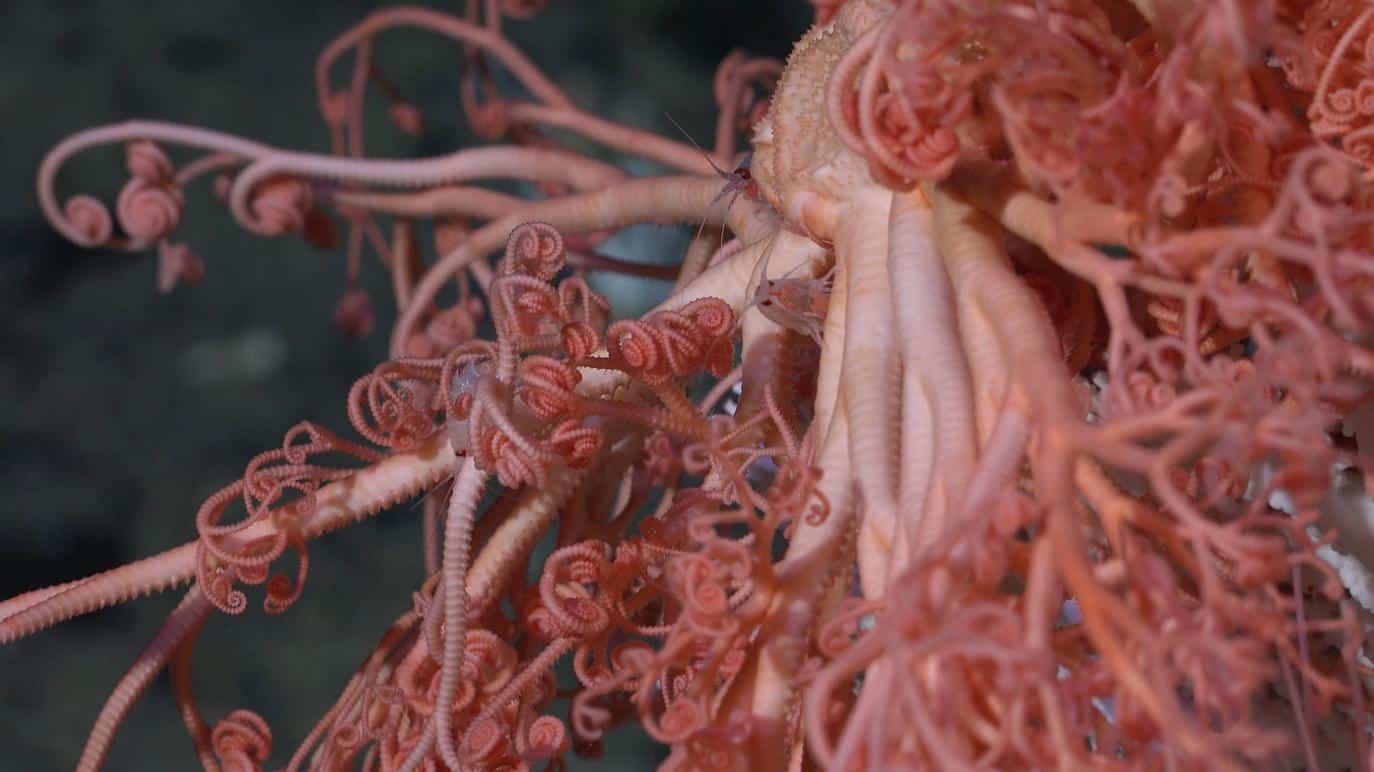
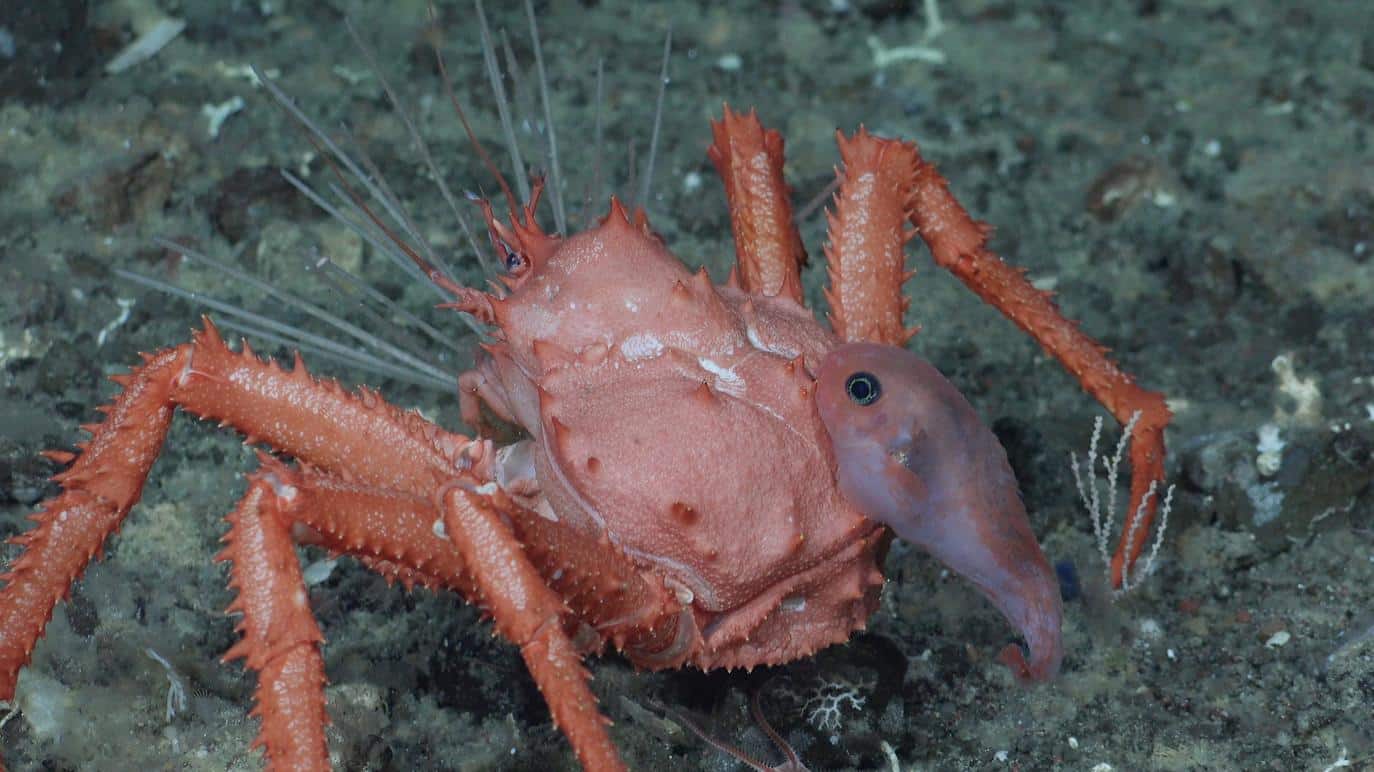
This region is home to the shallowest hydrothermal vents found near the South Sandwich Islands and among the first to be explored by remotely operated vehicles in this sector. Chimney-like structures rising from the ocean floor host clusters of corals, large sponges, and vent-tolerant creatures such as snails, barnacles, and sea urchins.
One of the most intriguing findings was the presence of snailfish eggs laid on black coral—a behavior never before documented. Nearby, researchers captured the first-ever video footage of the elusive dragonfish Akarotaxis aff. gouldae, a rarely seen species now caught on film in its native habitat.
These biological anomalies raise questions about the adaptability of marine species and the interplay between volcanic heat and deep-sea ecosystems. Coral and sponge colonies are not merely surviving—they are thriving in one of Earth’s harshest marine environments.

A Hidden Planet Beneath Us: Mapping the Unknown Deep
Despite covering more than 70 percent of the planet, much of Earth’s ocean remains unmapped and unexplored. The Schmidt Ocean Institute’s expedition to the South Sandwich Islands exemplifies how technology is enabling a new era of ocean discovery. Using tools like ROV SuBastian and multibeam sonar, scientists were able to locate and explore these rare hydrothermal vent ecosystems in detail.
This region is a geological and biological frontier. The Antarctic Circumpolar Current isolates its waters, creating a distinct biogeographic boundary. The conditions are so extreme and isolated that many species found here likely evolved in total separation from those elsewhere in the world’s oceans.
What makes this story particularly compelling is the realization that we are just beginning to scratch the surface of what lies beneath. These deep-sea gardens were completely unknown just months ago, proving once again that some of Earth’s most awe-inspiring wonders are still waiting to be discovered.
Strange Species, Future Innovations: What These Creatures Could Teach Us
Among the many surprises of the expedition was the identification of what appear to be multiple new species. From spiny sea stars to benthic comb jellies (ctenophores) and unclassified soft corals, the biodiversity uncovered here is extraordinary. While formal taxonomy is still underway, the findings point toward significant biological novelty.
Beyond ecological wonder, these discoveries hold real-world potential. Organisms that thrive in high-pressure, chemically volatile environments may offer insights into biomedical or material sciences. Similar hydrothermal vent bacteria have previously inspired enzyme technologies used in everything from DNA replication to deep-sea oil spill bioremediation. These newly discovered ecosystems could expand our knowledge even further.
Biological extremophiles—organisms that live in extreme conditions—are already a key area of interest for both biotechnology and planetary science. As researchers catalog these unique lifeforms, they may uncover traits that can be translated into human technologies or help us understand how life could exist in extraterrestrial environments like the subsurface oceans of Europa or Enceladus.
Earth’s Engine: How Undersea Volcanoes Help Life Thrive in Antarctica
The South Sandwich Islands lie along an active subduction zone, where tectonic plates meet and volcanic activity shapes the seafloor. This dynamic geology produces hydrothermal vents, where seawater interacts with magma beneath the Earth’s crust and emerges as hot, mineral-laden fluid.
These vents are not merely geological features—they are biological catalysts. The heated water provides localized thermal energy, and the vent minerals support chemosynthesis, a process where bacteria convert inorganic molecules into energy in the absence of sunlight. These bacteria form the base of an ecosystem that includes snails, worms, fish, corals, and more.
Unlike photosynthesis-based ecosystems at the surface, vent ecosystems rely entirely on this deep-sea energy source. The presence of both hydrothermal vents and coral gardens in close proximity at Quest Caldera reveals a previously unrecognized symbiosis between geological heat and ecological complexity.
Preservation at the Edge: Protecting an Unknown Frontier
The GoSouth expedition was led by an international collaboration that included the University of Plymouth in the UK, GEOMAR Helmholtz Centre for Ocean Research in Germany, and the British Antarctic Survey. Together, the team focused on understanding how natural hazards like underwater volcanoes, earthquakes, and tsunamis shape life in one of the most geologically active marine environments on Earth.
“This expedition has given us a glimpse into one of the most remote and biologically rich parts of our ocean,” said Dr Michelle Taylor, principal investigator for the Ocean Census and senior lecturer at the University of Essex.
This is exactly why the Ocean Census exists—to accelerate our understanding of ocean life before it’s too late… The 35 days at sea were an exciting rollercoaster of scientific discovery; the implications of which will be felt for many years to come as discoveries filter into management action.
These discoveries bring wonder but also responsibility. The coral gardens and vent ecosystems near the South Sandwich Islands lie within a region that, while partially designated as a Marine Protected Area, lacks sufficient monitoring and enforcement. Much of this area remains poorly understood, and its ecosystems are vulnerable to the impacts of climate change, fishing, and potential deep-sea mining.
The Ocean Census expedition has sparked momentum for further exploration and conservation. With many of the species found still awaiting official classification, there is a critical window for protective action. Preserving these ecosystems before industrial interests encroach is essential not only for biodiversity but also for maintaining the natural laboratories that could teach us about resilience, adaptation, and climate response.

What We Can Learn: Human Lessons from Earth’s Deepest Life
These coral gardens offer more than scientific fascination—they reflect deep truths about resilience, interconnectedness, and humility. That life can flourish beside fire-spewing vents in near-freezing water underscores the adaptability of nature and the limits of our understanding.
The lessons from this discovery extend beyond marine biology. They challenge us to rethink what environments are habitable, what species are possible, and how ecosystems function at the margins of what was once thought survivable. The presence of such biodiversity in a hostile, remote region shows that life will always find a way if given space and time to evolve.
This realization also calls for a reexamination of how we protect what we cannot yet see. Much of the ocean remains unknown, and without proactive conservation, we risk losing coral ecosystems before we ever know they existed.
Frequently Asked Questions About the South Sandwich Coral Discovery
What Are Hydrothermal Vents, and Why Are They Important?
Hydrothermal vents are cracks in the seafloor where heated, mineral-rich water flows out. They support ecosystems that rely on chemical energy rather than sunlight, making them key to understanding how life can exist in extreme environments.
How Can Coral Survive Near Hydrothermal Vents?
While hydrothermal vents emit toxic chemicals, the coral gardens found in this region appear to be located just far enough from the vents to benefit from warmth without being overwhelmed by toxins. Adaptation and microbial partnerships likely play key roles.
Where Are the South Sandwich Islands Located?
The South Sandwich Islands lie in the Southern Ocean, northeast of the Antarctic Peninsula. They are part of a remote volcanic island arc formed by tectonic activity.
What’s the Significance of These Discoveries?
These findings expand our understanding of life in extreme environments and emphasize the importance of protecting newly discovered ecosystems. They also hint at potential applications in biotechnology and planetary science.
Are These Areas Protected?
Parts of the region fall under the South Georgia and South Sandwich Islands Marine Protected Area. However, experts argue that enforcement and scientific monitoring need to be improved to ensure effective conservation.


