
With an electric plane capable of traveling 1,000 km (620 mi) on a single charge, you’d be able to take a trip from London to Paris with battery to spare. This kind of emission-free air travel is firmly in the sights of electric aircraft builders gearing up for test flights in the next few years. It is probable, if not certain, that a new breed of electric aircraft that could cover long distances will be a reality at some point in the coming decade.
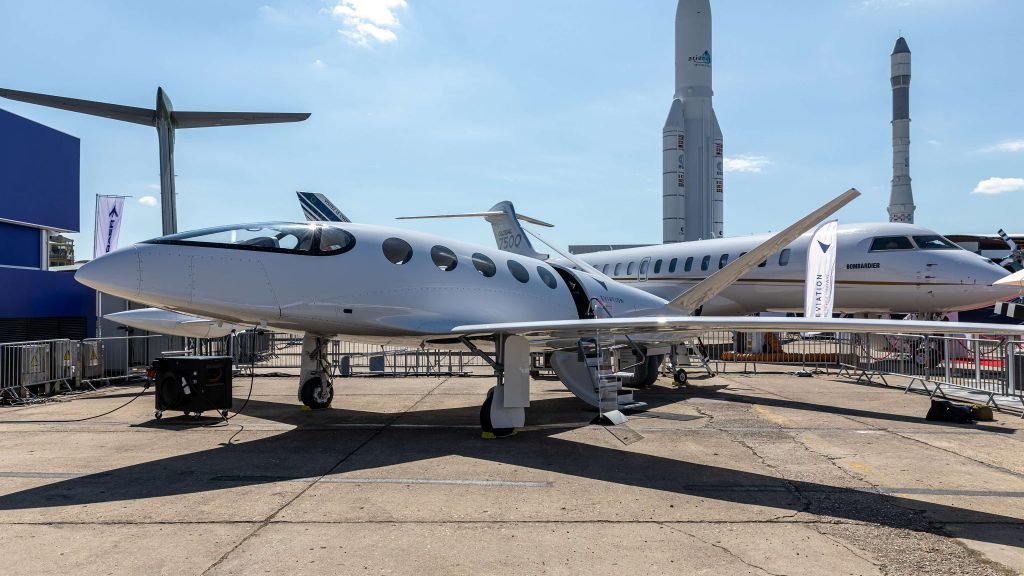
One aircraft, in particular, called Alice is a perfect example. It was built by Israeli startup Eviation, and it generated a lot of attention at the Paris Air Show. The nine-seat prototype electric aircraft provides a range of around 1,000 km and a cruise speed of 240 knots (445 km/h or 276 mph).
Cape Air, the largest independent regional airline in the US, has committed to buying an unspecified number of Alice planes. It believes these kinds of aircraft will play a significant role over the coming decade. The airline would also like to reduce its environmental footprint and sees these planes as being the way how. Eviation hopes its zero-emission plane can soon go to work servicing regional routes with Cape Air and many other companies as well.
Cape Air vice president of public relations, Trish Lorino, told New Atlas:
As the technology and innovation surrounding this development evolves, it’s fair to say that electric aircraft will be the norm by 2030, or would have provided the foundation for even further advancement in the industry.
For now, the integration of the plane into Cape Air’s fleet is at least four to five years down the road because Alice is yet to be tested or certified. Eviation said that the first test flights of Alice are due to begin in the US later this year.
However, Alice is not the only bird in the sky. Midway through last year, there were around 100 different electric aircraft programs in development around the globe. As of May this year that number has grown to 170 says consulting firm Roland Berger. It’s estimated that the number could hit 200 by the end of the year.
 Dr. Jake Whitehead, a transport scientist at the University of Queensland sees a future where these sort of aircraft will have an important role to play in how we get around. He envisions that “prior to 2030 we will see electric planes used on short-haul routes, primarily on lower frequency routes.”
The benefits of electric airplanes go beyond their obvious environmental impact. They would open up practical advantages too. Due to their lower fuel and maintenance costs (because of their simpler motors and drivetrain), they could make fares significantly cheaper. Furthermore, they could handle the shorter trips and thus improve the efficiency of major airports. Such light and low-cost aircraft could also go places that it never made sense for traditional planes to go, opening up new destinations and transport routes.
Whitehead said:
These planes will make it economically viable to fly to many regions where it is currently not feasible to fly fossil fuel planes, and so the greatest potential beneficiaries of this technology in the near term are regional and rural residents. This technology can improve the connectivity of our regions, and if strategically planned and accounted for by policy-makers, can complement other transport modes, such as high speed rail.
 Environmentally speaking, these electric aircraft could help supplant other, dirtier forms of travel. Nikhil Sachdeva, who leads the electric propulsion team at Roland Berger:
We have calculated that with a market-driven up-take of hybrid- and battery-electric aircraft, supported by effective improvements in air traffic control and airframe design, the share [of global carbon emissions] could be held down to 5%. Further, if there is strong regulatory support to incentivize the uptake of electric aircraft, the share could even be kept at around 2% by 2050, even as other industries get greener. So electric aircraft can be really impactful, but a lot has to occur before such a significant impact can be created.
Some countries have incorporated electric aviation into their green agenda. Norway and Sweden, for example, have committed to 100% electric short-haul flights by 2040. Also, industry giants such as EasyJet and Airbus are working on their own electric aircraft. EasyJet is developing a battery-powered plane with a 500-km (310-mi) range, while Airbus is planning to test its hybrid aircraft by 2022.
 Whitehead said:
There is a level of uncertainty about how quickly electric aircraft technology will be commercially rolled out, but certainly we should expect it to be widespread in the next 20-30 years, and form an important component of reducing global greenhouse gas emissions over that time period.


