
Fossil fuels and materials used to produce cement are missing radiocarbon. NOAA scientists working with researchers from the University of Colorado exploited this fact to forge a new way of tracking emissions. The method involves using ambient air samples and an isotope of carbon (used for decades to date archeological sites) to see how much radiocarbon is in the atmosphere.
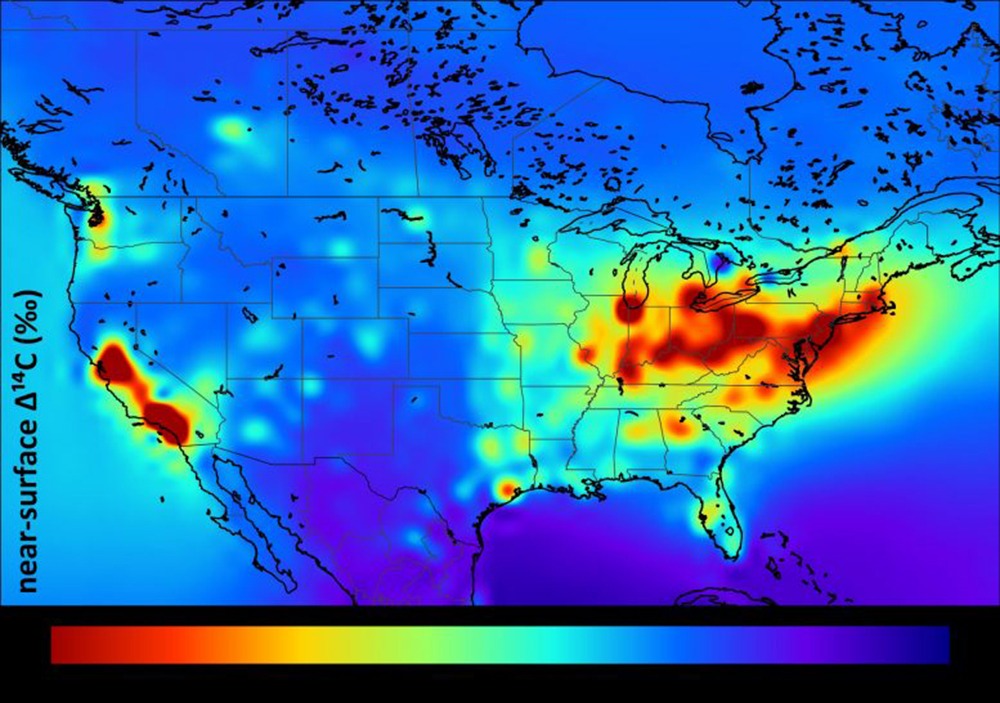
Wherever there are fossil fuel and cement production emissions, the region will appear as areas of low Δ14C in the radiocarbon field. These zones can then be traced back to sources at the surface to know the cause of emissions using atmospheric transport models. The study findings pave the way for a greenhouse gas information system that can help the world tackle the climate change problem.
Using this method, the scientists were able to produce the first-ever national scale estimate of fossil-fuel derived CO2 emissions. They observed the naturally occurring radioisotope (carbon-14, aka 14C) from air samples collected by NOAA’s Global Greenhouse Gas Reference Network.
The carbon in fossil fuels buried for millions of years is devoid of 14C because the isotope is created by cosmic rays and has a short life-span of 5,700 years. So, depending on how much 14C there is in the carbon sampled, the researchers knew what the emissions came form – be it a natural source or combustion from industry or vehicles.
Lead author Sourish Basu, who is now a scientist at NASA’s Goddard Space Flight Center in Maryland but was a CIRES scientist working at NOAA during the study, said:
This is a new, independent, and objective method for evaluating emission inventories that are based on what we actually observe in the atmosphere.
NOAA scientist John Miller and University of Colorado scientist Scott Lehman spearheaded this research over the past 15 years. Lehman said:
Carbon-14 allows us to pull back the veil and isolate CO2 emitted from fossil fuel combustion. It provides us with a tracer we can track to sources on the ground. We can then add these up and compare to other emissions estimates at various time and space scales.
There are two primary methods used by scientists to calculate emissions of CO2 from burning fossil fuels. The one used by the researchers in this study is called the top-down approach. It involves estimates based on measured changes in the concentrations of emitted gases in the atmosphere and wind patterns linking the surface source regions with the measurement locations.
Miller said:
Independent verification of annual and regional totals and multi-year trends using independent methods like this would promote confidence in the accuracy of emissions reporting and could help guide future emissions mitigation strategies.
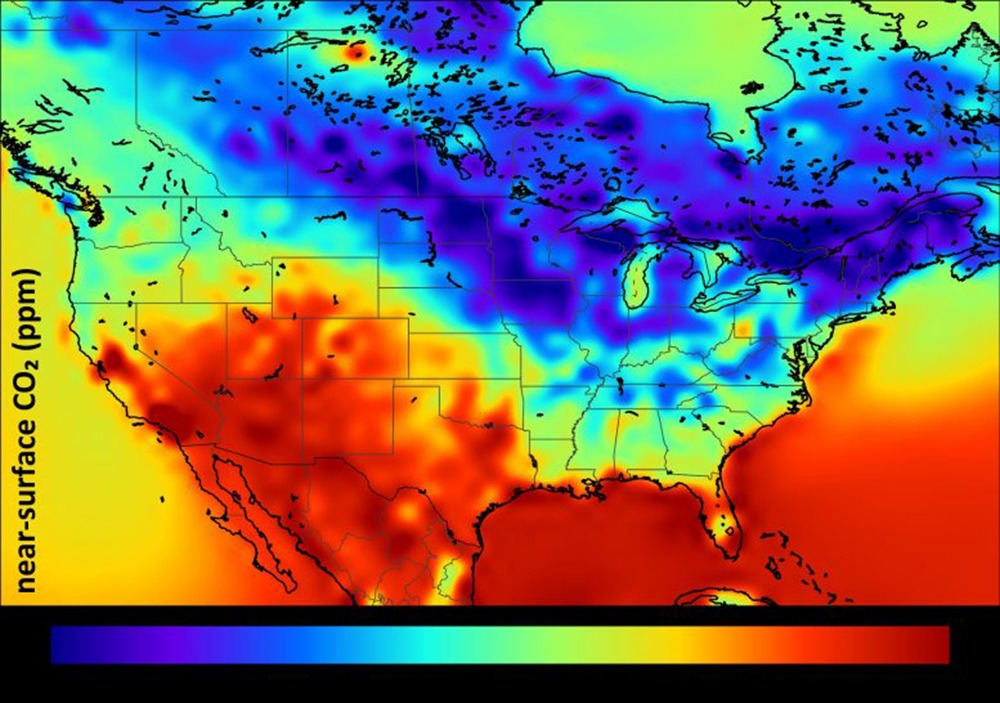
The team’s calculations for 2010 were similar to the emissions data produced by the NASA-funded Vulcan Project, which uses a multitude of data such as fuel statistics, local pollution reporting, and traffic activity. Now the 14C team is applying its method to find the measurements from subsequent years, which they will compare with current figures from the Vulcan Project and other sources.


