
The European Commission approved Ireland’s Renewable Electricity Support Scheme (RESS). Meaning, the country will be granted funding (EU state aid) for future renewable projects. The state intends to use the support to expand its wind and solar industries and move away from fossil fuels. The measure was sanctioned because it contributes to the EU environmental objectives.
Margrethe Vestager, the European Commission’s Executive Vice-President, who is in charge of competition policy, said:
This Renewable Electricity Support Scheme will contribute to Ireland’s transition to a low carbon and environmentally sustainable economy, in line with the European Green Deal and our State aid rules.
The RESS has an estimated budget of €7.2 billion (£6.5bn) to €12.5 billion (£11.3bn) that will be used to support green power production from renewable sources, including wind and solar photovoltaic farms. The Irish government introduced the scheme to help the country reach its national target of making clean sources 70% of its electricity by 2030.
Eamon Ryan, Minister for communications, climate action, and environment, said:
I am delighted to welcome this announcement today from the EU Commission. It endorses the government’s commitment to the Green Deal and launches a renewable energy revolution in Ireland.
The RESS will provide us with a platform for rapid deployment of onshore and offshore wind and solar projects at scale and at least cost, replacing fossil fuels on our energy grid. It also offers communities the opportunity to produce their own power and share in the ownership of Ireland’s energy revolution.
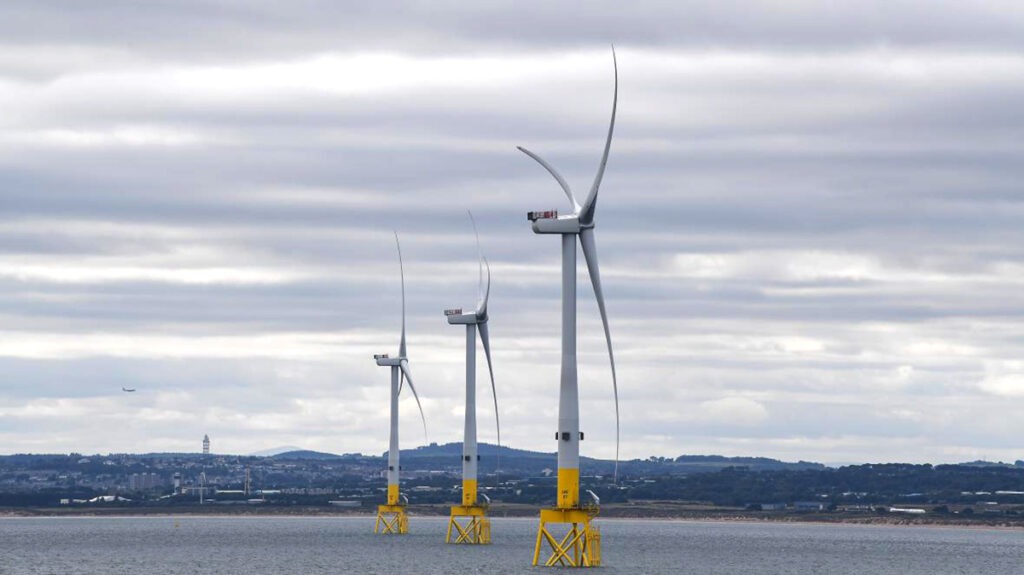
From now until 2025, aid granted under the RESS for the production of electricity from renewable sources will be allocated through auctions. At the auctions, all eligible technologies will compete for subsidies. The method should ensure that renewables remain cost-effective by encouraging competition. However, the country has justified preferential treatment for offshore wind and a small quantity of solar, based on the long-term potential of the technologies.
Ryan said:
To date, onshore wind energy has been the most cost-effective technology available to Ireland, however, to drive on and meet our renewable energy ambitions, other technologies such as solar and offshore wind will play a critical role in diversifying our renewable generation portfolio for the period out to 2030.
Applicants that succeed will receive support for 15 years by way of a premium on top of the market price. The ‘strike price’ will be set during the auction for the given grant. The way it works is as follows: When the market price is below this ‘strike price,’ beneficiaries will receive payments equal to the difference between the two prices; when it’s above, the consumers will receive the amount in the form of a discount on their electricity bills.
Ireland aims to achieve net-zero emissions by 2050 by starting now with a commitment to reduce annual emissions by 7% every year from 2021 to 2030. The RESS measure should help to achieve this.


