
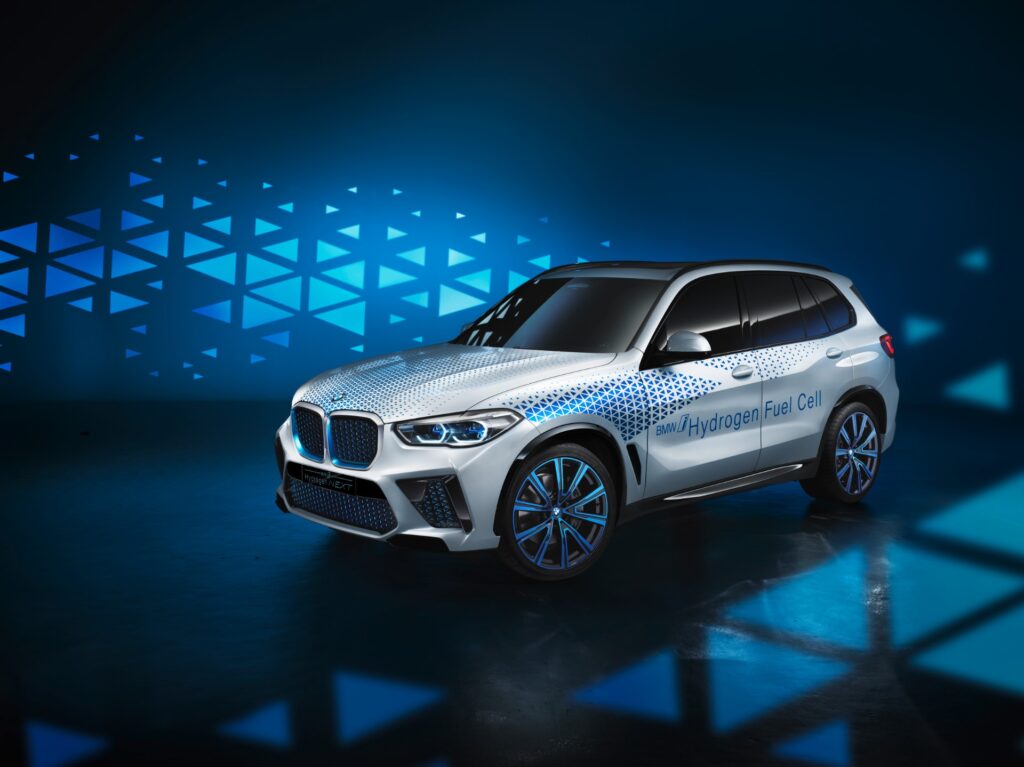
In 2022, there will be a BMW X5 SUV that runs on hydrogen fuel-cells on the market called the i Hydrogen NEXT. The German carmaker wants to make sure it has as many drive variants as possible for customers making the green transition. It also wants to have all its cards in play for whichever technology proves dominant. However, the new SUV will bet a limited production run with Toyota supplying the fuel cells.
Klaus Fröhlich, a member of the board of management of BMW AG, said:
We are convinced that various alternative powertrain systems will exist alongside one another in the future, as there is no single solution that addresses the full spectrum of customers’ mobility requirements worldwide. The hydrogen fuel cell technology could quite feasibly become the fourth pillar of our powertrain portfolio in the long term. The upper-end models in our extremely popular X family would make particularly suitable candidates here.

There is hope since hydrogen fuel cells provide long ranges and fast refueling – something that battery-powered vehicles can’t offer yet. However, there is the issue of infrastructure – it’s much more expensive to build fueling stations than it is to install charging ports.
BMW said in a statement when it unveiled the X5 prototype:
The requisite infrastructure, such as an extensive, Europe-wide network of hydrogen filling stations, is also lacking at present. However, the BMW Group is pressing ahead with its development work in the field of hydrogen fuel cell technology. The company is using the time until the infrastructure and sustainably produced hydrogen supply are in place to substantially reduce the cost of manufacturing the powertrain system.
Germany has taken an interest in aiding the growth of H2 technology. It recently presented a 7-billion-euro ($8.1 billion) plan to support its domestic hydrogen industry. The goal is to reach a production capacity of 5 gigawatts of green hydrogen by 2030, and 10 gigawatts by 2035.
At the moment, BMW makes combustion engine and battery-powered cars on one production line, which allows the company to react more flexibly to demand. In less than two years, the line will include hydrogen fuel cell cars too.
The company is one of a few automakers to be working with the technology in a model that’s not a heavy-duty vehicle (such as delivery trucks). BMW has been researching hydrogen fuel cell technology for over 40 years now and collaborating on it with Toyota since 2013.
The i Hydrogen NEXT will be available “in a small series” at first, followed by a full roll-out of the model in the second half of the decade.


