
Grimshaw and Concrete Valley are developing Modular Water Dwellings for areas at risk from rising sea levels. According to IPCC, sea levels could rise to 1.1 meters by 2100, primarily due to rising temperatures melting the ice caps and the expansion of seawater as it warms.
The floating houses would alleviate the risk of living in places that could be flooded and can also be adopted in urban areas where land prices and populations are too high. For example, they could be installed on waterfronts, turning them into floating villas or floating neighborhoods. Modular Water Dwellings would be cheaper to build than typical houses because it is prefabricated in factories and easy to make in large numbers; and therefore, it is cheaper to produce.
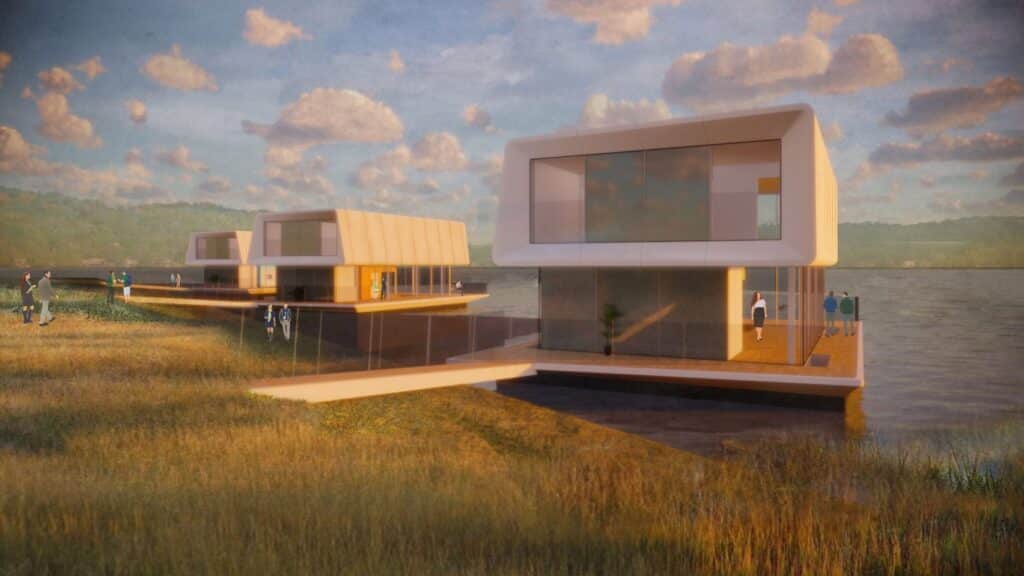
Jorrin ten Have, an associate principal at Grimshaw, explained:
In facing the realities of global transformations, be they climate change, increased urbanization, or reduced resources, it is critical that architects and designers respond to these concerns in a variety of ways. The Modular Water Dwellings offer an affordable, sustainable, and efficient alternative for safe and desirable housing.
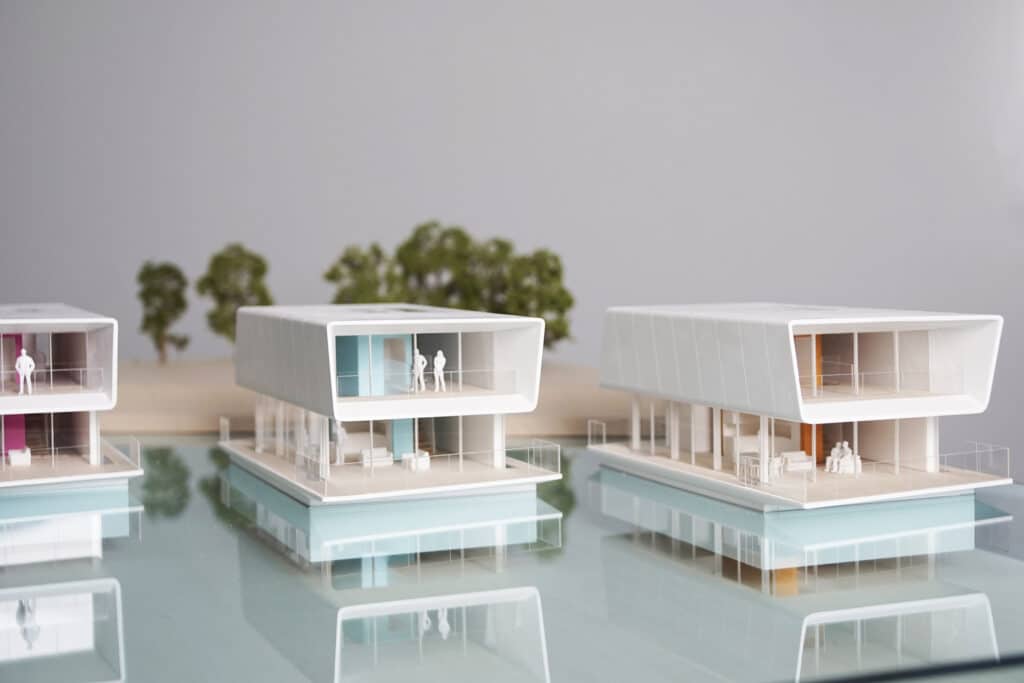
The lower deck sits on floating structures filled with air called ‘concrete pontoons.’ On the lower deck, there are walls and columns, topped with a concrete living pod. The materials used in making these homes include concrete and glass frames, which will last for decades. Different occupants could also customize the standard frame as they desire.
The upper deck shades the lower one because it sticks out more, and solar panels could be attached to the roof or exterior walls to power each floating home with its own electricity. The Modular Water Dwellings is currently in the prototype phase, but Grimshaw and Concrete Valley envision these floating homes worldwide, in flood zones or urban waterfronts.


