
After so many years of campaigning, Indiana Dunes National Lakeshore is officially the 61st national park in the United States.
“I am heartened that because of the support of our U.S. Senators, the entire Indiana Congressional delegation and numerous Northwest Indiana organizations, we have successfully titled the first National Park in our state,” said Democratic U.S. Rep. Pete Visclosky. “This action provides our shoreline with the recognition it deserves, and I hope further builds momentum to improve open and public access to all of our region’s environmental wonders.”
History

Indiana Dunes National Lakeshore was established in 1966. Efforts to establish it started back in 1899. Newspaper articles, popular scientific surveys, and political hearings were focused on making the dunes a protected and preserved space.
In 1916, the National Park Service (NPS) was established. The first NPS director, Stephen Mather, made a strong effort to make the dunes a national park. However, America became involved in two world wars and then came the Great depression so priorities shifted. “Save the Dunes!” became “Save the Country!”
Some years past and eventually Indiana established Sand Dunes State Park in 1926. The park was considerably smaller than a national park; it had only 8,330 acres of land and water. The site expanded from 1976 to 1992 leaving it with a total Of 15,000 acres of marshes, prairies, bogs, forest, and dunes.
From National Lakeshore to National Park
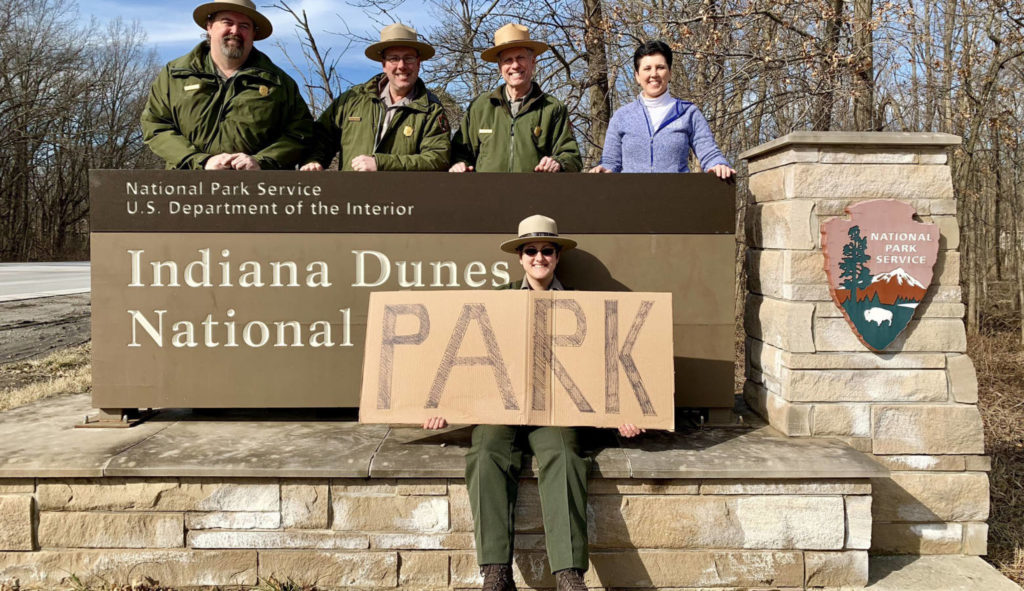 The shift to a national park may seem like a small change, but a lot of punch is packed into the word ‘park’. Funding and operations are not expected to change and the Indiana Dunes State Park will continue to be operated by the state.
People know what a national park is. More people will come to visit the dunes because they can check it off their list of national parks to visit. In 2018 the dunes attracted 3.6 million visitors. With the attendance combined with the State Park, Indiana Dunes National Park could be the seventh most visited national park in the whole country!
Location
 Getting to the park is easy, even if you are using public transit. The South Shore Line, which goes from downtown Chicago to South Bend International Airport, has a Dune Park stop on its route. Bicycles, which are allowed in the park, are also allowed on the trains but only from April to October.
You can get to the dunes from three different states in a matter of an hour’s drive,” said Amy Howell, the director of communications for Visit Indiana, the state’s tourism board.
Features
 There is so much to see at this national park, if you want to see it all, you must come back again or spend more than a few days exploring. From natural areas such as prairies, bogs, and marshes to heron rookery hardwood forests with hiking trails. There are 14 trail systems in the park that will take you through all of these areas. Camping and picnics are a must do in this park! (but don’t litter)
- For those who want to learn some history, while enjoying their nature, can visit Joseph Bailly homestead, farms, and cemetery. Bailly was a pioneer fur trader who established a trading post near what is now Porters, Indiana.
- You can visit the House of Tomorrow, a three-story steel framed house that has an airplane hangar on the first floor. It was built in 1933 as part of the worlds fair. The design of the house was constructed this way because it was assumed everyone would eventually have airplanes In the future.
- The preserve protects 15 miles of shoreline and 15,000 acres of land. Within these acres are 50 miles of hiking trails with equestrian and cross-country-ski routes.
- Kayaking and canoes are available if people want to enjoy paddling on the lake or inland on the Little Calumet River waterway.
- Sunsets are beautiful and relaxing from any one of the parks eight beaches. The eastern beaches are dog-friendly and have 66 campsites. You can find gas and convenience stores nearby.
Highlights
- In early March there is an annual Maple Sugar Time festival in the park that is free of charge. You can even tap some syrup sap all by yourself!
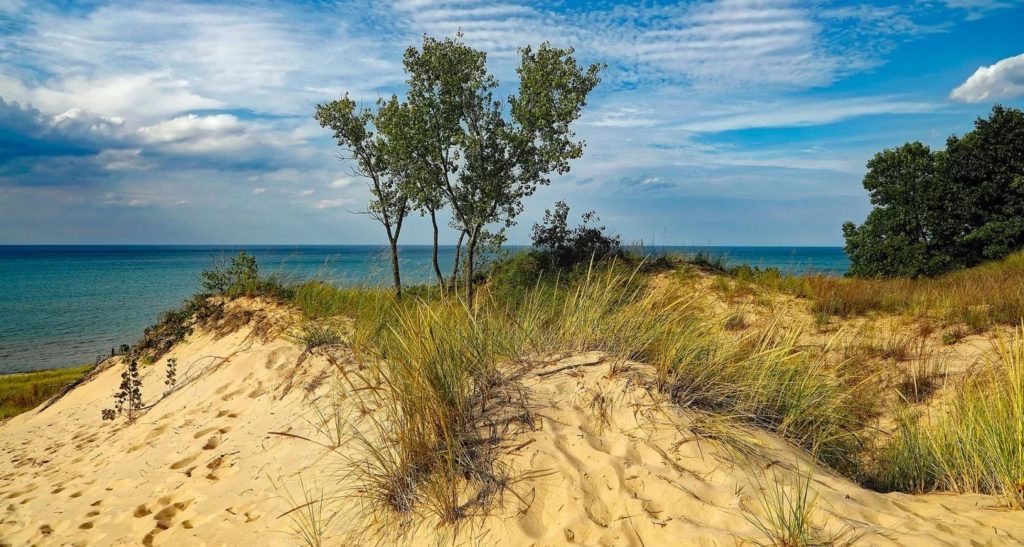
- The biggest sand dune in the park is Mount Baldy – a 126-foot-tall sand dune, located on the southern shore of Lake Michigan. It’s also known as a “living dune” because it moves or shifts about 4 feet every year. The beach that lay around Mount Baldy is open to the public and it’s a lovely place to have a picnic or read a book.
- For over 100 years the dunes and nature in the park have been natural field laboratories for scientific studies of ecology. The theory of ecological succession was formed from research conducted in the park.
- The park has 1,100 native plants. This makes it the fourth most diverse in plant life within the National Park System! The dunes soar high above water level and descend into pine forests filled with all sorts of bird species and endangered prairie. In the Great Marsh, you can find some sandhill cranes. But if you really want to see something unique, check out the oak savannahs. Amongst them, you will find mature black oaks with Midwestern wildflowers scattered around them.


