
A laser cutting machine is a sophisticated tool that uses focused laser beams to cut, engrave, or mark materials with exceptional precision. This technology has revolutionized various industries, including manufacturing, woodworking, textiles, and even jewelry making. The ability of laser cutters to create intricate designs and shapes with minimal material waste has made them indispensable in both professional settings and hobbyist workshops. As we delve deeper into the workings of laser cutters, we will explore their technology, applications, and advantages.
Understanding Laser Cutting Technology
A. What is Laser Cutting?
Laser cutting is a process that employs a high-powered laser beam to melt, burn, or vaporize material. This technique is favored for its accuracy and efficiency, allowing for clean cuts and detailed engravings. Unlike traditional cutting methods that may involve blades or saws, laser cutting provides a non-contact approach, which reduces the risk of material distortion and damage.
B. Types of Laser Cutters
There are several types of laser cutters available, each suited for different applications:
- CO2 Lasers: These lasers are commonly used for cutting non-metal materials such as wood, acrylic, leather, and paper. CO2 lasers are known for their versatility and are popular in both industrial and craft settings.
- Fiber Lasers: Ideal for cutting metals like steel, aluminum, and brass, fiber lasers utilize a solid-state laser source that offers high speed and efficiency. They are especially effective for thin to medium-thickness metals.
- Nd:YAG Lasers: Neodymium-doped Yttrium Aluminum Garnet (Nd:YAG) lasers are typically used for engraving and marking on various materials. They can also be employed in some cutting applications but are less common than CO2 and fiber lasers.

How a Laser Cutter Works
A. Components of a Laser Cutter
A laser cutter consists of several key components that work together to produce precise cuts:
- Power Supply: This component provides the necessary energy to generate the laser beam. It is crucial for determining the power output of the machine.
- Laser Resonator: The resonator is where the laser light is amplified before it exits through the cutting head. The type of resonator affects the quality and characteristics of the laser beam.
- Cutting Head: The cutting head focuses the laser beam onto the material’s surface. It often includes lenses or mirrors that help direct the beam accurately.
- Mechanical System: This system comprises motors and rails that move either the cutting head or the material itself during operation. This movement allows for intricate designs to be cut or engraved.
- Motion Control System: The motion control system coordinates all movements within the machine, ensuring that cuts are executed with precision according to the programmed design.
B. The Cutting Process
The cutting process begins when the laser cutter generates a concentrated beam of light that is directed toward the material being processed. As the beam strikes the surface, it generates intense heat that either melts or vaporizes the material. The specific interaction depends on factors such as material type, thickness, and laser power settings.
- Melting: For some materials, like metals, the heat from the laser melts the edges as it cuts through.
- Vaporizing: In cases like plastics or wood, the heat can cause rapid vaporization, resulting in clean cuts with minimal residue.
- Engraving: When engraving, the laser moves over the surface without penetrating entirely through it, creating detailed designs by removing only a thin layer of material.
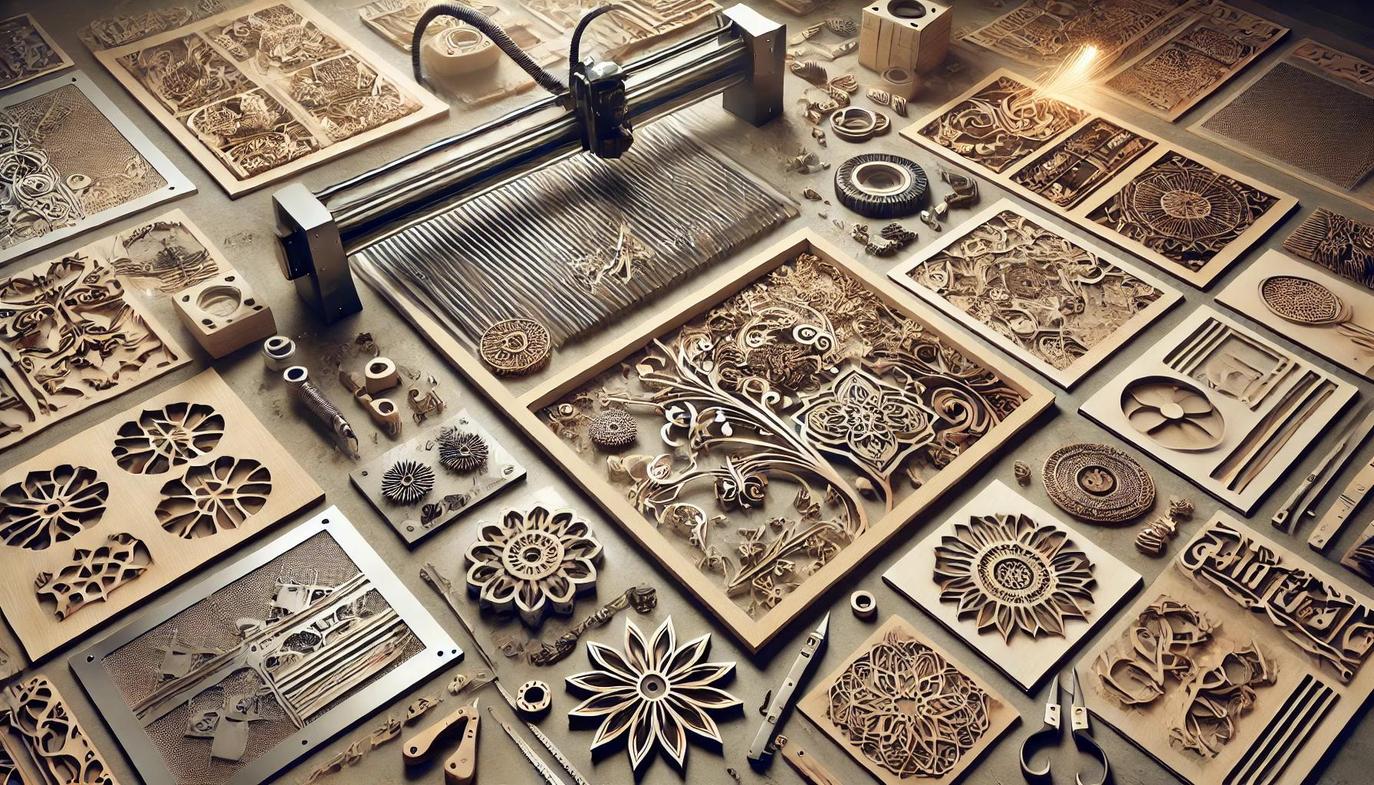
Applications of Laser Cutting
A. Materials Used
Laser cutters can work with an extensive range of materials:
- Metals: Including steel (mild and stainless), aluminum, brass, copper, and titanium.
- Non-Metals: Such as wood (hardwood and softwood), acrylic (PMMA), leather, textiles (cotton, felt), paper, glass (for engraving), and more.
B. Tasks Performed
Laser cutters are capable of performing various tasks:
- Cutting: Creating intricate shapes and parts for products ranging from signage to automotive components.
- Engraving: Adding detailed patterns or text on surfaces for decorative purposes or branding.
- Marking: Producing permanent marks on materials for identification or traceability without removing material.
Advantages of Laser Cutting
Laser cutting offers numerous benefits that contribute to its popularity:
- Precision: Laser cutters can achieve incredibly fine details with tight tolerances—often within 0.1 mm—making them ideal for intricate designs.
- Versatility: These machines can process a wide variety of materials across different thicknesses and densities without requiring significant adjustments.
- Efficiency: The narrow kerf width minimizes waste material while maximizing yield from raw sheets.
- Non-contact Process: Since there’s no physical contact with tools during cutting or engraving, there’s less risk of damaging delicate materials or altering their properties.
- Automation Capabilities: Many modern laser cutters can be integrated with computer-aided design (CAD) software for automated cutting processes, enhancing productivity in manufacturing environments.

Advanced Laser Cutting Tech and Top OMTech Solutions
Laser cutters represent a significant advancement in manufacturing technology by enabling users to execute detailed designs efficiently across various materials. Their precision and versatility have made them essential tools in numerous industries—from industrial manufacturing to artisanal crafting. For those considering investing in a laser cutter for personal or professional use, OMTech offers a range of laser cutting or engraving machines suitable for different needs. Their machines are known for their reliability and performance in both professional settings and hobbyist workshops alike. By understanding how laser cutters work and their applications, users can make informed decisions about which machine best fits their needs while exploring new creative possibilities in their projects.


