
In the world of shooting sports and tactical applications, every piece of equipment plays a critical role in performance and precision. One such tool that has been gaining significant attention is the low-power variable-optical scope, commonly known as the LPVO. But what exactly is an LPVO scope, and why is it becoming such a preferred choice for both professionals and hobbyists? LPVOs offer incredible versatility in a single optic by combining close-range and mid-range capabilities.
LPVOs are designed to be adaptable. They provide shooters with the ability to swiftly transition from a zero magnification view—ideal for close encounters—to higher magnification, which can allow for precision aiming at greater distances. This makes them a go-to choice for scenarios that range from tactical military operations to hunting excursions in diverse environments. In this article, we delve deeper into the world of LPVO scopes to explore their benefits, limitations, market trends, and potential future applications.

Understanding LPVO Scope Technology
What is an LPVO?
Low Power Variable Optics, or LPVOs, are a type of rifle scope that combines the simplicity of a red dot sight with the precision of a magnified optic. The essential feature of an LPVO is its range of magnification, typically starting from a true 1x, which allows the user to view targets as if with the naked eye, and extending up to about 10x for long-distance shots. This flexibility means an LPVO can be your go-to tool whether you’re safeguarding your home or hunting in dense forests where both quick reflexes and long sightlines are necessary.
The unique selling point of LPVOs lies in their variable magnification setting. Unlike fixed power scopes, an LPVO scope allows you to quickly adjust your magnification level to meet the demands of the current shooting scenario, offering you a blend of speed and precision unparalleled by other optics. This makes them ideal for users who need flexibility without switching between multiple optics.
Operational Dynamics
Operating an LPVO is fairly straightforward but does require some understanding of its mechanics. The scope features a “throw lever” or a simple adjustment knob that enables the quick transition between different levels of magnification. This dynamic adjustment capability is particularly useful in situations that involve moving targets or varying distances—something that traditional fixed scopes cannot easily accommodate.
One point to consider is the parallax reduction feature in LPVOs, which helps maintain the reticle’s stability as the shooter’s head moves, thus improving accuracy. Understanding how to manipulate these settings can significantly enhance a shooter’s effectiveness, reducing the need for physical repositioning and allowing for a seamless transition from a broad overview field to a targeted, precise shot.
By understanding these basic features and functionalities, one can appreciate why LPVOs are becoming a common sight in both personal and professional arsenals, providing unparalleled flexibility and control in highly diverse situations. As we further delve into their advantages and potential use cases, it’s clear that these optics are carving out a significant role in modern shooting practices.

Advantages of LPVO Scopes
When it comes to choosing the right optic for your needs, LPVOs—or Low Power Variable Optics—offer a unique blend of features that make them a popular choice among hunters, sport shooters, and tactical professionals. Their adaptability to a wide range of shooting scenarios sets them apart from other scopes, making them a versatile addition to any shooter’s toolkit.
Versatility and Range
One of the standout features of an LPVO scope is its versatility. An LPVO allows you to engage targets at varying distances with ease. The ability to switch from a low magnification setting, perfect for quick, short-range engagements, to higher magnifications (up to 10x) enables users to handle both close-quarters situations and longer-range shots without switching equipment. This capability makes LPVOs especially valuable for tactical operations and dynamic hunting expeditions where the environment can change rapidly.
Speed and Precision Balance
LPVO scopes strike an ideal balance between speed and precision. At 1x magnification, they function much like a red dot sight, providing quick target acquisition essential for high-paced scenarios. When you need to focus on more distant targets, simply dial up the magnification for a clearer, more detailed view that aids precision shooting. Balance makes LPVOs an attractive option for those who want both rapid response capabilities and accuracy.
Adaptability Across Environments
Another compelling advantage of LPVOs is their adaptability across multiple environments. Whether you’re navigating dense woodlands or open plains, the scope’s ability to adapt its magnification ensures that you’re always prepared. This makes LPVOs a preferred choice for hunters who may find game across diverse habitats and need equipment that adjusts to shifting environments seamlessly. Their robust construction also means they can withstand varied weather conditions, ensuring reliability wherever you might find yourself.
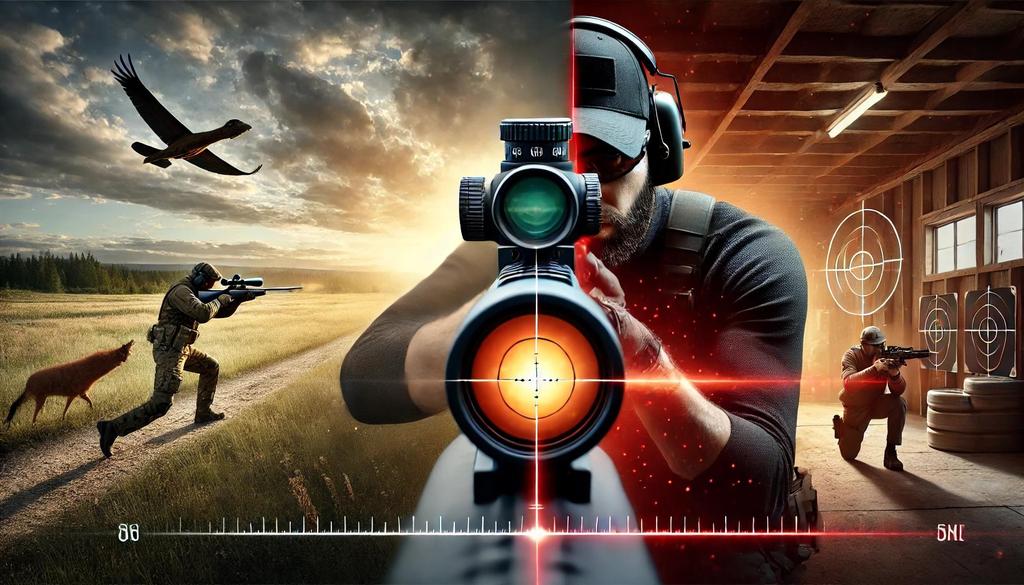
LPVO vs. Red Dot Scopes: A Comparative Discussion
While LPVOs boast numerous benefits, they are not without challenges and limitations. Before making an investment, consider these factors to make a fully informed decision.
LPVO Cost and Accessibility
LPVOs tend to come with a higher price tag compared to traditional scopes, which can be a barrier for some users. The advanced technology and versatile capabilities justify the expense, but it’s essential to ensure that the investment aligns with your specific needs and shooting style. Although casual use may not justify the investment, hunting enthusiasts and tactical professionals recognize the cost as a trade-off for performance and flexibility.
Physical and Technical Limitations
While LPVO scopes are lighter than traditional long-range scopes, they are bulkier compared to simpler red dot sights. This can affect maneuverability, especially in fast-paced environments where weight and size play critical roles. Additionally, LPVOs require precise eye relief, which might be less forgiving than other sighting systems, necessitating practice and adjustment to master fully.
Battery dependency for illuminated reticles poses another challenge. Ensuring that you have backups or alternative options can mitigate the risk of battery failure in critical moments, a pragmatic step for any field operator.
Red Dot Overview
Red dot sights are renowned for their simplicity and speed. They provide a clear, unobstructed view with a single reticle point for aiming, making them ideal for close-quarters combat and rapid target acquisition. This immediate target alignment capability caters well to dynamic shooting environments and competition settings where speed is crucial.
Key Comparisons
While red dots lead in speed and simplicity, LPVO scopes offer superior versatility. The capability to adjust magnification from 1x up to 10x allows for engaging targets at varying distances without changing optics. This makes LPVOs a hybrid solution for users requiring multifaceted uses—transitioning smoothly from fast-paced action to calculated, long-range shots.
Red dots, however, offer a weight advantage—often more compact and lighter than LPVOs. This makes them easier to handle in swift maneuvers, which might be a deciding factor for those operating mainly in close-proximity environments.
Ultimately, the choice between an LPVO and a red dot boils down to the specific needs and priorities of the shooter. Whether you prioritize the rapid engagement of targets typical of red dots or require the variable magnification power of an LPVO scope for broader use cases, understanding each option’s unique benefits will guide you in equipping yourself, ready for any scenario.

Power of LPVO Scopes: Redefining Shooting Optics and Market Dynamics
In recent years, the landscape of shooting optics has undergone significant transformations, with the LPVO scope leading the charge in both societal and economic terms. These scopes have not only changed how professionals and hobbyists approach shooting but have also sparked shifts in the market dynamics of the optics industry.
Influence on Shooting and Hunting Practices
LPVOs have revolutionized traditional shooting and hunting methodologies by providing a versatile tool capable of handling diverse environments and applications. These optics have gained popularity for their ability to adapt to different terrains, offering hunters the flexibility to pursue various game without needing to switch between different sight systems. This flexibility aligns with the modern shooter’s need for a “do-it-all” optic that can manage both close proximity targets and those at extended distances, enhancing the overall shooting experience.
Market Trends and Economic Impact
Economically, LPVO scopes have impacted the optics market by pushing innovation and competition among manufacturers. Companies have often responded to the growing demand by developing new models with enhanced features, such as improved lens quality and advanced reticle technology. This surge in innovation has fueled economic growth within the industry as manufacturers strive to outshine competitors and capture a larger market share. Promotions and sales events, like Black Friday, have become crucial periods where companies like Gunnr maximize consumer interest by offering bundled deals, ultimately driving sales and increasing customer engagement.
Future-Ready with Cutting-Edge LPVO Modern Optics
As technology continues to evolve, so too does the potential for next-generation LPVO scopes. The future promises exciting advancements that could redefine the role these optics play in both professional and civilian applications.
Technological Innovations
Recent advancements have seen LPVOs become more refined, with improvements in optical clarity, weight reduction, and reticle technology. Companies have introduced innovations like illuminated reticles and anti-reflective coatings to improve performance in low-light conditions, thereby enhancing the versatility of these scopes. Companies are likely to continue this technological momentum by integrating features like digital enhancements and augmented reality overlays, which could provide real-time data and targeting assistance to the user.
Potential Future Applications
Looking ahead, LPVO scopes could see expanded use beyond traditional realms, entering areas like law enforcement training, military operations, and specialized fields requiring precision optics. Coupling this with the advancements in digital integration could make LPVOs indispensable tools for a variety of users, broadening their utility and application in the field.

Why LPVO Scopes are the Future: Dominating the Optics Industry with Versatility and Innovation
LPVO scopes are carving out a prominent place in the optics world, thanks to their remarkable versatility and adaptability to multiple shooting scenarios. Understanding their societal and economic significance provides insight into why these tools are gaining traction across various user groups—from hunters seeking flexibility to professionals demanding precision.
As the future unfolds, the integration of advanced technologies promises to further enhance the capabilities of LPVOs, solidifying their role as essential components of modern shooting systems. Companies will undoubtedly continue to contribute to this growth and innovation, ensuring that LPVOs remain frontrunners in the evolution of shooting optics.
Whether you’re a seasoned shooter or new to the world of optics, staying updated on these developments will equip you with the best tools to enhance your shooting experience and maximize your success in all your endeavors.


