
Bertolt Meyer, a DJ and professor of psychology at the Chemnitz University of Technology, was born without a lower left arm. Still, it hasn’t stopped him from learning a musical instrument. He even turned his prosthetic arm into a musical superpower by adapting it to allow him to control synthesizers with his mind!
Meyer became frustrated by how difficult it was to tweak the small dials on his synthesizers with his prosthetic arm – a high tech device called i-LIMB that can turn electrical signals from his muscles into wrist and finger movements through thought alone. However, he did not become discouraged. On the contrary, it inspired him to come up with a way to hack the device so that he could control the audio equipment better.
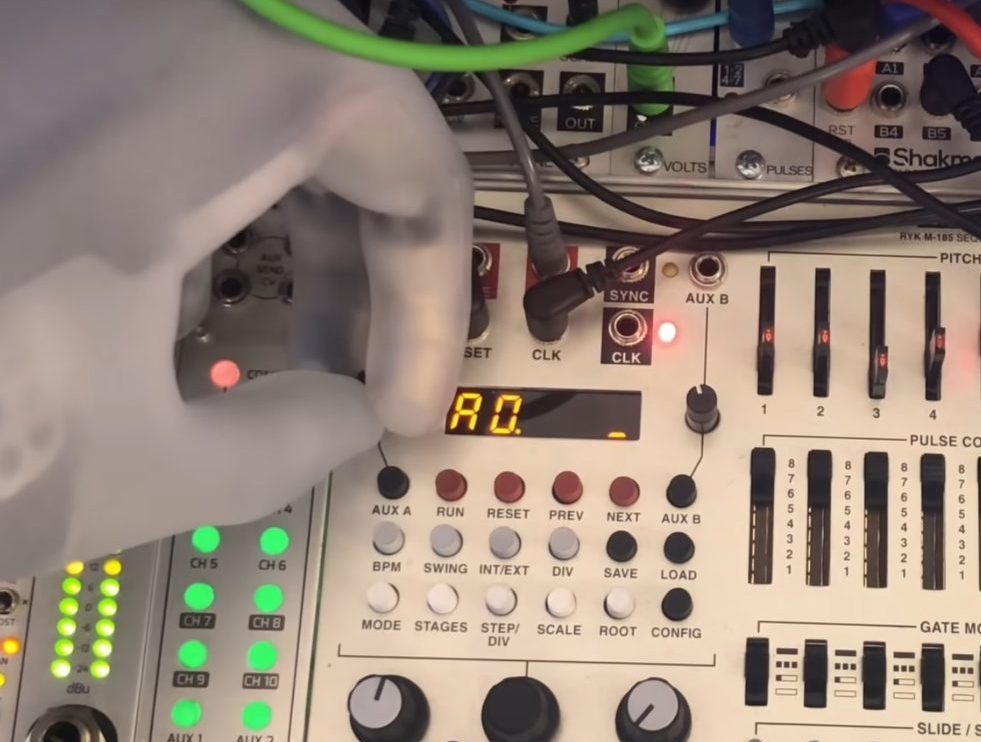
Meyer shared in a YouTube video (featured below):
As useful as this hand is, it is really difficult to control the synthesizer with it. All the tiny nobs you need to tweak, and you need to tweak them fast with precision, and it is really difficult to do that with a prosthesis like this.
Meyer told Metro:
The prosthesis picks up signals from picks up signals from the surface of my arm to control the hand, which I use to control the synths. I thought: this is a bit of a stupid detour, can’t I just plug the signal from my arm directly into the synth, without having to convert it into physical motion?
With the help of the engineers at musical equipment studio KOMA Elektronik, he developed a custom circuit board that could be attached in place of the mechanical hand, which gathers signals from his muscles to control the synthesizer. The SynLimb, as he calls it, essentially translates his neural signals into instructions for electronic instruments. The circuit they designed can generate multiple control voltage channels so he can plug into more than one CV jack on his Eurorack modular synths.

Meyer said:
The SynLimb thus allows me to plug my prosthesis directly into my synthesizer so that I can control its parameters with the signals from my body that normally control the hand. For me, this feels like controlling the synth with my thoughts.
[Using the device] feels just like moving your fingers – you know how to do it, it’s effortless, but you can’t explain it. I’ve been wearing a prosthesis that works like this for more than ten years every day, morning to evening, so for me, it’s second nature.
Meyers says his invention is still a work in progress, and there are more iterations to come until it is finished, but he envisions playing music with only the device, not his main prosthesis. He is also planning to release the design as an open-source product online so that the few others like him living with partial limbs can have fun playing electronic music.
And here’s some of his music:


