
Effective staffing is crucial in healthcare, especially in nursing, where the adequacy and expertise of the staff directly impact patient outcomes. Optimal nursing staffing strategies ensure that there are enough qualified nurses to handle the varying degrees of patient needs at any given time. This balance is essential not only for maintaining high standards of patient care but also for minimizing the stress on nurses, which can lead to burnout and turnover. Hospitals can improve patient and staff satisfaction by aligning staff levels closely with patient needs.
Strategic Approaches to Staffing in Healthcare
Balancing Full-Time, Part-Time, and Per Diem Nurses
A strategic mix of full-time, part-time, and per diem nurse positions is essential for managing staffing levels effectively. Full-time nurses provide stability and continuity of care, while part-time and per diem nurses offer flexibility to adjust to varying patient loads. This balance ensures that healthcare facilities can maintain optimal staffing without incurring unnecessary labor costs during quieter periods. These can be attractive to nurses seeking flexible schedules, helping to retain staff who might otherwise leave the profession due to rigid scheduling.
Utilizing Contract RNs and Nurse Practitioners
RN contract jobs and nurse practitioner contract jobs are integral to staffing strategies, particularly in areas with seasonal population fluctuations or where there are gaps in specialized care. These roles attract highly skilled nurses who may prefer short-term engagements, allowing healthcare facilities to maintain high levels of expertise without long-term commitments. Utilizing contract professionals can also help manage budget constraints while ensuring that patient care standards are upheld during peak times or in specialized units.
Leveraging Temporary Nursing Jobs
These positions are crucial for maintaining a fluid workforce capable of handling unexpected demands, such as during flu seasons or public health emergencies. Temporary roles can also be a testing ground for future full-time employees, offering a pathway for both the employer and the nurse to evaluate fit before a longer-term commitment is made.
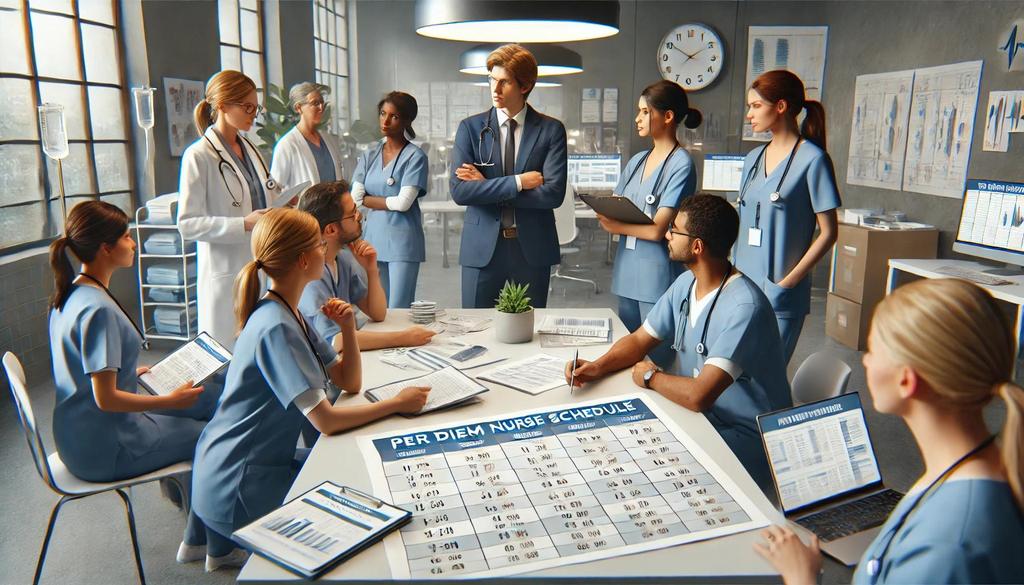
Creating an Effective Per Diem Nurse Schedule
Aligning Facility Needs
Creating schedules that align the needs of healthcare facilities with the preferences of per diem nurses is crucial for operational efficiency and staff satisfaction. This alignment involves understanding the personal and professional commitments of per diem staff and integrating them into the scheduling process to ensure that shifts are covered by nurses who are not only qualified but also motivated. This approach reduces conflicts and no-shows, ensuring consistent patient care and reducing the administrative burden of last-minute staffing changes.
Reducing Burnout
Balanced scheduling is key to reducing burnout among nurses, particularly those working on a per diem basis. Here’s how effective scheduling can contribute to lower burnout rates:
- Predictable Shift Planning: Offering per diem nurses predictable shifts where possible allows them to plan their personal and professional lives better, reducing stress and increasing job satisfaction.
- Limiting Consecutive Shifts: Avoiding the assignment of multiple consecutive shifts can help per diem nurses maintain a healthy work-life balance, reducing the physical and mental exhaustion associated with prolonged work periods.
- Flexible Shift Swaps: Implementing a system that allows for easy shift swaps can empower nurses to manage their schedules more effectively, giving them control over their work hours and reducing burnout.
Effective scheduling practices are essential, not only for operational efficiency but also for the well-being of the staff. By considering individual preferences and life circumstances, healthcare facilities can create a supportive environment.
Adapting Schedules
Seasonal fluctuations and unpredictable demands, such as those seen during flu seasons or local events that increase population density, require adaptive scheduling strategies. This might include preemptively increasing the number of per diem nurses on call or adjusting shifts to accommodate anticipated changes in patient volume. Proactive scheduling ensures that the facility remains well-prepared for any situation, maintaining a seamless flow of operations and patient care.

Leveraging Technology and Data in Staffing Management
Using Predictive Tools
These tools are essential in forecasting staffing needs, allowing healthcare facilities to prepare for future demands effectively. These tools analyze historical data and current trends to predict patient influx, helping managers make informed decisions about staffing levels. Facilities can avoid understaffing or overstaffing by anticipating peak times and making proactive adjustments to their staffing levels.
Implementing Staffing Software Solutions
Implementing effective staffing software solutions involves several critical steps that can significantly enhance scheduling efficiency and accuracy:
- Selection of Appropriate Software: Choose a software that fits the specific needs of your facility, considering factors like ease of use, integration capabilities, and support services.
- Customization and Integration: Customize the software to accommodate your facility’s specific scheduling rules, pay rates, and union requirements. Ensure it integrates seamlessly with other systems, such as HR and payroll.
- Training and Support: Provide comprehensive training for all users to ensure they are proficient in using the new system. Establish a support system to help with any issues that arise during use.
Staffing software solutions streamline the scheduling process, reducing the administrative burden and increasing accuracy. These systems often feature automation tools that can allocate shifts based on predetermined rules, such as seniority, skills, or staff preferences, making the process fairer and more transparent.

Addressing Staffing Challenges in Specialized Environments
Nursing Homes and Long-Term Care
Because residents in nursing homes and long-term care facilities require significant and ongoing care, staffing in these facilities demands a different strategy. Challenges such as high turnover rates and the need for specialized skills can complicate staffing. Effective management in these environments involves not only recruiting staff with the right qualifications but also providing ongoing training and support to ensure they can meet the specific needs of long-term care patients.
Travel Nursing Jobs
Nursing home travel nurse jobs require a strategic approach to ensure that travel nurses are effectively integrated into existing teams. These positions often fill critical gaps in staffing, particularly in geographically isolated areas or in specialties where there is a shortage of skilled local nurses. Effective strategies include clear communication of job expectations, supportive onboarding processes, and ensuring that travel nurses are included in team dynamics and decision-making processes, thereby fostering a collaborative work environment.
Specialized Care Needs
Flexible staffing solutions are essential in environments where patient care needs are highly specialized, such as in oncology, pediatrics, or emergency care units. Utilizing a combination of full-time, part-time, and per diem nurse schedules, along with contract positions, allows these units to scale staff up or down based on real-time needs. This flexibility helps in managing patient surges effectively while also catering to the complex care regimens that specialized treatments often require. Facilities must focus on creating a versatile staffing model that can quickly adapt to changing conditions without compromising the quality of care.

Continuous Evaluation and Adaptation of Staffing Strategies
Incorporating Feedback
Staff members are on the front lines and can provide valuable insights into the practical aspects of day-to-day operations and patient care challenges. Actively soliciting and integrating their feedback fosters a collaborative culture and can lead to more effective and efficient staffing solutions. Better patient care is a result of this strategy’s assistance in pinpointing problems, streamlining processes, and raising employee engagement and morale.
Future Trends
Nurse leadership best practices are likely to be influenced by several trends, including increased use of technology and a focus on preventive health and outpatient care. Understanding and anticipating these trends can help healthcare leaders develop more proactive and innovative staffing strategies. Embracing these changes will require ongoing staff education and investments in new technologies and processes that facilitate more effective staffing and better patient outcomes.
Impact of Effective Healthcare Management on Nursing and Patient Care
The long-term benefits of effective healthcare management for nurses extend beyond immediate patient care. They include improved job satisfaction among nurses, lower turnover rates, and enhanced reputation for healthcare facilities. Effective staffing strategies lead to a more motivated and committed nursing team, which in turn contributes to higher levels of patient satisfaction and overall healthcare quality. By ensuring a stable and responsive staffing system, facilities can better manage financial resources, reducing wasted expenditure on overtime and temporary staff while maximizing the use of their workforce.


