
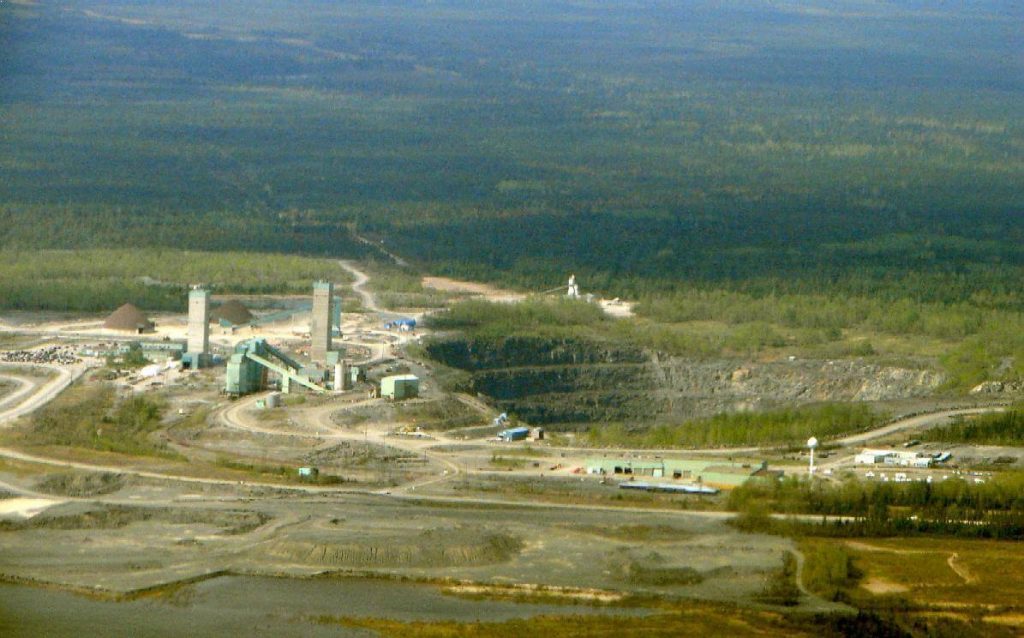
Imagine that! When scientists thought it impossible for life to thrive in the depths of the earth’s crust where it’s too hot, too dark, and where there are too few nutrients to sustain living things, microorganisms have surpassed their expectations. There is now evidence that microbial life exists 2.4 kilometers (1.5 miles) below the surface in a Canadian mine in Ontario.
What’s most fascinating about this mine, Kidd Creek Mine, is that it’s home to some of the oldest-known water on the planet. In fact, previous studies revealed that the water has been trapped below the surface in the creek’s precambrian rock for millions, perhaps, billions of years!
Scientists believe that it’s the presence of sulfates in the ancient underground water that’s keeping these microorganisms alive. So basically, the microscopic life forms are breathing the sulfates to survive, rather than depending on oxygen.
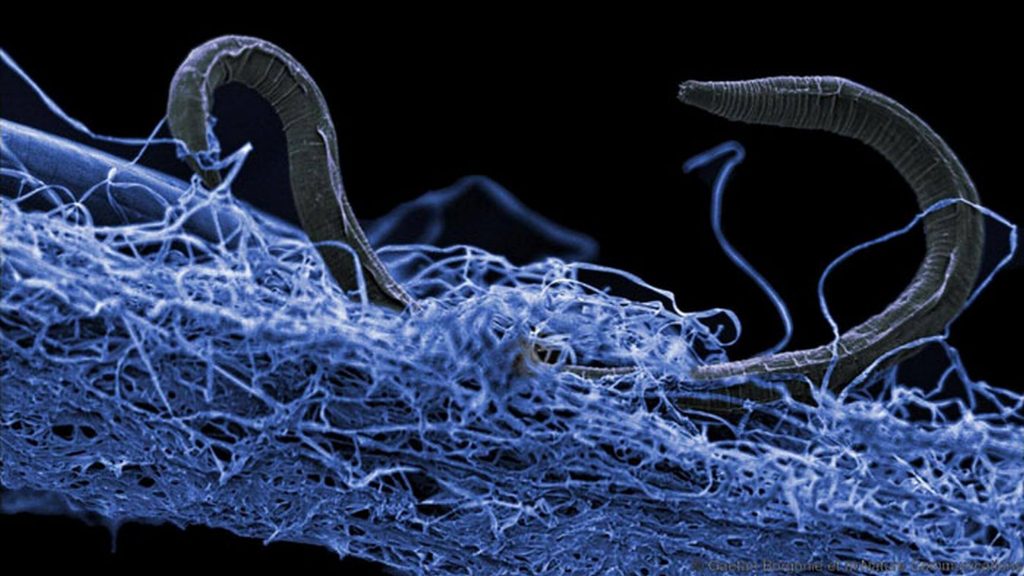
In a recent study published in the Geomicrobiology Journal, researchers from University of Toronto, Canada, tell about how they discovered the existence of the microorganisms which were untouched by water or land from the surface. They found the microbial cells among the sediments in samples collected via two boreholes, which naturally discharge fracture water. Their findings add to the collection of evidence that there is a subsurface biosphere within the Earth’s crust (which is an area previously thought to be hostile to life).
The researchers wrote:
Even in the modern scientific era, the planet’s biosphere was thought of as a thin veneer on or near the surface of the planet, with life primarily dependent on photosynthesis to thrive.
That hypothesis has obviously been changing, with all of the evidence that keeps piling up. For example, in December 2018, a ten year-long project exposed a deep biosphere that had billions of microbes living miles below the subsurface. In fact, they estimated around 70% of all microorganisms that live on Earth exist underground. It’s actually believed that as a collective these microbes produce 15 – 23 billion tons of carbon, which is 245 – 385 times greater than the carbon mass of humans from above the surface.
The scientists described this phenomenon as a “subterranean Galapagos,” consisting of bacteria, archaea (microbes without a membrane-bound nucleus), and eukarya (microbes and multi-cellular organisms with a nucleus and membrane-bound organelles). Although, unlike the surface-dwelling microbes, these live on near-geologic timescales. While some subsist on nothing else than energy from rocks.
The diversity of these microorganisms is extremely understudied and needs far more exploration. But, as for those microbes that reside in Kidd Creek Mine, the researchers added food sources to incubated cells taken from the samples to analyze their metabolic activity by measuring how quickly they metabolized the certain food types. The results revealed that the microbes were almost all sulfate reducers. Which means, the microorganisms perform anaerobic respiration that uses sulfate, reducing the substance to hydrogen sulfide (H2S).
The authors of the study wrote:
The identification of sulfate-reducing organisms in these fluids, both in the geologic past and in the present day (this study) is an important finding extending our understanding of the deep subsurface biosphere. Understanding when these fracture fluids were colonized by life remains an outstanding question but can begin to be constrained by application of a variety of groundwater dating approaches.
While microbial ecosystems living deep inside mines might not have much of an impact on the subsurface of earth, it expands our understanding of life and how it’s capable of surviving in the harshest of environments. The researchers hope that the findings can help them understand Earth’s deep biosphere better, while understanding what kind of life forms may possibly exist on Mars or anywhere else in the solar system for that matter.
If you are interested in life forms that survive in the harshest of environments, check out the tardigrade. I wouldn’t be surprised if one day a scientist finds one if these ‘water bears’ deep in the Earth’s crust too!


