
For many Managed Service Providers (MSPs), marketing is a significant challenge. Reaching the right audience with a compelling message is overwhelming when customer needs constantly change, causing generic strategies to fall flat.
AI tools resolve this difficulty by analyzing vast amounts of data faster than any human ever could, helping MSPs understand customer behavior, anticipate trends, and customize marketing that connects on a personal level. This article demonstrates how AI enables meaningful personalization at scale for MSPs without compromising the human touch, ensuring every customer interaction matters.

How Can AI Improve Customer Segmentation for MSPs?
AI processes customer data at a faster and more precise rate compared to manual methods. It assesses behavior, demographics, and purchase history to categorize customers into specific segments. These findings help MSPs target the appropriate audience with greater accuracy.
It also adjusts to changes promptly. For instance, if a client’s requirements evolve, AI swiftly assigns them to updated categories. Adaptability enables MSPs to maintain relevance while conserving time on administrative duties, which is a principle that extends directly into using predictive analytics for lead scoring.
What Is Predictive Analytics, and How Does It Help With Lead Scoring?
AI combines customer segmentation with predictive analytics to create a deeper understanding of buyer behavior. Predictive analytics forecasts future actions by examining historical data patterns. It identifies which leads are more likely to convert based on thorough analysis, such as purchase history or browsing habits. AI technology then ranks these leads through intelligent scoring systems. This simplifies the decision-making process, helping MSPs allocate their resources more efficiently.
Data-driven predictions allow businesses to focus time and energy on high-priority prospects. This method minimizes guesswork and provides clear insights into potential conversions. Real-world MSP growth stories by Jumpfactor highlight how predictive, data-driven approaches turn qualified leads into long-term clients.
A Practical Lead Scoring Example
For example, an MSP can determine if a lead searching frequently for “managed IT services” is ready to buy soon or is still gathering information. By pinpointing key behaviors early, companies save time, reduce marketing costs, and enhance client acquisition rates.
How Can AI Customize Marketing Content Dynamically?
Predictive analytics doesn’t just score leads; it provides insights for real-time content creation. AI adjusts messages to match individual preferences instantly. It examines user data like search history, demographics, and past interactions.
AI-driven systems modify marketing materials mid-campaign. A prospect viewing IT security topics receives targeted ads for cybersecurity services. Others browsing cloud solutions get offers specifically customized to that theme. With more businesses adapting to a 27% remote workforce, these dynamic adjustments ensure your campaigns stay relevant to shifting workplace realities. AI ensures relevance at every step by focusing on each customer’s immediate priorities.
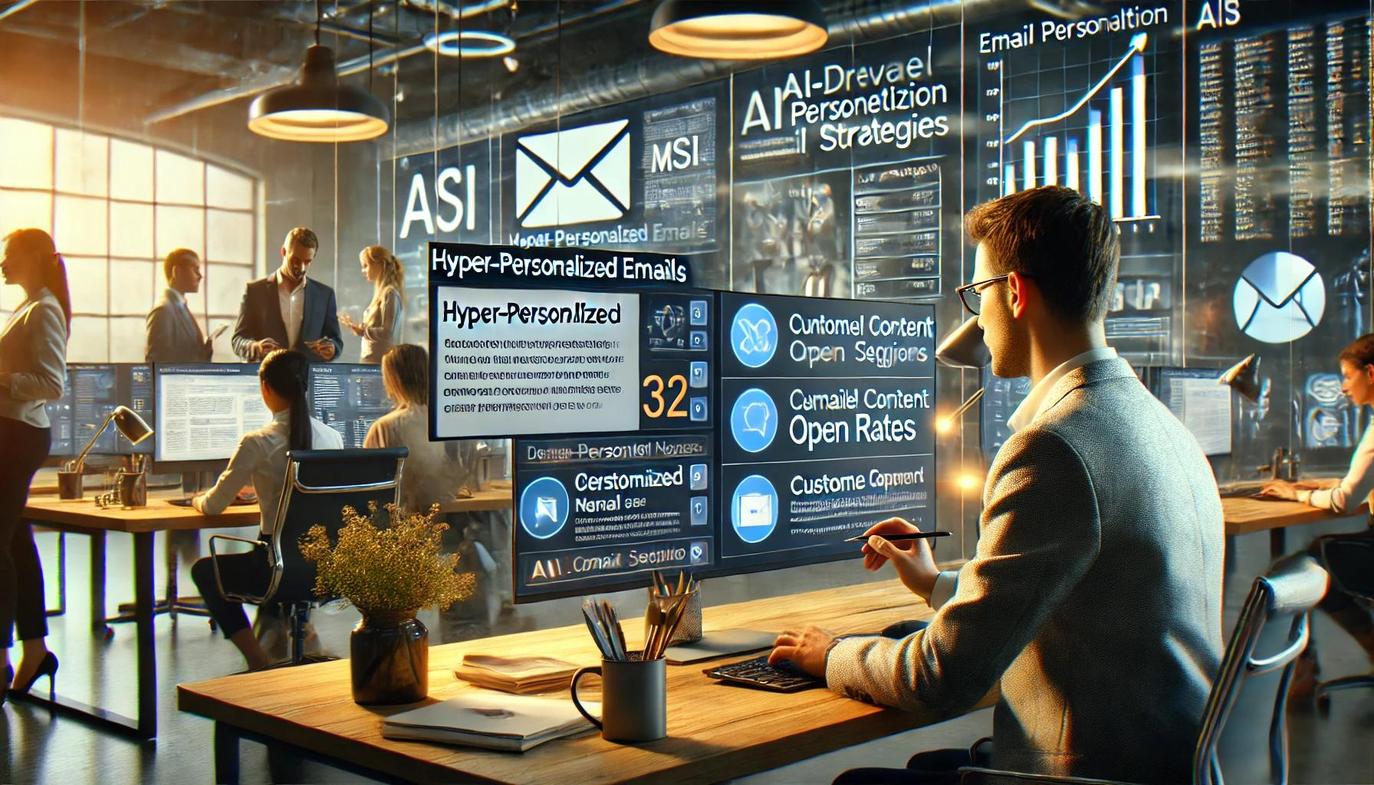
What Are the Best Strategies for Hyper-Personalized Email Campaigns?
Email remains a powerful marketing channel, but its effectiveness hinges on personalization. To move beyond generic blasts that get ignored, MSPs can use AI to refine their email campaigns, ensuring every message speaks directly to the client. Here are ten effective strategies for achieving hyper-personalization:
- Segment your audience by needs, preferences, or past behaviors. AI tools help analyze data quickly so you can group customers accurately.
- Add the customer’s name or company to subject lines. People are more likely to open emails when they feel specifically addressed.
- Send content based on where a customer is in their decision-making process. For instance, share basic information with new leads and detailed guides with long-term clients.
- Use AI-driven insights to determine optimal sending times for individuals. Emails sent at peak reading times often achieve better results.
- Focus on creating brief but valuable content that aligns with customer pain points. Overloading an email might cause readers to abandon it quickly.
- Track engagement metrics like click-through rates (CTR). Use this data to refine future campaigns with targeted improvements.
- Add interactive elements such as surveys or quizzes that adapt based on user responses. This keeps readers involved throughout the email.
- Avoid overly automated language in your emails by keeping them conversational but professional. Customers connect better when emails feel natural and human-like.
- Offer exclusive deals or updates specific to certain groups of customers. Highlighting unique offers shows value and builds loyalty among recipients.
- Continuously test different subject lines, layouts, and content approaches using A/B testing tools powered by AI analytics for consistent improvement over time.
These specific marketing recommendations allow MSPs to build stronger, more effective customer relationships.

How Do AI-Powered Chatbots Enhance Real-Time Customer Engagement?
AI-powered chatbots respond to customers instantly, maintaining the conversation without delays. They manage multiple inquiries at once, providing every customer with prompt attention, which enhances satisfaction by minimizing wait times.
Chatbots also analyze data to customize interactions based on past behavior, suggesting relevant services or solutions suited to individual needs. Their constant availability ensures businesses never miss an opportunity to support potential leads or existing clients.
What Is Behavioral Retargeting, and How Can It Re-Engage Customers?
While chatbots can assist users in real time, behavioral retargeting encourages them to return. This strategy focuses on displaying ads to individuals who have interacted with your website or content but did not take a final action.
For example, a visitor who checks out managed IT services packages and leaves without signing up can be presented with targeted ads later that remind them of the advantages they explored.
Customers often require multiple reminders before making decisions, which makes these efforts effective. Retargeting tools track browsing patterns through cookies and deliver highly specific ads across platforms such as Google or social media channels. With AI technology, MSPs can refine these ads further by customizing messages based on customer intent, effectively regaining their attention.

How Can Personalized Recommendations Boost Customer Engagement?
Personalized recommendations show customers that you understand their unique needs. AI examines user behavior, purchase history, and preferences to suggest the most relevant services or products. For example, an MSP can recommend new security solutions to a client based on recent activity patterns or emerging industry trends.
These specific suggestions save time for customers and increase the likelihood of a conversion. When recommendations align with their business goals, clients feel valued, and trust grows, which keeps them coming back and enhances long-term loyalty.
What Are the Best Practices for Ethical and Effective AI-Driven Personalization?
The foundation of ethical personalization begins with transparency. Always inform customers how their data is gathered and applied in your marketing strategies, as clear communication builds the trust essential for a positive customer experience.
A key part of this is allowing users to set preferences on what information they share and how you customize services for them. For instance, provide options to choose between tailored digital ads and general company updates.
Maintaining Privacy And Preventing Bias
Respect privacy laws like GDPR and CCPA without cutting corners. Regularly review AI systems to check for biases that could affect fairness in targeting practices. Avoid overusing personal details where it feels intrusive, such as repeating too much of the customer’s browsing behavior back to them in emails or messages. Ethical practices not only prevent legal risks but also maintain positive and lasting relationships with your audience.
Paving The Future Of MSP Marketing With AI Personalization
Adopting AI-driven personalization is no longer just an advantage for Managed Service Providers; it is a necessity for staying competitive in a dynamic market. AI provides the tools to create genuinely resonant customer experiences, from refining customer segmentation to enhancing lead scoring with predictive analytics. By deploying hyper-personalized email campaigns and chatbots, MSPs can move beyond generic outreach, allowing them to build stronger relationships, boost engagement, and achieve higher conversion rates by delivering the right message at the perfect moment.
Embracing these technologies ethically and transparently is the final, crucial piece of the puzzle. By respecting customer privacy and communicating data practices openly, MSPs can foster the trust required for long-term loyalty. The future of MSP marketing lies in this blend of high-tech capability and indispensable human insight. A thoughtful AI strategy will not only scale your marketing efforts but also solidify your position as a client-centric industry leader.
Your Questions Answered On AI-Powered Marketing
How does AI help MSPs understand their customers better?
AI analyzes large datasets on customer behavior, demographics, and past interactions to identify patterns and preferences. This allows MSPs to move beyond assumptions and create marketing strategies based on data-driven insights into what customers truly need.
Can personalization at scale feel robotic?
While automation is a core component, the goal of AI in marketing is to feel more human, not less. By using nuanced data, AI helps craft messages that are highly relevant to an individual’s specific situation, making interactions feel more personal and less like a mass broadcast.
What is the first step to implementing AI in our marketing?
A great starting point is customer segmentation. Use an AI tool to analyze your existing customer data and group clients into more precise segments. This foundational step can immediately improve the targeting and relevance of your campaigns.
Is AI marketing only for large MSPs?
Not at all. Many scalable, cloud-based AI tools are accessible and affordable for MSPs of all sizes. The efficiency gains, such as time saved on manual data analysis and improved lead qualification, often provide a rapid return on investment for smaller businesses.


