
In an innovative stride towards sustainability and waste management, several trash bins in New York City have acquired a robotic makeover. This is thanks to a team of research students from Cornell University who have introduced robotic bins to the city’s pedestrians.
The research was supervised by Wendy Ju, associate professor at the Jacobs Technion-Cornell Institute. In an interview with guest host Aarti Pole on CBC’s As it Happens, Ju expressed delight about the general public’s response to the robot bins. “For the most part, people seem excited to see them,” noted Ju. She added, “They understand right away that they’re there to do a task.”
The motorized bins not only serve to collect trash but also spark an engaging interaction among the city dwellers. Interestingly, some passersby have even referred to the bins as their “buddies,” demonstrating a lighthearted anthropomorphic response to the robots.
According to Fiona Carroll, a program director with the Cardiff School of Technologies, the “novelty factor” of these robotic bins could garner “initial attention and interest from people, potentially leading to increased engagement in litter reduction efforts.” This accentuates the integral role technology can play in amplifying sustainability and cleanliness initiatives.
The project has also reinforced how humans anthropomorphize robots, a phenomenon explained by Moojan Ghafurian, co-director of the University of Waterloo’s Social and Intelligent Robotics Lab. Ghafurian pointed out, “Many people name their robot vacuums and interpret behaviors from their cleaning patterns. In this case, the robot approaching people and its specific movements can be one reason why we may assign human-like behaviors to it.”
However, not all reactions were warm or friendly. Instances of violent fidgeting with the robo-bins were also observed, possibly triggered by individual sentiments about the city’s government. One such instance was found encapsulated in a social media video captioned, “Mayor Eric Adams doing the most he can with the NYC sanitation budget.”
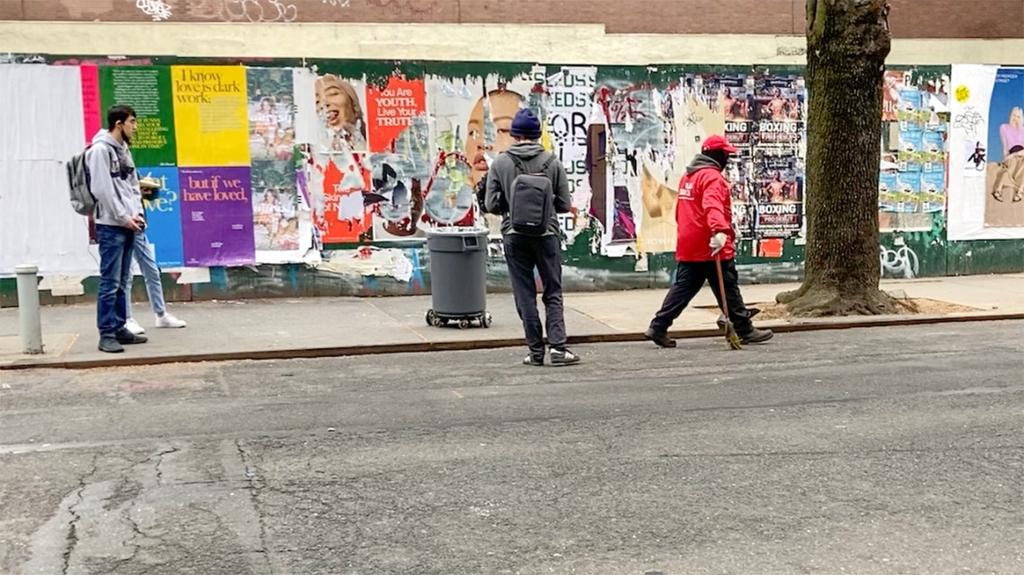
Despite these confrontations, the motorized bins are marking a positive impression and steadily becoming a part of the city’s landscape. Undoubtedly, this innovative project helps people see how technology can be leveraged to enhance litter reduction efforts, promote cleanliness, and incite a sense of community among city dwellers.
In the future, Ju expects the continued prevalence of daily objects with enhanced capabilities, similar to the current trend of robot vacuums and bins. The associate professor poses a thought-provoking question on how people will interact with these objects in the absence of human interaction conventions – a thrilling zest toward our tech-infused future.


