
An injury naturally focuses your attention on the immediate pain. Hospital bills, physical pain, and anxiety about missing work combine to make the future feel distant and uncertain. Once the immediate chaos settles, a new question surfaces: What is the true value of this impact? This question is not sentimental but one of fairness. How do you measure an accident’s impact on your life, income, health, and peace of mind?
This is where tools like a settlement calculator can help. A calculator provides a preliminary look at what your personal injury claim might be worth by organizing the chaos into quantifiable data. It translates your experience into a structured estimate, forcing a practical look at what has been lost. While not providing a final, legally binding answer, these tools help you see the broader financial picture of what your case might involve.
More importantly, a settlement calculator reminds you that your pain and disruption have tangible value in the eyes of the law. This article will help you understand how these calculations work, what factors feed into them, and how you can use this information to see the bigger picture. We will explore the difference between economic and non-economic damages, the role of state laws, and how to navigate negotiations for the fair settlement you deserve.

More than Just Medical Bills: Understanding Your Claim
Every injury claim tells a story, and that story has multiple layers. A proper claim is not just about “fixing what broke”; it is about acknowledging how deeply the event has reshaped your life. Injury claims typically fall into one of two types of damage.
Visible Damage:
- Hospital visits
- Prescriptions
- Physical therapy sessions
Invisible Damage:
- Lost time with family
- Interrupted careers
- Chronic pain
- Emotional distress
How Insurance Companies View Damages
Insurance companies, however, tend to view those layers differently. They concentrate on substantiated evidence. Understanding the basic math behind compensation estimates and how each factor feeds into the final settlement figure is therefore essential.
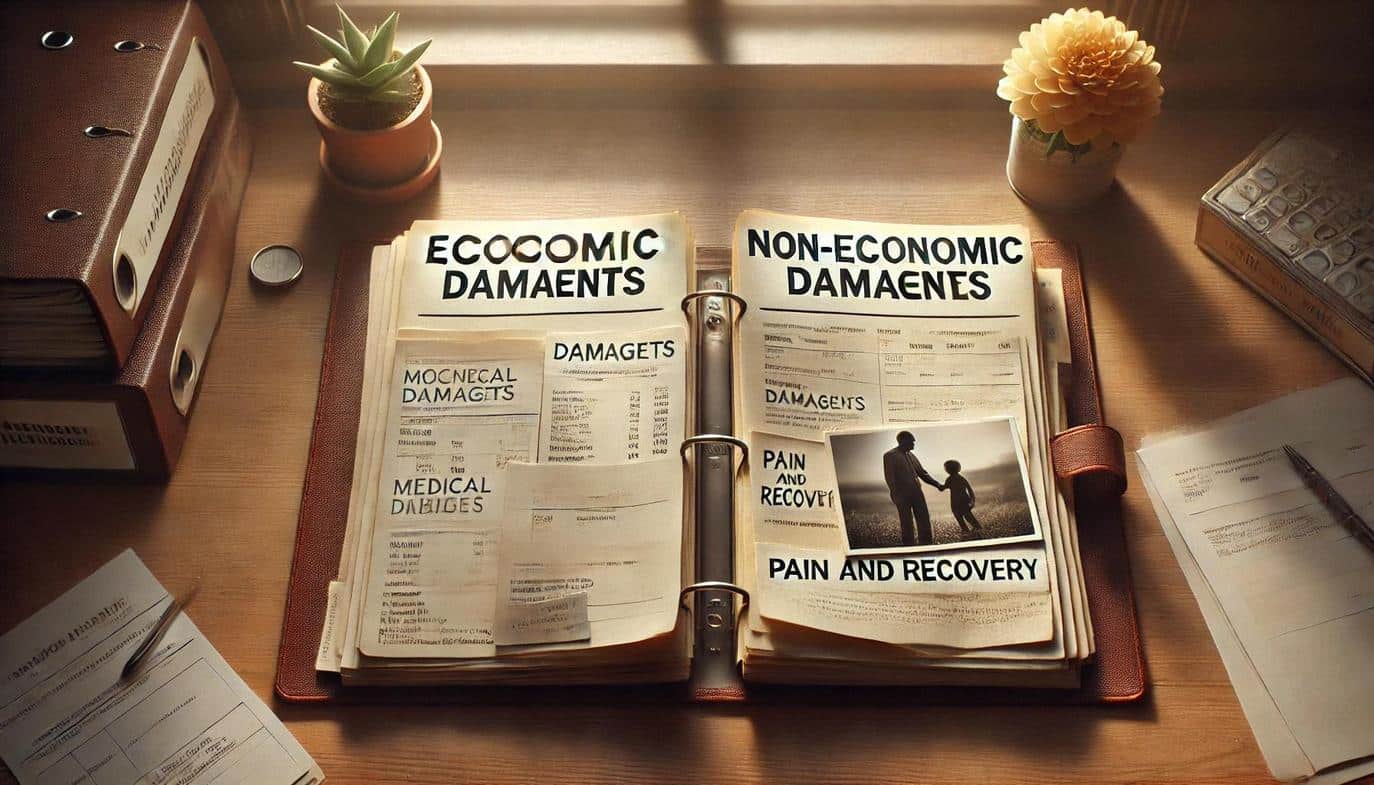
Economic vs. Non-Economic Damages
Personal injury law divides compensation into two broad categories: economic and non-economic damages. These two categories together make up the foundation of your potential claim value.
However, people often struggle to comprehend the interplay between these two categories. For example, someone who suffered a broken wrist in a car accident might have $10,000 in medical bills and two months of missed work. But if that same injury causes chronic stiffness that prevents them from returning to their previous job, the long-term economic cost could be far higher.
The real challenge is anticipating future losses and expressing them in measurable terms. This is where valuation tools and early consultations with legal or medical professionals can be invaluable. They help to paint a more accurate picture of what the accident might cost over time, not just today.
Defining Economic Damages
Economic damages are straightforward, covering:
- Medical expenses
- Property repair
- Lost wages
- Future care costs
These are the numbers you can trace to receipts, invoices, or pay stubs.
Defining Non-Economic Damages
Non-economic damages, on the other hand, measure what cannot be captured on a balance sheet. This category includes:
- Pain
- Emotional trauma
- Reduced quality of life
- The ripple effect an injury has on relationships and routines

How State Laws and Fault Can Affect Your Compensation
Every state also handles personal injury compensation differently. Some states follow “pure comparative negligence,” where you can recover compensation even if you are mostly at fault, while others have stricter limits that bar recovery if your responsibility exceeds a certain threshold.
A clear understanding of these local rules is essential and can dramatically change your expectations. According to Nolo’s legal resource center, several factors have important implications for determining the value of a claim. These include state laws, fault percentages, and insurance limits. No calculator or guide can substitute for the specific realities of your case, but these tools can help you spot what’s missing before you speak with an attorney.
The Critical Role of Timing in Your Claim
The Risk of Settling Too Soon
Timing is one of the most underestimated factors in case valuation. Accident victims often rush to settle because bills are piling up and they need immediate relief. But this often leads to undervaluation, since some injuries take weeks or months to fully manifest. Soft-tissue damage, head injuries, and emotional trauma often have delayed symptoms. Settling too soon can mean accepting an amount that does not account for future treatment or therapy costs.
The Danger of Waiting Too Long
On the flip side, waiting too long can weaken your claim if crucial evidence fades or deadlines pass. Most states impose a statute of limitations for filing claims, typically between one and three years, and missing that window can mean losing your right to compensation entirely. Taking the right steps early on can set a strong foundation for any future legal action. These steps can also involve understanding the specific local protocols regarding what to do after a car accident in Las Vegas, or elsewhere, to ensure no important evidence is overlooked. The best way to safeguard your right to full and fair compensation is to be well-informed about these initial requirements.
Negotiating with Insurance Adjusters
Insurance adjusters understand these dynamics all too well. They are trained to minimize payouts by emphasizing quick resolutions, partial responsibility, or policy limits. Adjusters might downplay long-term effects or argue that certain treatments are unnecessary. Knowing how they operate is a significant advantage. Personal injury attorneys from firms like Blair & Ramirez LLP can guide you through these negotiations, ensuring your claim is presented effectively and that you receive the compensation you deserve. The more organized and documented your case is, from medical reports to written communication, the less room there is for lowball offers. A claim built on strong evidence often settles faster and fairer because it signals preparedness and credibility.
How “Pain and Suffering” is Calculated
“Pain and suffering” is not a random guess; it is often tied to formulas that weigh your tangible losses against the severity and duration of your pain. Some insurers, for example, use a multiplier method: they add up your economic damages and multiply that total by a number between 1.5 and 5, depending on the seriousness of the injury. Others might assign a per diem rate for every day you have experienced pain or disruption. These calculations are not exact, but they show that your story—how long you have been hurting, how deeply your life has changed—directly affects the financial side of recovery.

The Practical Steps Toward a Fair Settlement
Taking a Factual, Empowered Approach
Even the best estimate, however, cannot capture the emotional cost of living with uncertainty. Victims also often struggle with anxiety, frustration, or guilt for needing financial help. Approaching a claim as a factual process, rather than an emotional one, can be empowering. By seeing your situation through a practical lens, evaluating medical expenses, documenting recovery progress, and consulting professionals, you take back a sense of control. You transform an overwhelming experience into a structured process with clear steps and goals.
Accounting for Broader Financial Consequences
The financial consequences of an accident can also go beyond a family’s immediate care needs. These consequences may include lost household income, new childcare needs, or the emotional toll of a loved one’s ongoing recovery. Those costs, too, belong in your total claim. While no amount of money can undo an accident, the right compensation can stabilize your future, pay for therapy, replace income, and give you the space to heal without constant financial stress.
Preparation as the Key to Negotiation
The journey toward fair compensation is not quick or simple, but it becomes far less intimidating once you understand its mechanics. The settlement process is best viewed as a negotiation built on preparation. The better you can document your financial, emotional, and physical recovery, the more accurately you can argue for what is fair. A valuation tool or preliminary estimate will not solve everything, but it will remind you that your pain has measurable consequences, and that knowledge is the first step toward justice.
Taking Control of Your Case
Do not let the system’s complexity make you settle for less than what you deserve. Laws, formulas, and policies exist to bring structure to the process, but real fairness comes from persistence and clarity. When you understand what goes into your claim, you stop feeling like a bystander and can actively guide it toward resolution.
Receiving a fair settlement is more than a paycheck; it is a form of closure. It represents acknowledgment that what happened to you matters and that your recovery deserves support. While the process may feel technical, it is fundamentally about people—about ensuring the story of your injury is heard, respected, and valued.
Stepping back to look at the bigger picture reveals that every document, conversation, and piece of evidence adds up to more than a number. It adds up to accountability—a right every injured person deserves.

Understanding the Value of Your Personal Injury Claim
A settlement calculator is an excellent starting point for understanding the components of your personal injury claim, but it is just one piece of the puzzle. These tools help you see the bigger picture by translating your experience into the two key categories: economic and non-economic damages. From tangible medical bills and lost wages to the significant, intangible cost of pain and suffering, quantifying these impacts is the first step toward a fair settlement.
Ultimately, a fair settlement provides more than financial relief; it offers a form of closure and accountability. To navigate this complex process, you must be prepared to document your losses, understand state laws, and negotiate effectively with insurance adjusters. Arming yourself with this knowledge empowers you to move from being a bystander in your case to an active participant in securing the injury compensation you deserve.
Frequently Asked Questions About Injury Compensation
How is Pain and Suffering Calculated?
While there is no single formula, “pain and suffering” is often calculated using two common methods. The “multiplier method” involves adding all your economic damages (like medical bills) and multiplying that sum by a number (typically 1.5 to 5) based on the severity of your injury. The “per diem” method assigns a specific dollar amount for each day you experienced pain from the accident until you reached maximum recovery.
What are Economic and Non-Economic Damages?
Economic damages are the verifiable, out-of-pocket financial losses you have incurred. This includes medical bills, lost wages, property repair, and future care costs. Non-economic damages are intangible, non-financial losses, such as emotional distress, pain and suffering, loss of enjoyment of life, and loss of companionship.
Why do Insurance Adjusters Offer Low Settlements?
Insurance adjusters are trained to protect the company’s financial interests by minimizing payouts. They may offer a quick, low settlement before the full extent of your injuries is known. This process is done in the hope that you will accept it out of a need for immediate relief. They may also dispute the necessity of certain treatments or argue you were partially at fault, which reduces the value of your personal injury claim.


