
Growing up in urban settings is a risk factor for psychosis. But why? A new study, published in the journal JAMA Psychiatry, provides a potential explanation. It states that air pollution exposure is to blame. The research revealed that dirty air is associated with increased odds of psychotic experiences in adolescence.
By psychotic experiences, they mean incidents such as hearing voices and intense paranoia, but a less extreme form of those symptoms which are experienced by individuals with a psychotic disorder like schizophrenia. It is more common for people to go through psychotic experiences in adolescence than adulthood. However, young people who report psychotic experiences are more likely to go on to develop psychotic disorders, as well as a range of other mental health problems and suicide attempts.
Study senior author Dr. Helen Fisher, from the Institute of Psychiatry, Psychology & Neuroscience at King’s College London, UK, said:
“Psychotic disorders are difficult to treat and place a huge burden on individuals, families, health systems and society more broadly. By improving our understanding of what leads to psychotic experiences in adolescence, we can attempt to deal with them early and prevent people from developing psychotic disorders and other serious mental health problems.”
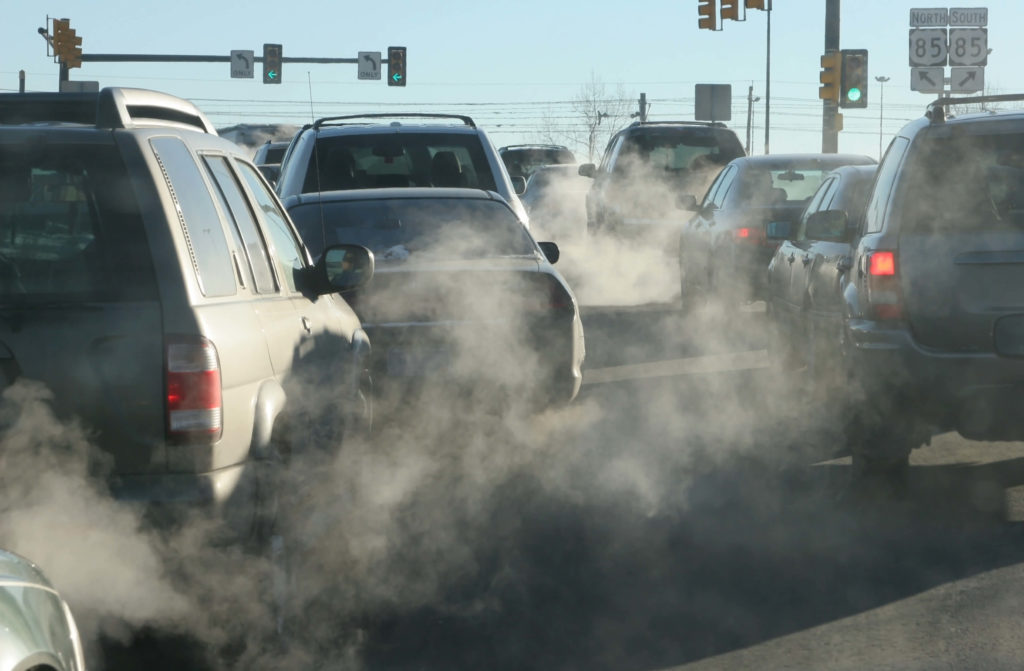
Dr. Fisher and his colleagues discovered that psychotic experiences were significantly more common among adolescents with the highest exposure to nitrogen dioxide (NO2), nitrogen oxides (NOx), and very small particulate matter (PM2.5), even after accounting for known risk factors for psychosis. The study took into account other potential causes of psychotic experiences, such as smoking, alcohol and cannabis use, family income and psychiatric history, and measures of neighbourhood deprivation.
Co-author Professor Frank Kelly, also from King’s College London, said:
“Children and young people are most vulnerable to the health impacts of air pollution owing to the juvenility of the brain and respiratory system. Given that 70% of the world’s population will live in cities by 2050, uncovering the mechanisms linking the urban environment to psychosis should be an urgent health priority.”
The risk is so great that NO2 and NOx together accounted for 60% of the association between living in an urban environment and having adolescent psychotic experiences. Nitrogen oxide comes largely from diesel vehicles. Not only has air pollution been linked to psychotic experiences, but also to reduced intelligence, dementia and depression, while other work has revealed air pollution can reach the brain.
The Study
- They combined high-resolution air pollution data and psychotic experiences disclosed by the adolescents in private interviews.
- A third of the young people lived in urban areas, with one fifth being rural and the rest suburban.
- Data from the E-Risk study, which comprises 2,232 children born in England and Wales – was analyzed and used as a base to which the scientists added to.
- Then, they accessed young people (at age 18) for psychotic experiences in private interviews. They were asked questions such as ‘do you hear voices that others cannot?’ and ‘have you ever thought you were being watched, followed or spied on?’.
- The data on psychotic experiences were linked with hourly estimates of air pollution at 65 x 65 feet (20 x 20 m) grid points throughout the UK.
- For each participant, they combined home addresses with two additional locations where the young people spent substantial amounts of time at age 17. This is how the researchers were able to accurately model their exposure to air pollution over the space of a year.
The Results
- Overall, 30% of the young people reported at least one psychotic experience.
- Psychotic experiences were significantly more common among teens living in the top 25% most polluted places. Newbury said: “In areas with the highest levels of [nitrogen oxides], there were 12 teens who reported psychotic experiences for every 20 teens who did not. In areas with lower levels, there were only seven teens who reported psychotic experiences for every 20 teens who did not.”
- They also found a link to small particle pollution, with psychotic experiences 45% more common for those teens exposed to higher levels.
Conclusion
The researchers do admit that while this first study provides good evidence, it is important other studies be done to confirm their findings. Study first author Dr. Joanne Newbury, also from King’s College London, said:
“We found that adolescent psychotic experiences were more common in urban areas. While the study could not show pollutants caused adolescents to have psychotic experiences, our findings suggest that air pollution could be a contributing factor in the link between city living and psychotic experiences.”
Nevertheless, it is a valuable contribution to the growing body of evidence that air pollution may affect more than just cardiovascular and respiratory health. Dr. Stefan Reis, the head of Atmospheric Chemistry and Effects at the Centre for Ecology & Hydrology, said:
“This new study makes a compelling case to investigate a range of mental health outcomes of air pollution exposure.”
Something Has To Be Done
The way things currently are on the planet must change or we’re all in big trouble. Dr. Ellen Wood, from the Doctors Against Diesel campaign group, said:
“People living in cities are subjected to high concentrations of toxic particles and gases from exhaust fumes on a daily basis. This study adds to the growing evidence that air pollution could have devastating and far-reaching consequences on our physical and mental health, that is put at further risk if policymakers do not address this public health emergency.”
Rebecca Daniels, at the global health charity Medact, added:
“We urgently need to see policies that equitably reduce polluting vehicles on our roads, and replace them with affordable, sustainable and accessible public transport.”


