
Downtime in large solar fleets directly impacts revenue streams and performance metrics, with equipment failures, poor installation, and adverse weather conditions being the primary culprits. Financial projections suffer when systems operate below capacity or shut down completely, impacting overall system availability and creating a cascade of consequences from lost energy production to increased operational costs and potential contractual penalties.
Managing downtime requires addressing multiple challenges simultaneously. Proven strategies minimize interruptions and maximize production efficiency across the entire solar fleet.
Advanced Techniques For Large Solar Fleets
Machine Learning For Performance Forecasting
Forecasting solar fleet performance has advanced significantly through machine learning applications. These algorithms analyze historical production data alongside weather patterns to predict energy generation with increasing accuracy.
Maintenance planning improves when data models detect subtle signs of performance degradation. Identifying anomalies early allows teams to intervene before minor inefficiencies evolve into extended downtime.
As solar fleets expand across multiple locations, operations and maintenance teams must coordinate inspection data, performance signals, and maintenance actions across dispersed assets. Many operators address this growing complexity through centralized solar operations and maintenance like Scoop, which orchestrates fleet-wide workflows, from service execution and SLA tracking to field coordination and financial reporting, across their existing tools and teams.
Drone-Based Inspections
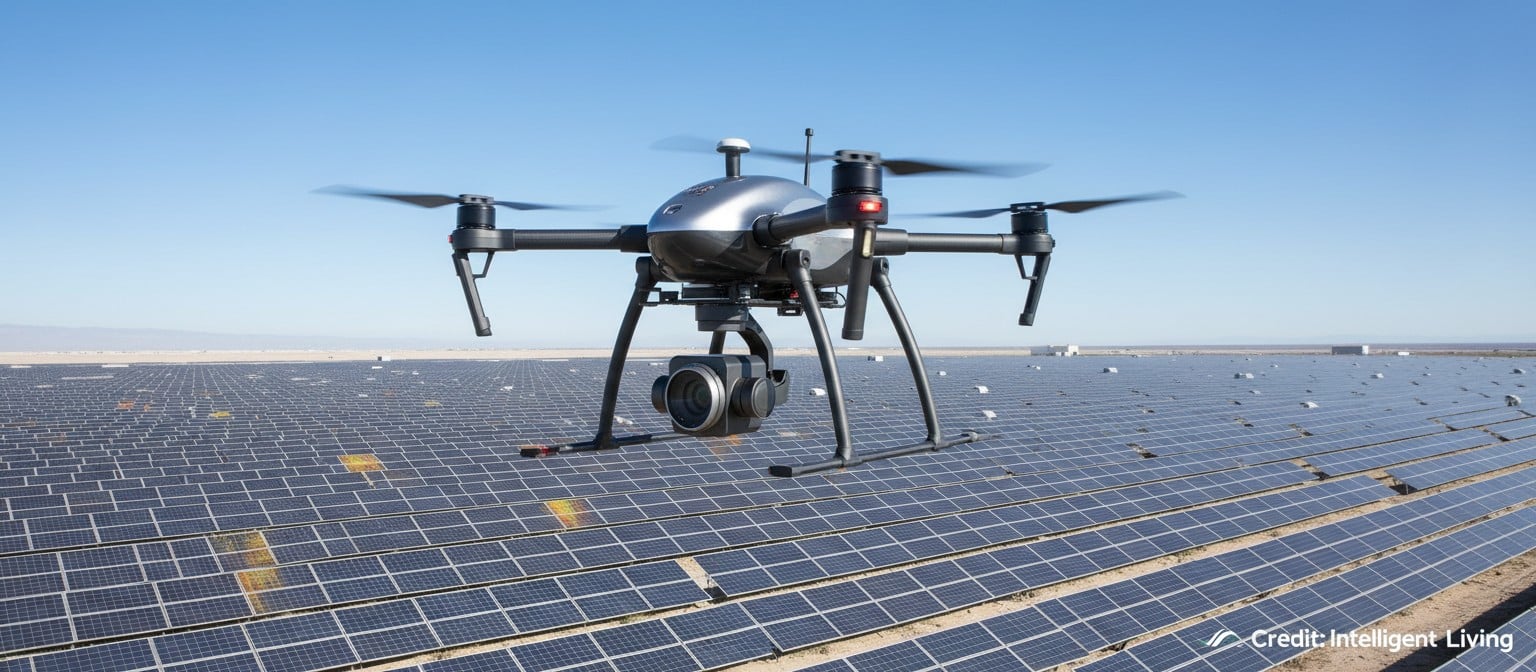
Managing large solar installations requires efficient inspection methods that minimize downtime while maximizing accuracy. Drones have revolutionized how businesses approach solar fleet maintenance by providing aerial perspectives that human inspectors cannot achieve alone.
Maintenance teams benefit from drone technology through rapid scanning of vast solar arrays. These flying devices capture high-resolution thermal and visual imagery that identifies potential issues like hot spots, damaged panels, or connection problems before they cause significant performance drops.
The advantages extend beyond speed. Drones reduce safety risks by eliminating the need for workers to climb on rooftops or navigate difficult terrain. They access areas that might otherwise present challenges for physical inspection, creating comprehensive documentation of the entire solar fleet condition.
Robotic Cleaning Systems
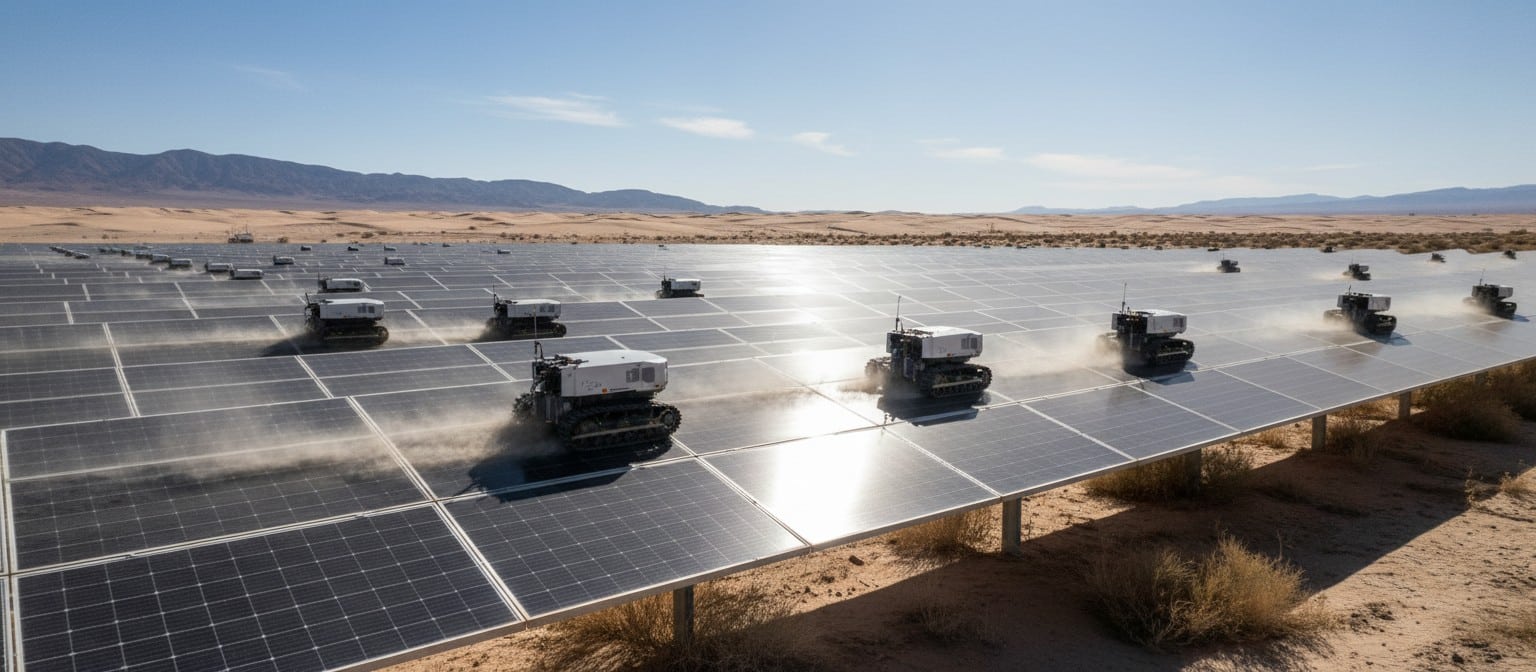
Solar panel efficiency directly correlates with cleanliness. Dust, pollen, bird droppings, and other debris can reduce energy output when allowed to accumulate. Robotic cleaning systems offer an automated solution to this persistent challenge.
Regular cleaning protects solar investments. Automated robots travel across panel surfaces using brushes, microfiber cloths, or water sprays to remove accumulated dirt without causing damage. These systems operate on programmed schedules, ensuring consistent maintenance without constant human supervision.
Water conservation is possible with advanced robotic cleaners that use minimal or no water for their operations. This feature is particularly valuable in arid regions where water resources face constraints but solar potential remains high.
Predictive Maintenance Essentials
AI-Driven Data Analytics
Predictive maintenance has transformed how solar fleet operators manage their assets. Through AI-driven predictive maintenance, maintenance teams can anticipate potential failures before they occur, significantly reducing costly downtime.
The integration of AI with solar installations creates a proactive approach to maintenance. Systems can continuously monitor performance data, identifying patterns that human operators might miss. For example, AI algorithms can detect subtle changes in inverter efficiency that signal an impending failure, allowing repairs to be scheduled during planned downtime rather than responding to emergencies.
Machine learning capabilities enhance these benefits by continuously improving prediction accuracy. As the system collects more operational data, the AI becomes increasingly effective at distinguishing between normal variations and genuine warning signs.
Connected Sensors And IIoT
The foundation of effective predictive maintenance lies in the network of connected sensors and Industrial Internet of Things (IIoT) devices monitoring solar fleets. These technologies create a comprehensive view of system performance that would be impossible to achieve manually.
Modern solar installations feature sensors measuring everything from electrical output to equipment temperature, weather conditions, and physical positioning. Each sensor provides a data stream that contributes to the overall understanding of system health.
Maintenance teams benefit from this connectivity through access to real-time information regardless of their physical location. Remote sensing capabilities allow technicians to diagnose issues before arriving on site, ensuring they arrive with the right equipment and parts for efficient repairs.
Real-Time Monitoring And Alarm Management
Implementing real-time monitoring systems gives teams visibility into solar fleet performance as it happens. Commercial solar installations now track dozens of performance metrics simultaneously, creating an accurate picture of operational status.
However, effective alarm management is critical to making this information actionable. Without proper configuration, monitoring systems can generate excessive alerts, leading to alarm fatigue among staff. This phenomenon occurs when operators become desensitized to warnings due to frequent false alarms.
A well-designed alarm system ensures teams focus attention on genuine problems requiring intervention, improving overall response times and maintenance efficiency.
Balancing Technology And Traditional Expertise
While advanced technologies offer powerful capabilities, they work best when complemented by traditional maintenance expertise. The most effective approach combines technological insights with human judgment and experience.
Smart technology provides valuable data and analysis, but human technicians bring contextual understanding and problem-solving abilities that remain beyond AI capabilities. For instance, an experienced technician might recognize that an anomaly flagged by the system relates to a recent weather event rather than equipment failure.
This balanced approach creates a maintenance program greater than the sum of its parts. The technology identifies issues human inspection might miss, while experienced technicians provide validation and context that pure data analysis cannot.
Preventive Maintenance Best Practices
Routine Inspections And Testing
Regular inspections serve as the first line of defense against potential system failures. By conducting thorough examinations of solar fleet components, small issues can be identified before they develop into costly problems that cause downtime.
Inspection schedules should follow manufacturer recommendations, but most commercial solar systems benefit from quarterly professional inspections. Data shows that routine inspections frequently uncover minor issues that would otherwise escalate into major failures. Making preventive maintenance a priority helps maintain consistent energy production levels throughout the system’s lifespan.
Comprehensive QA/QC Protocols
Quality Assurance and Quality Control protocols form the backbone of reliable solar fleet operations. A QA/QC program should establish clear standards for every aspect of system performance and maintenance.
The data supports this approach: comprehensive QA/QC inspections conducted at key construction milestones substantially reduce critical issues throughout the system lifecycle. Maintenance teams can catch potential problems during installation rather than discovering them after commissioning.
QA/QC protocols should evolve based on findings and changing industry standards. This adaptive approach ensures maintenance practices remain current with technological advancements and emerging best practices in the solar industry.
Staff Training And Education
Maintenance team knowledge directly impacts solar fleet performance. Ongoing education ensures technicians stay current with industry developments and best practices.
Training and education in proper wire management and connector installation minimize future downtime. Investing in staff development pays dividends through reduced maintenance issues and faster problem resolution.
Consider implementing a tiered training approach that builds expertise progressively. New technicians can start with basic maintenance tasks while experienced staff handle complex diagnostics and repairs. This structure creates a career pathway that helps retain valuable employees.
Training programs should incorporate manufacturer-specific guidance alongside general solar maintenance principles. This comprehensive approach ensures technicians understand both theoretical concepts and practical application for specific equipment models.


