Breaking a bone is a terrible experience. The ridiculous thing is, the plaster cast may be the worst part of it all! Constant pain aside, the uncomfortable, itchy, and stinky cast that can’t get wet is torturous to deal with. Fortunately, a group of Chicago-based engineers designed a better, breathable, and waterproof cast to improve the lives of anyone who breaks a limb. No more trash bags over your cast when you have to take a shower!

The engineers are the founders of a Startup called Cast21, who have made it their mission to look into the problems of plaster casts and solve them all in one go. A trio from the University of Illinois – Jason Troutner, electrical engineer Justin Brooks, and biomedical design engineer Ashley Moy – put their heads together and came up with a more hygienic, breathable, and waterproof cast that can be easily fitted in about 10 minutes.
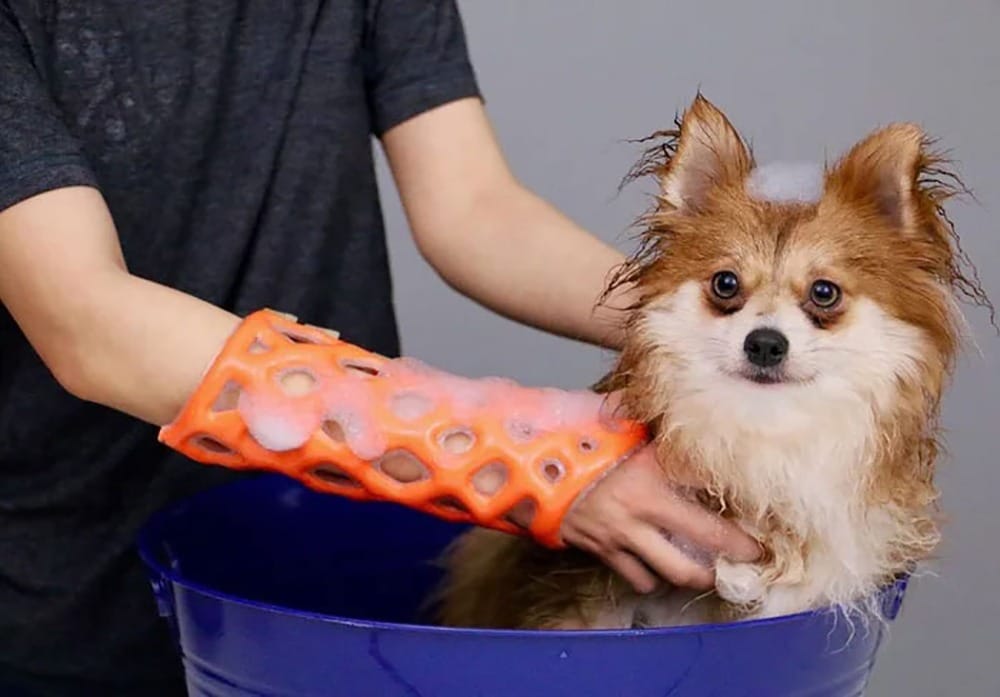
The scheme uses a liquid resin that hardens within a sleeve. It is shaped to the person’s arm and ultimately sets the bone in place. The sleeve is a wide mesh design constructed like an inflatable. It is filled (through a valve at the top) with two liquid resins available in a variety of vibrant hues. No water or electricity is needed to apply the cast, making it a portable and very accessible option.
It’s a quick process that involves the physician measuring the damaged limb first, then sliding the flexible sleeve on and filling it with the resin. After three minutes, the filling begins to take on a malleable gel-like consistency, which is when the physician molds the cast to the patient’s arm. Then, they wait five to seven more minutes for the filling to harden completely, and the process is complete!

It’s a pain-free procedure, and the exothermic heat produced by the device hardening can even be beneficial. Cast21’s VP of engineering, Veronica Hogg, said: “It feels soothing. It reaches about the same temperature as a hot tub.”

The process to take it off is also much better than a traditional plaster cast. Hogg explained:
“The majority of fractures happen in children, adolescents and the elderly. Those saws are very loud and all this debris flies off and it’s very messy, it can be extremely frightening. The cast saw also presents a risk of burns to the patient.
Our product does not require that at all. It’s designed so that a physician can take clinical shears, snip through the tabs and pull it open easily. It was designed to completely eliminate the use of a cast saw and make the healing process far more pleasant for the patient.”

For now, Cast21 only has the product available for a forearm and only in a medium size. Hogg said:
“The idea is to prove that this technology works… right now, we are past the prototype stage and have a fully functioning model in place for the forearm. We hope that this technology can span across the entire body. We are looking forward to having a lower limb model for ankle fractures soon.
We have this radical notion that you can enjoy your healing experience. You don’t need to be restrained from daily activities. I’m from Colorado and I like to go hiking, and the equipment needed to administer our cast is so small and lightweight that hikers and climbers could carry it with them in their backpacks (as a first aid kit).
It also has potential for use in the military and for at-home first aid. 3D printed casts can be very expensive, and the turnaround time is very slow. Our design is almost instant and very portable.”

Cast21 wants to provide a product that is affordable and as accessible as possible. The truth is there are waterproof casts available already, but they are costly because they require 3D printing. Only people with enough money can get one, while everyone else is left with no choice but a horrible plaster cast.
Hogg said:
“We want it to be competitive, and reachable to a large population. We don’t want this to be a luxury product. We are still conducting research in price sensitivity, and the final cost to the patients will be depending on their insurance and doctor.
Right now, we can treat what’s known as ‘distal radial fractures’ or DR fractures; that’s a catch-all term for any fracture of the radius that occurs close to the wrist.
We are hoping, with more data and feedback from physicians, that they would feel comfortable using this technology after a surgery was required. We are interested in expanding the pilot use of our product in clinics. So, we would love for anyone interested to reach out to us for more information. Whether you are a doctor or patient, use the Contact form at the bottom of the website’s homepage.”

Thanks to this new cast, everyone will soon be able to have a more comfortable healing experience, not just a select few. May the days when everyone can have an equal opportunity to go swimming with a cast on come swiftly!