Presenting a new compact electric tilting urban cargo delivery vehicle called the Electric Cargo Trike.
Urban package delivery methods present the usual challenges such as safety and poor handling. This leaves few alternatives to fossil fuel delivery vehicles. There is a growing demand for better solutions in New Zealand and around the world.
The current spectrum of traditional delivery methods is costly both financially and often ecologically. Delivery fees need to cover road taxes, fuel consumption, parking fees, and time. They also lose productivity while the delivery driver waits in traffic or finds an open parking space or vacant loading zone. They also impact the environment with carbon emissions, especially in big city centers.

Sustainable Vehicle Solution
In New Zealand, over 60% of online purchases get delivered to customers living in Aukland, Wellington, and Christchurch. 1.8 million online purchases required delivery in 2018 and 44% of those were recurring purchases more than once a month. We have seen an increase in electric vehicles in New Zealand over the past few years, showing Kiwis’ commitment to sustainable vehicle solutions.
The New Zealand national James Dyson Award winner, Electric Cargo Trike, aims to solve these problems.
A team of six young industrial design students won the prestigious award with their Electric Cargo Trike. They hope to solve an array of problems faced by New Zealand cities. These include environmental issues, efficient package delivery, and safety for the couriers.
New Zealanders are becoming increasingly more dependent on delivery services for parcels. In particular, the increase in online shopping deliveries has boomed and changed the delivery landscape. The team wanted to create a safe, sustainable alternative for those deliveries. Their Trike differs significantly from any existing electric cargo delivery vehicle. The Trike’s design reportedly focuses on handling and driver experience.
Filling The Gap
The designers from Massy University in Wellington want to fill the gap in the market for sustainable package delivery alternatives. The Electric Cargo Trike aims to replace large delivery vehicles because they are inefficient for small packages in urban and suburban areas. “We see this working well within the agricultural sector. We might replace quad bikes with a much safer alternative. The vehicle has a tilting mechanism which makes it much harder to roll over and injure the driver” say the team behind the Electric Cargo Trike.
The young designers received AU$3,500 with their winning entry and said:
We’re excited the James Dyson Award recognised that Electric Cargo Trike, we now hope to further its development to offer more sustainable deliveries. We love how James Dyson set out to solve problems, which is exactly what we set out to do. Our product went through an extensive iterative process and sustainability is very important to us, so this competition was a great natural fit for us.
How It Works
Sports bikes and the increasing trend of Kiwis inspired the team to move to more sustainable vehicles. “The last few kilometres are the least efficient in the delivery process, and we wanted to create a vehicle that addresses that problem and solves it,” said Daniel Shorrock a member of the design team. “We know New Zealanders care about the environment and think they would feel better if they had an electric trike delivering their parcel than having a van in their driveway,” he explained.
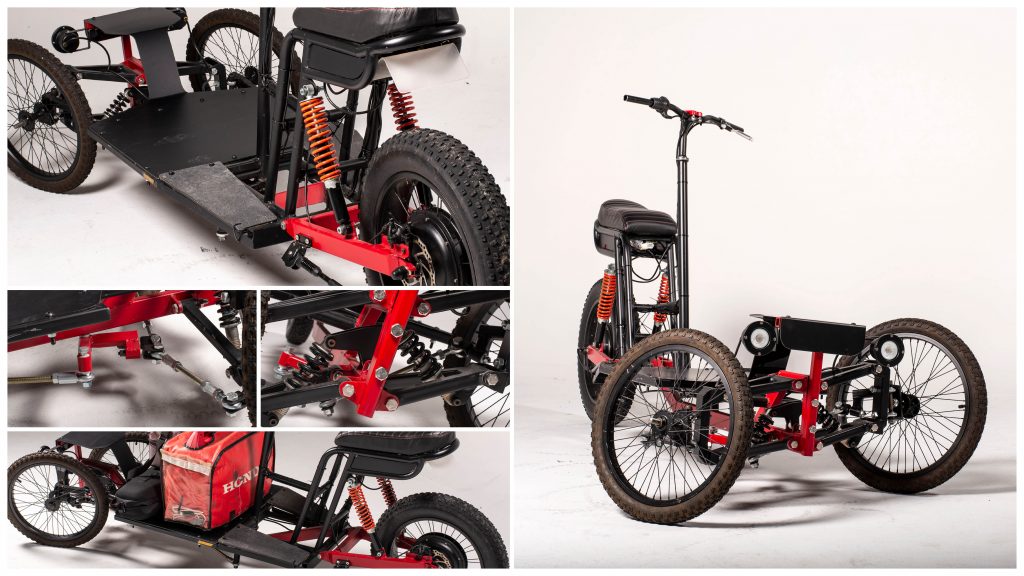
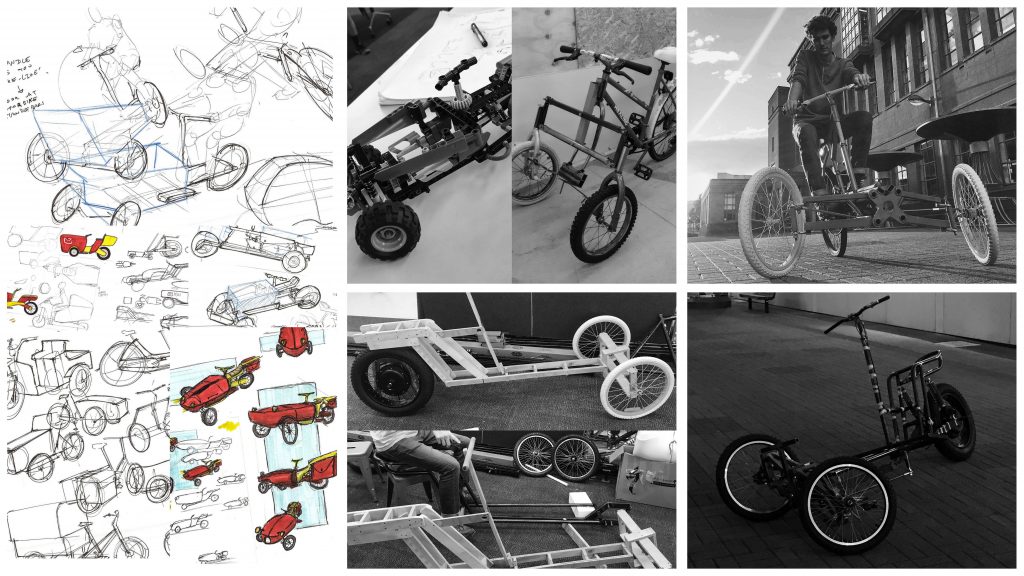
The design wasn’t as simple as the drive to solve the last-mile delivery problem: “We had four main prototypes, over 10 CAD (Computer-Aided Design) models, and countless sketches and Lego models getting to this final product. We spent hundreds and hundreds of hours over 12 weeks trying to make this the most effective, safest, and easy vehicle to use and we think we finally got there,” explained Daniel. The Electric Cargo Trike has a range of options for future implementation, possibilities include use on New Zealand Farms.
Safe And Efficient
The vehicle is very stable at high speeds because of its ability to lean into corners. The Trike can handle obstructions like speed bumps, rough terrain, and curbs exceptionally easily. The two front wheels give the vehicle a lot of traction at the front while the wishbone suspension provides a large overall portion of the suspension during travel. The three-wheel configuration allows for increased cargo capacity compared to a traditional motorcycle.
“It can stop faster, corner harder, and provide more stability than a normal bike,” added Daniel. The payoff is that packages are safer and more likely to arrive at the final destination undamaged.
We keep delivery downtime to a minimum because of interchangeable batteries. This allows the vehicle to run all day with only a few short breaks needed to swap batteries.
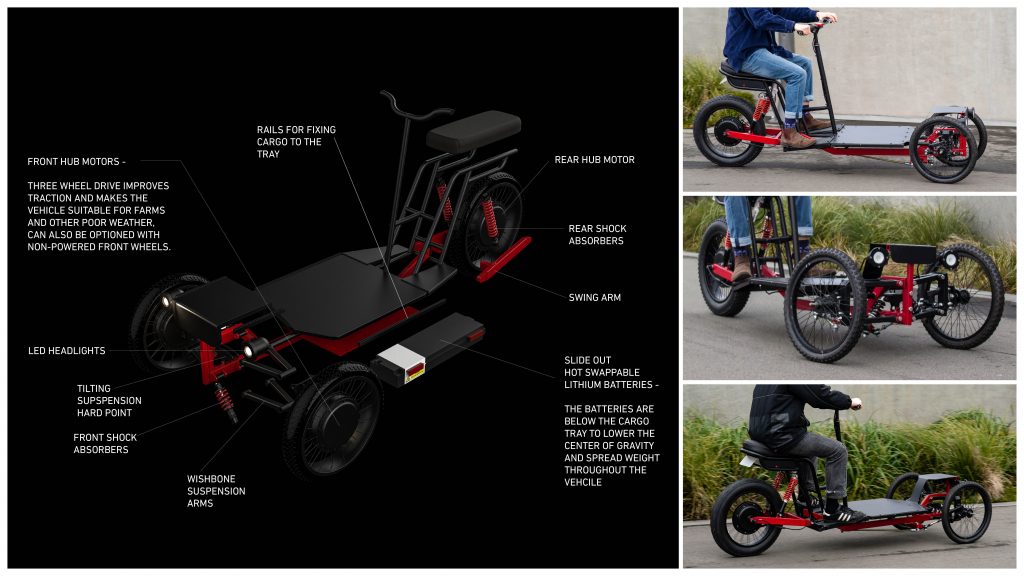
“The idea is; You charge one battery at the depot while you’re out doing deliveries, and when you get low, you swap it out so you don’t have to wait for a battery to charge,” said Daniel.
James Dyson Award judge Sir Ray Avery says: “This is an urban ute. Nobody has applied this kind of technology to this kind of vehicle before. A product like this, and what it could mean for those who use it, mean it could become a game-changer from a global perspective. Spending 80% of my time on the developing world, I see a real need and opportunity for this design. The Electric Cargo Trike has a place in every developed country.”
Yet another step towards a low-carbon or carbon-free future a must in our world plagued by the effects of climate change. Although this Cargo Trike is the first trike of its kind, it is likely that small electric vehicles are going to be mainstream transportation options in the future.