
Imagine your home guiding your body through the day with bright, alerting light in the morning, gentler hues after dusk, and a purifier that quietly increases power when tiny particles sneak in at night. Simple, science-based changes help you fall asleep faster, sleep more soundly, and wake up clearer, while also running your smart home more efficiently and sustainably.
Experts now agree on practical light frequencies to improve sleep and consumer guidance on safe, effective air cleaners. With interoperable smart home standards, it is easier than ever to automate the whole routine across different brands.
Wellness-Oriented Smart Home Tech
Why Light Timing and Spectrum Affect Sleep
Special light sensors in your eyes set your body clock. These light sensors strengthen daytime alertness with bright, cooler light and support better sleep with dimmer, warmer light in the evening.
Why Indoor Air Pollutants Disrupt Rest
Fine particles and gases irritate airways, triggering nighttime arousals and disrupting sleep. Cleaner bedroom air reduces the load on your respiratory system while you sleep, especially in polluted areas.
The Connectivity Layer for Smart Devices Is Now Consolidating
The fragmented connectivity layer for smart devices is consolidating into a single framework. This interoperability makes wellness routines practical for non-enthusiasts.

Budget To Premium: Three Stacks for Circadian Lighting, Matter Air Quality Sensors, and CADR Air Purifiers
Budget Stack: Practical, Low Cost, High Impact
- Air Quality Sensing: Use a simple monitor so your home can react to what you cannot see. An affordable option reads PM2.5 and basic volatile organic compound trends and integrates with a budget smart home hub.
- Filtration First: Choose a purifier with a smoke CADR that matches your room and filters suited for particles. Confirm room size guidance from consumer agencies and energy programs, and prioritize models that list third-party performance data.
- Warm-Dim Evenings: Set lamp timers or use basic smart bulbs with scheduled warm scenes to lower evening light. If you prefer a ready-made schedule, choose bulbs that offer day-to-evening presets.
- Safety Check: Avoid ozone-producing technologies in the bedroom, and prefer products carrying the UL 2998 validation.
Mid-Tier Stack: Interoperable Automations and Quieter Nights
- Matter-Ready Triggers: Pick an air quality sensor and a purifier that can participate in the same automation framework. Matter 1.2 added standardized support for smart air purifiers and air quality sensors, which makes it easier to set rules like “if PM2.5 rises after 8 p.m., increase purifier speed.”
- Thermostat As a Health Hub: A modern Ecobee smart thermostat can alert you to indoor air quality issues by monitoring VOCs and estimating CO2, which helps you automate ventilation and filtration.
- Lighting That Follows the Day: Use a scene that transitions from cooler daylight tones to warm evening hues. Popular ecosystems include presets that deliver this flow without manual tuning.
- Quieter Sleep Strategy: Right-size your purifier so it can clean the room on a higher setting before bedtime, then run on low during sleep.
Premium Stack: Full-Spectrum Lighting and Whole-Room Awareness
- Human-Centric Fixtures: Full-spectrum, tunable smart device systems can mimic natural patterns from morning to moonlight and maintain excellent color rendering for daily life. Matter smart light bulbs allow precise control of brightness and color throughout the day to meet melanopic EDI targets without sacrificing aesthetics.
- Coordinated Sensors: Add sensors for PM2.5, VOCs, temperature, and humidity in key rooms and hallways and use conditional rules that tune lighting and filtration together. Matter compatibility reduces brand lock-in when you expand over time.
- Multi-Room Purification: Select multiple smart home purifiers sized to each space so that bedrooms stay quiet while living areas handle daytime loads. CADR guidance remains the selection anchor for each room.
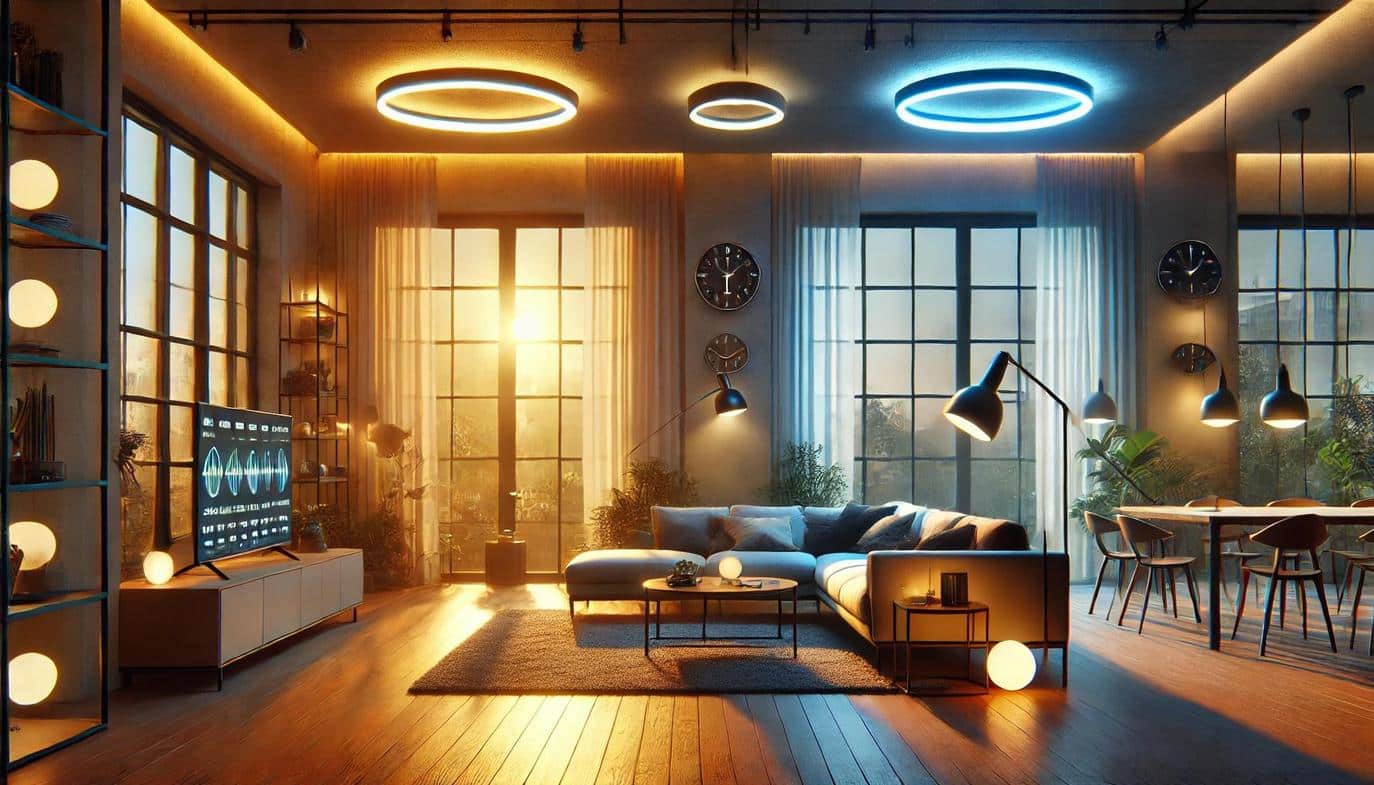
Build Your Plan: Circadian Lighting Scenes, Bedroom Air Purifier Setup, and Matter Automations
Step 1: Set Up Day to Night Lighting Scenes
Use the tools you already have. Most mainstream smart home ecosystems now include time-based scenes that shift color temperature and brightness across the day.
Morning to Midday
Select or create a bright, cooler white scene where you spend your morning. If you use Philips Hue, the Natural Light scene gradually transitions from cooler to warmer tones and can anchor your daytime routine. Position your primary work seat near a window when possible for additional daylight.
Evening Wind Down
About three hours before bedtime, switch to warm, dim scenes. Keep overheads off and favor table or floor lamps that put light below eye level. Aim to keep melanopic EDI under 10 by holding light levels low and choosing warmer tones. LIFX provides multi-step scheduling called Routines to automate these shifts on a set schedule.
Overnight Safety Lights
For bathrooms or hallways, use very dim amber or red night lights to stay under 1 melanopic lux. This keeps your space safe without restarting the alerting signal that makes it hard to return to sleep.

Step 2: Clean The Air Where You Sleep
Start with smart devices in the bedroom. Cleaner air here adds the most benefit per dollar because it directly affects the hours you spend asleep.
Choose The Right Purifier
Pick a smart air purifier with a CADR sized to your room and filters suitable for particles and odors. Use the AHAM Verifide program as your quick check for CADR ratings, and consult the EPA’s 2025 consumer guide for selection tips. Favor models with UL 2998 validation to avoid ozone.
Place it for Quiet, Effective Use
Place your smart purifier where air can circulate freely. Close the door at night to let the purifier work the room. Once the air is clear, reduce speed to minimize noise. ENERGY STAR guidance explains how CADR relates to area coverage and why right-sizing allows quieter operation overnight.
Choose Filters and “Zero Ozone” Designs
Some electronic air cleaners can generate ozone, which is a lung irritant and the opposite of what you want in a sleep space. Zero Ozone Emissions validation is recommended, also known as UL 2998, which caps emissions below 5 parts per billion and is stricter than many general safety thresholds. If a product markets ionization or “plasma” features without clear certification, it’s wise to avoid placing it in occupied rooms.
Night Lighting that Protects Melatonin
Evening light has a powerful effect on the body’s hormones. Large studies indicate that common household lighting before bed can suppress melatonin and delay its rise. You can counter this negative effect by using warm, dim lighting in the last few hours of the day and very low night lights for safety. Expert consensus translates these findings into practical smart device targets using the melanopic EDI metric: keep daytime light around or above 250 melanopic lux, keep evening light below 10, and keep nighttime light at or below 1.

Step 3: Automate With Sensors and Matter Devices
Matter brings air quality sensors and purifiers into the same smart device environment, so a trigger from any one brand can control devices from another.
Triggers To Try
- If PM2.5 is above 10 to 15 micrograms per cubic meter after 8 p.m., increase the bedroom smart purifier to medium until readings drop below 5. Use an air quality sensor that reports PM2.5 to your platform.
- If volatile organic compounds trend upward while cooking or cleaning, open a window or enable boosted ventilation, then revert to normal once levels recover. Eve Room tracks VOCs and works over Thread for low-latency updates.
- If bedroom lights turn on after midnight, shift them to a very warm, low scene to preserve melatonin, then return to normal in the morning. Hue’s scene library and wake features can handle these transitions.
Budget To Premium Example Stacks
- Budget stack: GoveeLife Smart Air Quality Monitor for PM2.5 and VOC trends paired with a correctly sized purifier and simple evening light scenes.
- Mid-tier stack: Ecobee Smart Thermostat Premium for on-device IAQ alerts, plus one air quality sensor in the bedroom and Matter automations linking air triggers to lights and purifiers.
- Premium stack: A whole room of high-quality tunable fixtures that mimic natural light through the day, combined with multi-room purifiers and central automations. Lutron Ketra is a reference example for full-spectrum, day-through-night control.

Decoding Sleep Science for Smart Homes: Why this Technique Works
Light Metrics for Better Sleep
Melanopic EDI expresses how biologically stimulating a light is to the circadian system. You don’t need a lab to benefit from it. Use the expert consensus thresholds below to shape your daily scenes.
Three Practical Light Targets
- Daytime target: at least 250 melanopic lux at eye level while you work or have breakfast. Sit near a window or use brighter, cooler scenes to reach this goal.
- Evening target: within three hours of bedtime, reduce overall brightness and blue content to keep melanopic EDI below 10. Table lamps and warm presets help.
- Night target: maintain ambient light under 1 melanopic lux for hallways and bathrooms, using very dim amber or red path lights for safety.
Air Metrics for a Healthier Home
Clean Air Delivery Rate (CADR) tells you how much filtered air a purifier produces at its highest setting, so a higher CADR cleans a room faster and allows for quieter operation at night. ENERGY STAR and AHAM provide plain-language explanations that map CADR to room size.
How to Size Your Purifier
Check your bedroom’s square footage and select a purifier with a CADR that matches or exceeds it for smoke, or follow the brand’s CADR-to-room charts. Simple, science-based changes help you fall asleep faster, sleep more soundly, and wake up clearer, all while running your home more efficiently and sustainably.
What Zero Ozone Means
Some electronic air cleaners can create ozone, a respiratory irritant. Look for the UL 2998 Zero Ozone Emissions validation to ensure your purifier cleans without adding a pollutant, as this validation is recognized by major authorities and is recommended for devices that could otherwise produce ozone.
What Studies Say About Sleep Outcomes
Evening Light Exposure
A large real-home study found that nearly half of households had evening light levels capable of suppressing melatonin by about 50 percent, and greater evening light was linked to more wakefulness after bedtime. Controlled lab work shows room light before sleep delays melatonin onset and shortens its duration. Together, these findings explain why a warm, dim evening is protective.
Air Pollution and Sleep
Systematic reviews associate exposure to PM2.5 and related pollutants with worse sleep quality and higher odds of sleep disorders. Reducing indoor pollutants is a practical way to defend sleep health while broader air quality policies evolve.

Smart Device Bedroom Upgrade Checklist for Better Sleep
Target Night Air Quality and Noise Levels
Your bedroom offers the highest return on investment for quality sleep health. Aim to keep fine particle levels as low as possible overnight, allowing a portable purifier to handle spikes from outdoor smoke or dust. Government guidance confirms that both ventilation and filtration reduce airborne contaminants, which helps prevent nighttime awakenings.
Practical PM Guidance for Bedrooms
While there’s no universal indoor PM2.5 limit, public health agencies advise keeping particle concentrations as low as possible. Use filtration when ventilation alone is not enough, especially during wildfire season or periods of poor outdoor air. Pairing a correctly sized purifier with basic ventilation addresses both the sources and symptoms of poor indoor air during sleep.
Right-Size and Place The Purifier
A purifier’s effectiveness depends on its size and placement. The most useful metric is the Clean Air Delivery Rate (CADR), which tells you how much clean air the device produces each minute. For quieter operation at night, choose a purifier with a CADR that matches or exceeds your room’s square footage.
Bedroom CADR Checklist
Measure your bedroom, then look for the smoke CADR on the box or spec sheet. Choose a model that meets or exceeds the recommended rating for your room size, and consider a higher CADR if your ceilings are taller than eight feet. This checklist ensures you select an effective model that provides quiet protection for your sleep.
Choose Filters and “Zero Ozone” Designs
Some electronic air cleaners can produce ozone, a respiratory irritant you do not want in your sleep space. We recommend looking for the UL 2998 Zero Ozone Emissions validation, as this certifies that a purifier cleans without adding a pollutant. Major authorities recognize this validation, which is stricter than many general safety thresholds.
Night Lighting That Protects Melatonin
Evening light has a powerful effect on the body’s hormones, with studies showing that common household lighting before bed can suppress melatonin. You can counter this by using warm, dim lighting in the last few hours of the day and very low night lights for safety. Expert consensus recommends keeping evening light below 10 melanopic lux and night light at or below 1 melanopic lux.
Temperature also plays a role in sleep quality, and some smart-bed systems now allow each side of the bed to be set separately, as with The Pod by Eight Sleep. This can be helpful for couples who sleep best at different temperatures.
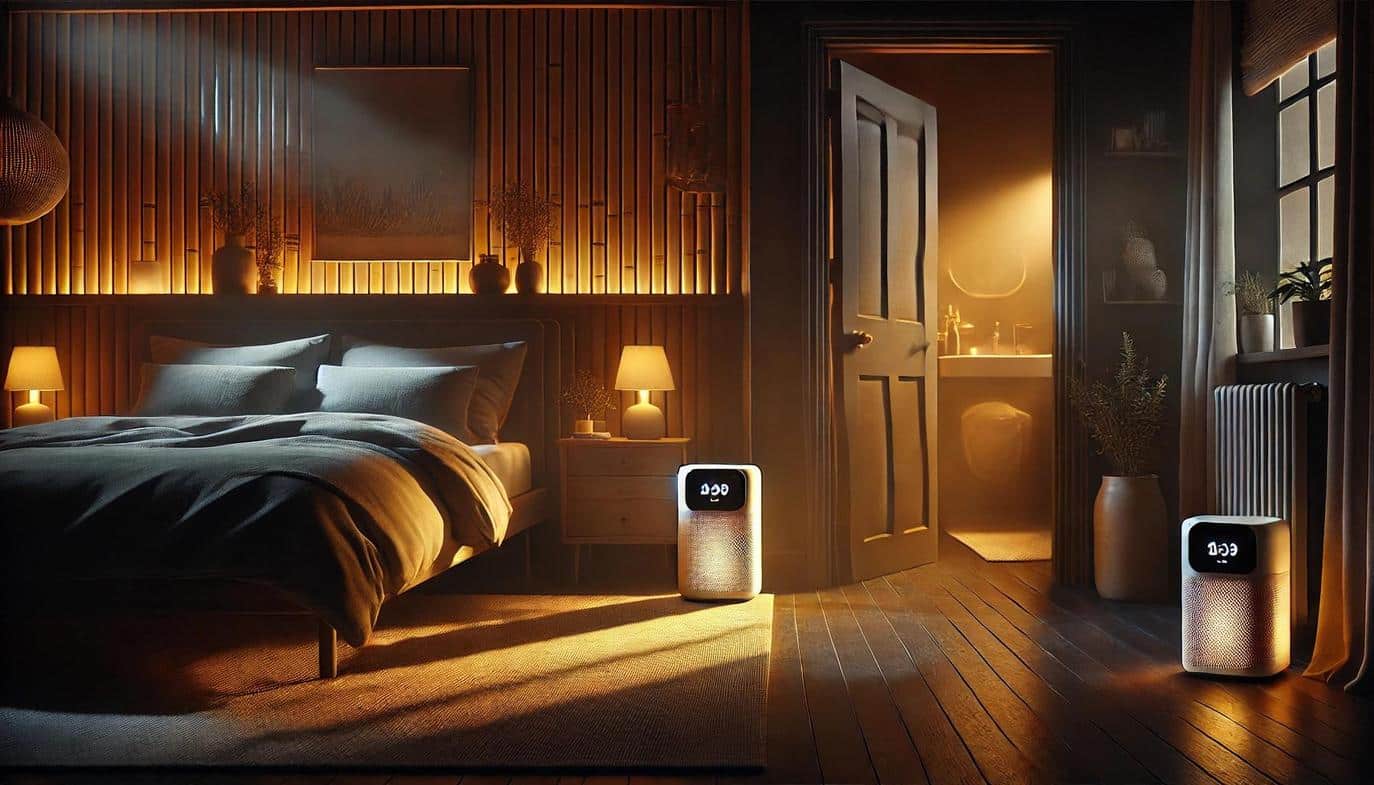
Your Smart Home Automates Better Sleeping Habits
Imagine your home guiding your body through the day with purpose. Your morning begins with bright, cooler white light to boost alertness, then shifts to warm, low-level lamps in the evening to help you release melatonin. At night, dim amber path lights guide you safely without disrupting sleep, all part of a simple, science-backed routine.
Your air quality sensors and purifiers work together to protect your rest. For example, if PM2.5 levels rise after 8 p.m., your purifier automatically increases its speed. If VOCs spike while cooking, your smart home can prompt you to open a window or run a vent fan, then settle back down when levels improve. This automated defense is seamless and effective.
Smart home automation is a natural convergence of technology and health, not a luxury. These routines take minutes to set up and then run in the background, compounding into significant benefits like earlier sleep onset, fewer awakenings, and more consistent mornings.
Common Myths and Mistakes About Circadian Lighting, Blue Light, Air Purifiers, CADR, Ozone, And Ventilation
Myth: Blue-Blocking Glasses Fix All Sleep Problems
While some evidence suggests benefits, a recent review found no consistent evidence for broad sleep improvements. Environmental light management remains the most reliable approach, as clinical research shows it reliably affects melatonin timing.
Mistake: Any Air Cleaner Will Improve Sleep
Some electronic air cleaners can produce ozone, a lung irritant you do not want in your sleep space. We recommend choosing filtration-based purifiers and looking for the UL 2998 Zero Ozone Emissions validation for added assurance.
Mistake: Undersizing the Purifier
Undersizing a unit is the most common error in air purification. Follow CADR guidance that matches the purifier to your room size, ensuring it can handle particle loads and run quietly overnight.
Myth: Evening Light Color is All that Matters
While light color helps, intensity and timing are just as important for sleep health. Studies show that combining warm colors with lower brightness before bedtime reliably supports melatonin production.
Mistake: Ignoring Basic Ventilation
Filtration systems enhance air quality, but they cannot substitute for bringing in fresh air when conditions permit. Health agencies recommend simple steps like opening windows or using exhaust fans to reduce airborne pollutants.


