
Screws are essential components in the toolbox of any DIY enthusiast. Their versatility and functionality make them indispensable for various projects, from assembling furniture to building a deck. This guide aims to provide a thorough understanding of the different types of screws and how to choose the right one for your project.
Basics of Screws
At their core, screws are simple devices. They consist of a cylindrical shaft with a helical ridge (the thread) wrapped around it. The head, located at one end, typically features a slot or indentation for a screwdriver. Screws work by converting rotational force into linear motion, securing materials together through friction and compression. For specific applications, you might use socket set screws which are designed to hold objects together in a precise position without the need for nuts.

Screws are favored in construction for their holding power and ability to be removed and reused. Understanding the basic components and how screws work is crucial for selecting the right type for your project.
Types of Screws Based on Head Shape
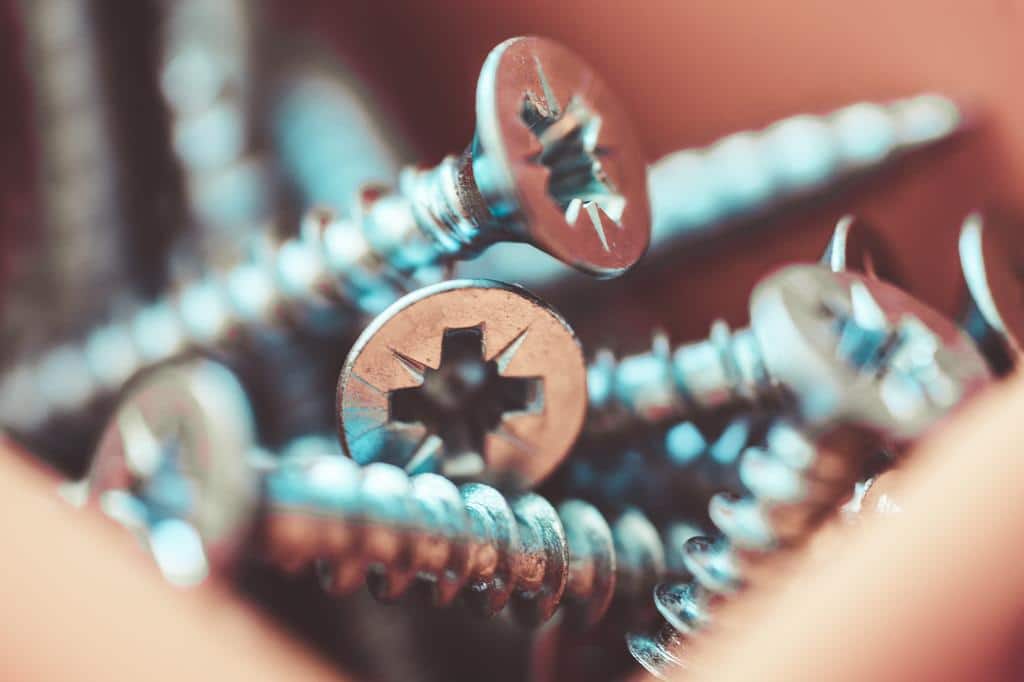
Flat head screws have a flat top that sits flush with the material’s surface when fully driven in. They are commonly used in woodworking and cabinetry, providing a clean, finished look. The main advantage is that they can be countersunk but may not be suitable for applications requiring frequent removal.
Round head screws feature a domed top that sits above the material’s surface. They are often used in applications where a low-profile head is not required, such as attaching metal parts. These screws are easy to remove and reuse, but they may not provide a sleek finish.

Pan head screws have a slightly rounded top with a flat bearing surface. They are versatile and commonly used in electronics and machinery. Their broad surface provides good holding power, but they may not be ideal for countersinking.

Types of Screws Based on Drive Types
Phillips head screws have a cross-shaped indentation on the head, designed to prevent the screwdriver from slipping out. They are widely used in many applications due to their ease of use. However, they can be prone to stripping if over-tightened.

Slotted head screws have a single slot across the head, requiring a flat-blade screwdriver. They are one of the oldest types of screws and are still used in applications where a simple, straightforward fastener is needed. The downside is that the screwdriver can easily slip out of the slot, making it harder to drive.

Torx screws have a star-shaped indentation, providing a more secure grip and reducing the risk of cam-out (slipping). They are commonly used in automotive and electronic applications. Torx screws offer excellent torque transfer but require a specialized screwdriver.

Types of Screws Based on Material
Wood screws are specifically designed for fastening wood. They have coarse threads that grip the wood fibers and a smooth shank that allows the top piece of wood to be pulled tightly against the piece below. Best practices for using wood screws include pre-drilling pilot holes to prevent splitting and choosing screws made of corrosion-resistant materials for outdoor projects.
Metal screws are used to fasten metal parts together or attach metal to other materials. They typically have finer threads than wood screws and may be self-tapping, meaning they create their own threads as they are driven in. When using metal screws, it’s essential to match the screw material to the metal being fastened to avoid galvanic corrosion.
Plastic screws are designed for use with plastic materials. They have sharp threads that create a strong hold without cracking the plastic. Best practices include using the appropriate screw size to avoid overtightening and ensuring compatibility with the plastic type.
Specialized Screws
Machine screws are designed for use with nuts or threaded holes. They have uniform threads and are used in applications requiring precise fastening, such as in machinery and electronics. They come in various sizes and materials, making them suitable for a wide range of uses.

Self-tapping screws can create their own threads as they are driven into materials, eliminating the need for pre-drilling. They are commonly used in metal and plastic applications. Their main advantage is ease of use, but care must be taken to avoid overtightening and damaging the material.

Concrete screws are designed to anchor objects to concrete, brick, or masonry. They have hardened threads that can cut into these tough materials. Proper installation involves drilling a pilot hole and using a screw with the appropriate diameter and length for the load and material.

Conclusion
Understanding the various types of screws and their applications is essential for any DIY enthusiast. By selecting the right screw for your project, you can ensure a secure and durable connection. Remember to consider the material, size, head type, and drive type when choosing screws, and follow best practices for installation and maintenance.


