
Imagine a creature so adept at hiding that it literally vanishes from sight. It’s not a mythical being but a real-life amphibian known as the glass frog. These remarkable frogs, native to the forests of Central and South America, have long fascinated scientists with their almost invisible bodies. Until recently, the secret to their incredible disappearing act remained a mystery. However, recent breakthroughs have revealed the fascinating mechanisms behind this natural wonder, offering insights that could revolutionize fields ranging from biology to medicine.
These frogs aren’t just interesting to look at—they’re also key to understanding how life can adapt to extreme conditions. Through understanding the biology of glass frogs, we may unlock secrets that could help develop new medical treatments and innovations in science. In this article, we will dive into the historical journey of studying these fascinating creatures, the scientific discoveries that unveiled their secrets, and the vast potential these findings hold for future applications.
A Brief History of Glass Frog Research
The journey to understanding the glass frog’s invisibility began decades ago. Curiosity was piqued by these small amphibians with their transparent skin and the fascinating ability to reveal their internal organs without dissection. The term “glass frog” was coined due to their translucent belly, through which you can observe their heart, liver, and even intestines.
Early researchers were intrigued but faced immense difficulty in studying these creatures’ unique properties. Their nocturnal lifestyle made observations challenging, as did the fact that their most intriguing invisible traits were only apparent while they slept. This meant scientists had to adapt to the frog’s night-time activity patterns, essentially becoming nocturnal themselves to capture necessary data.
For years, the enigma of how these frogs achieved such transparency baffled scientists. It was known that many aquatic animals like jellyfish and certain types of shrimp are transparent. However, achieving and maintaining transparency on land posed a far more complex challenge due to differences in light absorption and scattering by tissues.

How Glass Frogs Turn Invisible
The breakthrough discovery of how glass frogs become invisible was as fascinating as it was pivotal. Researchers uncovered that the key lies in how these frogs manage their blood. When glass frogs go to sleep, they siphon off nearly 90% of their red blood cells into crystal-lined sacs within their liver. These sacs act like mirrors, reflecting incoming light and rendering the frogs nearly invisible. With their brightly colored red blood cells hidden away, the frogs’ bodies become two to three times more transparent, helping them blend into their surroundings and avoid predators.
To unlock this secret, scientists utilized advanced imaging techniques, including a method known as photoacoustic microscopy. This technique involves using laser pulses to penetrate the frog’s tissues and detect sound waves generated when light strikes hemoglobin, the protein in red blood cells that carries oxygen. This allowed the researchers to visualize where the blood cells were being stored and understand how the frogs’ transparency increased significantly during sleep.
Ingenious Adaptations and Medical Insights
Further research revealed more about the frogs’ ingenious adaptations. The storage of red blood cells in the liver isn’t just a random occurrence; it’s highly organized. Their liver, enveloped in reflective, mirror-like crystals, effectively camouflages the packed red blood cells. The liver expands by about 40% to accommodate the additional cells during this process. When the frogs awaken, these cells quickly re-enter circulation, returning the frogs to their normal, opaque state.
These discoveries don’t only explain a remarkable natural phenomenon but also offer promising insights for medical science. Knowing how glass frogs manage to avoid blood clots while tightly packing their red blood cells can lead to breakthroughs in understanding and treating blood clotting disorders in humans. It’s a unique example of how life adapts in extraordinary ways to ensure survival, holding valuable lessons for a variety of scientific fields.
The Glass Frog’s Survival Strategy in the Wild
In the dense forests of Central and South America, where glass frogs make their home, survival tactics are a matter of life and death. The frogs’ transparency is not just a quirky trait but a critical survival strategy that helps them avoid predators. During the day, when these nocturnal creatures are most vulnerable, they cling to the undersides of leaves. Their transparent skin and hidden blood cells make them nearly invisible from both above and below, effectively rendering them invisible to birds and other predators passing by.
Transparency is a rare and complex trait in the animal kingdom, particularly on land. While many aquatic animals, like jellyfish and certain shrimp, use transparency to avoid predators in the water, glass frogs are among the few land-dwelling creatures to adopt this method. Their ability to hide in plain sight by becoming transparent during the day is a fascinating adaptation that significantly enhances their chances of survival.
What’s even more impressive is how these frogs manage this feat so efficiently. By packing nearly all of their red blood cells into their liver, they remove the primary obstacle to transparency. Red blood cells absorb light, which would normally make the frogs visible. However, by hiding these cells in a reflective, crystal-lined liver, the frogs avoid casting any shadows, thus blending seamlessly into their leafy surroundings.
Glass Frog Genetic and Physiological Insights
Understanding the inner workings of how glass frogs achieve and maintain their transparency opens up a treasure trove of genetic and physiological insights.
Broader Implications
The implications of decoding the glass frog’s transparency are vast and promising, extending well beyond the realm of amphibian biology. One of the most exciting prospects is the potential application in medical science, particularly in the study of blood clotting disorders. By understanding how glass frogs manage to pack their red blood cells without causing clots, scientists could develop new treatments for conditions like thrombosis in humans.
Ecological Insights
Moreover, the study of glass frogs’ transparency offers broader ecological insights. By understanding how these frogs interact with their environment and evade predators, researchers can better inform conservation strategies for other transparent or camouflaged species. It also opens up new avenues for creating biomimetic materials—substances engineered to mimic the efficient and adaptive traits found in nature.
The study of glass frogs answers age-old questions about how these creatures achieve their near-invisibility and opens up a world of new possibilities. From medical breakthroughs to biotechnological innovations, the potential applications of these findings are as diverse as they are groundbreaking. The intricate genetic landscape uncovered in these studies provides a deeper understanding of glass frogs and paves the way for potential applications in biotechnology. It’s a testament to the incredible adaptability of life and a reminder of the untapped potential that lies in studying the natural world.
Comparative Insights: Tardigrades and Extreme Survival
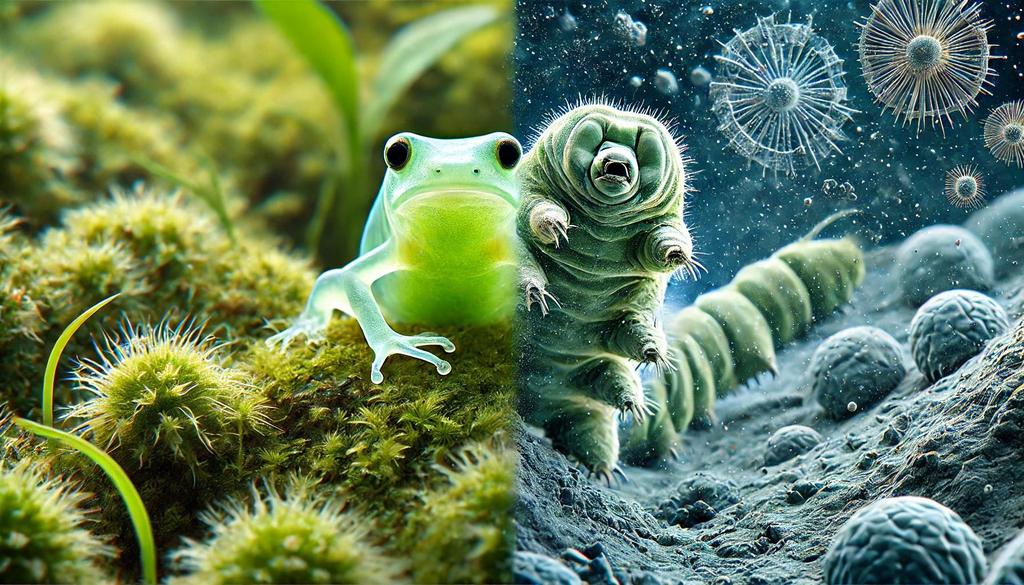
When it comes to surviving extreme conditions, glass frogs aren’t the only fascinating creatures in the spotlight. Tardigrades, commonly known as “water bears,” are microscopic organisms renowned for their unparalleled resilience. These tiny creatures can survive in some of the harshest environments imaginable, from the vacuum of space to the depths of the ocean. But what makes tardigrades so indestructible, and how do their survival strategies compare to those of glass frogs?
Tardigrades have the remarkable ability to enter a state called anhydrobiosis, where they effectively shut down their metabolism and lose almost all their water content. In this dormant state, known as a “tun,” tardigrades can withstand extreme temperatures, radiation, and even the vacuum of space. Their secret lies in unique proteins and genetic adaptations that protect their cells and DNA from damage.
Specialized Proteins and Evolutionary Adaptations
Recent research has shown that tardigrades possess specialized proteins like Cytosolic Abundant Heat Soluble (CAHS) proteins, which play a crucial role in their ability to endure desiccation. These proteins prevent cellular damage by stabilizing the structure of cells and proteins when water is scarce. Additionally, the genes responsible for these adaptations have undergone multiple duplications, indicating a complex evolutionary history aimed at maximizing survival.
The resilience of both glass frogs and tardigrades illustrates nature’s incredible capacity for adaptation. While the glass frog’s ability to hide its red blood cells in its liver is a remarkable example of biological camouflage, the tardigrade’s capacity to withstand extreme conditions through anhydrobiosis offers valuable insights into life’s potential for endurance. By studying these organisms, scientists can gain a deeper understanding of how life can persist in the face of seemingly insurmountable challenges.

Future Directions in Biology Research
The discovery of how glass frogs achieve their transparency and the extremotolerance of tardigrades opens new avenues for scientific exploration. One promising direction is the potential application of these findings in medical research. For instance, understanding how glass frogs manage to prevent blood clots while densely packing their red blood cells could lead to innovative treatments for human blood-related conditions like thrombosis.
Biotechnological Innovations from Genetic Insights
Further research into the genetic adaptations of glass frogs can also inspire advancements in biotechnology. By deciphering the genes and proteins that enable these frogs to survive and thrive, scientists could engineer crops that are more resilient to drought or develop new materials that can withstand extreme environments, such as those encountered in space exploration.
Expanding Genomic Research and Comparative Studies
Ongoing efforts to sequence the genomes of various species of glass frogs will provide a more comprehensive understanding of their unique adaptations. Large-scale sequencing projects aim to fill gaps in the current genetic data and uncover additional insights into their biology. These initiatives are essential for building a robust framework for future research and applications.
Comparative studies involving other resilient organisms, like tardigrades, will also play a critical role in expanding our knowledge. By examining similarities and differences in survival mechanisms across species, researchers can identify common genetic threads that may be harnessed for practical applications in medicine, agriculture, and beyond.
Appreciating Nature’s Resilience and Future Potential
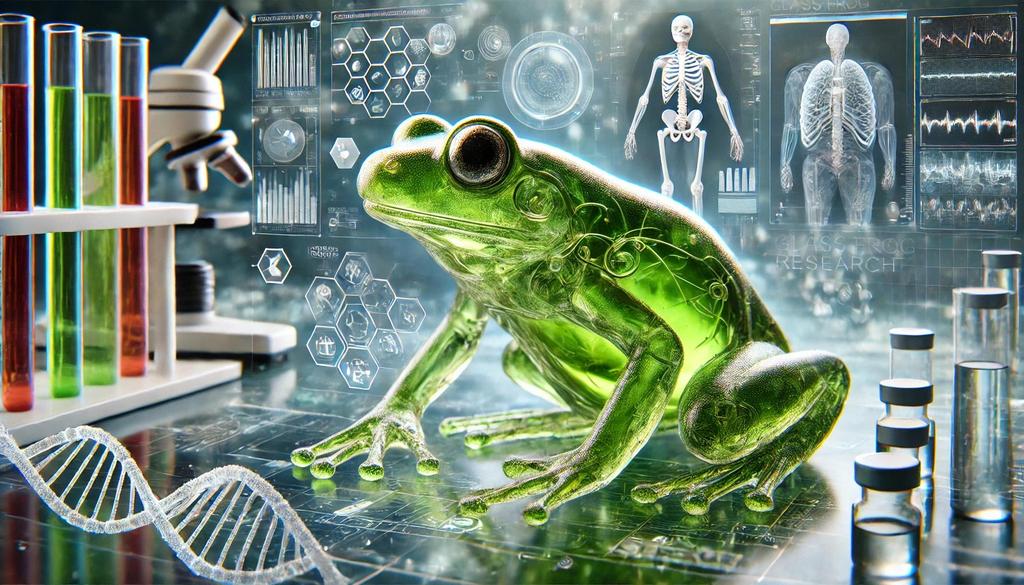
The exploration of how glass frogs turn invisible and the comparative study of tardigrades’ extreme survival capabilities highlight the extraordinary resilience of life in the natural world. These tiny amphibians and microscopic water bears offer a fascinating glimpse into the biological marvels that enable survival under the most challenging conditions.
The journey to uncover these secrets has not only answered longstanding questions but also opened the door to a wide array of potential applications. From groundbreaking medical treatments to innovative biotechnological solutions, the implications of this research are both exciting and far-reaching.
As scientists continue to delve deeper into the genetic and physiological intricacies of these remarkable creatures, we can look forward to a future where their extraordinary capabilities may be harnessed to address some of humanity’s most pressing challenges.
In understanding the resilience of glass frogs and tardigrades, we gain more than scientific knowledge—we gain a profound appreciation for the adaptability and ingenuity inherent in nature. These discoveries remind us of the vast potential that lies within the natural world and the endless possibilities that arise from studying it.


