
In a world where “unprecedented” may feel like a term worn thin by overuse, occasionally, a story emerges that fully merits its use, compelling us to look with fresh eyes at the wondrous possibilities of medical science. Such is the tale of Tyson, the French Bulldog puppy whose journey is redefining the contours of veterinary capability.
Tyson’s Miraculous Tale: The Puppy with a Regrown Jaw
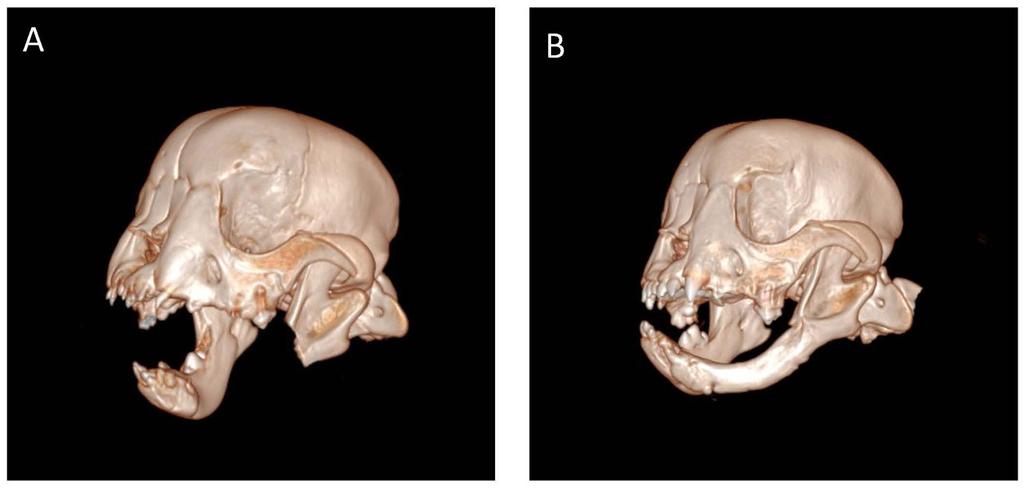
In an extraordinary medical triumph that seems borrowed from the pages of a fantastical novel, a three-month-old French Bulldog named Tyson has made history. Post a life-saving but drastic surgery to remove a cancerous tumor from his jaw at the Cornell University College of Veterinary Medicine, this tenacious little canine surprised everyone by achieving the seemingly impossible – regrowth of his mandible, the lower jawbone.
What could easily be brushed off as another modern-day marvel of advanced veterinary practice is, in reality, a phenomenon that transcends the known boundaries of canine physiological resilience. While instances of spontaneous regeneration are recorded in human children, Tyson marks the very first data point in the veterinary annals where a dog has regrown such a significant portion of the jawbone, leaving experts and pet owners alike in awe.
Hope in Desperation: The Crucial Choice
Tyson’s journey into the medical history books began under a cloud of uncertainty. With a malignant tumor gnawing away at his lower left mandible, his prospects appeared grim. His ailment, diagnosed as oral papillary squamous cell carcinoma – a vicious enemy that has claimed many lives – required immediate and aggressive intervention. Veterinarians led by Dr. Alexandra Wright determined that the only viable course of action was to operate and remove the majority of Tyson’s affected mandible. The decision was fraught with emotional and practical complexities, particularly given Tyson’s tender age and the invasive nature of the procedure.
Amid the daunting reality of a potential life marred by disability and struggle, Tyson’s owners, Melissa Forsythe, and Mike Lacagnina, resolved to grasp at the slender thread of hope offered by a clear CT scan. Electing surgery, they set the stage for what would become a groundbreaking outcome.
Scientific Underpinnings and the Mystery Unsolved
In the traditional sense, when such a substantial segment of bone is excised, the prospect of regeneration is all but discounted. However, Tyson defied these odds, his unexpectedly swift and comprehensive recovery pointing to the critical preservation of periosteum – a delicate, vascular membrane enveloping the bones – during his surgery. As hypothesized in the report published by Dr. Wright in Frontiers in Veterinary Science, this preservation was pivotal to the regenerative miracle.
Nonetheless, this explanation only skims the surface of a complex bio-medical puzzle. The circumstances specific to Tyson’s case – the extent of bone removed, his young age, and the rapidity of the regrowth – continue to intrigue researchers and beg further investigation into canine regenerative potential.
A Triumphant Aftermath for a Resilient Pup
Today, Tyson’s reconstructed jaw is nearly as functional as his original one, although it is understandably deemed atypical due to the absence of several features, like the mandibular canal and teeth. Despite these deviations from normalcy, its symmetry prevents any alignment issues, and, hearteningly, there are no traces of cancer in the newly formed bone.
Beyond the medical marvel, Tyson’s story is one of hope and defiance against dire prognoses. His routine is now as wholesome as that of any other puppy; after overcoming a subsequent cleft palate surgery, he revels in the joys of water-soaked kibble and delights in his array of soft toys, eschewing hard food for precaution. His milestones are a testament to both his resilience and the dedicated care of the Cornell team. From obedience classes to a celebrated appearance in a local Christmas parade, Tyson’s life post-surgery brims with normalcy and achievements.

Implications for Future Veterinary Practice
The ripple effect of Tyson’s case is far-reaching, cultivating optimism for similar diagnoses and fostering a scientific curiosity that could eventually lead to advancing treatment practices for pets with severe health issues. His is an emblematic tale of a medical rarity transfiguring into a beacon of hope, potentially redefining what’s possible in veterinary care.
As Dr. Wright so aptly summarizes, Tyson’s case now stands as a crucial informant of complete bone regeneration potential in puppies. Moreover, it evokes an enduring belief in second chances, a belief that even the most dreadful conditions can yield to the vitality of life and the wonders of medical science.
For the well-informed pet owner or the curious reader, Tyson’s is not just a medical case study; it is an uplifting narrative that reminds us of life’s boundless capacity for surprise and renewal. For all seeking information and inspiration, Tyson’s tale is a monumental testament to the miracles that dedicated care and advanced veterinary science can bring about.

