
Imagine a world where every whispered word, every melody, every heartbeat measured through sound were rendered lifeless, lost without the medium to be heard. Now, realize the astonishing truth that a single invention by James E. West, a black scientist whose story we celebrate during Black History Month, gave voice to the voiceless technology of our time. West’s creation of the electret microphone empowers the sounds of billions of devices worldwide. In recognizing his pioneering work, we also amplify a critical narrative: the necessity to sustain and cherish black contributions within the realm of STEM.
I. The Man Behind the Microphone: James E. West
James Edward Maceo West—born on February 10, 1931, in Farmville, Virginia—was fascinated by the mysteries of electricity from his youth. A startling jolt from a radio, rather than causing fear, fueled a precocious West’s passion for understanding the enigmatic flows of current and voltage. This spark led him to wire homes with his bare hands and lay the groundwork for a future bright with innovation. Disregarding conventional expectations, he pursued physics with a zealous spirit, a decision that blossomed into a career punctuated by more than 250 patents and his name indelibly inked into history alongside fellow black innovators.
II. The Electret Microphone: A Tiny Device with a Towering Impact
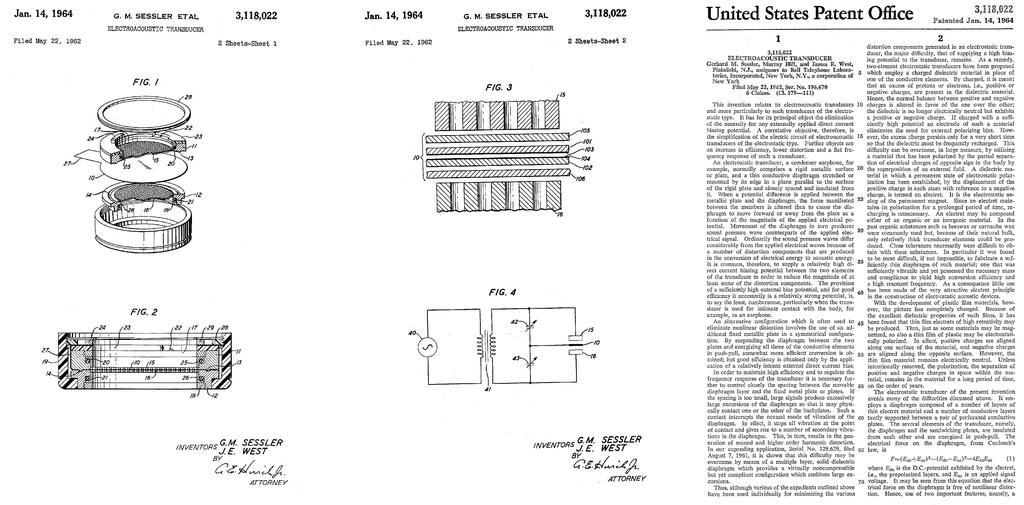
In the unruffled sanctum of a Bell Laboratories workspace in 1962, a revolution was silently set into motion. James E. West, alongside Gerhard Sessler, embarked on a quest to reimagine acoustic technology. The fruit of their labor was something seemingly unpretentious yet revolutionary—the electret microphone. This innovative auditory alchemy involved the use of an electret, essentially a piece of Teflon that could hold an electrical charge, to replace the bulky batteries of older microphones. The sleek design and cost-effective production of this microphone marked the birth of a new era in sound transmission.
The electret microphone swiftly made its ascent to ubiquity, enveloping the globe in a sonic embrace. Over 90% of microphones produced today are descendants of West’s invention. They find homes in theatrical stages, crossing continents with every call made on a cell phone, whispering in the ears of billions through earbuds and hearing aids, and translating the details of our virtual conversations with lifelike precision during teleconferences. Their impact has traversed beyond Earth’s atmosphere, aiding communication in the vast expanse of space, proving the electret microphone is not merely an invention but a cornerstone of modern human interaction.
The implications of this invention are profound. In healthcare, it transformed hearing aids, turning an orchestrated stroll in the park into a pleasure rather than a cacophony of vibrations. Musicians and content creators can now record studio-quality audio from virtually anywhere. Smartphones, with their embedded electret microphones, have democratized communication, enabling voices to be heard from every corner of the Earth—voices that include the whispers of intimacy, the negotiations of commerce, and the fiery rhetorics of freedom.
The electret microphone has altered the paradigm not only for personal devices but the fabrics of surveillance and security. It is a trusted companion in law enforcement and intelligence, listening intently and capturing sounds that might otherwise be missed. It has contributed to scientific exploration, from the monitoring of environmental sounds to gauge ecological health to the preservation of endangered languages.
As we marvel at the impact of West’s electret microphone, we pay homage to a device that has become astonishingly woven into the fabric of daily life. It highlights an unparalleled innovation—one that amplifies the notion that the smallest of changes can carry the most profound of reverberations throughout society and beyond.
(Credit: The History Makers)
III. A Legacy of Patents and Innovations
Crowned with an astounding array of patents that have cascaded throughout the globe and seeped into the grains of our daily lives, James E. West’s prolific career at Bell Laboratories spanned more than four decades of unrelenting ingenuity. This stretch of time witnessed a cascade of over 250 U.S. and foreign patents – a testament not just to his genius but to his steadfast commitment to elevating the quality of sound and communication technologies across continents.
In those 40 years, West’s pioneering spirit never wavered; he coalesced his acoustical know-how with a keen sense for materials science, resulting in a pantheon of devices that have remodeled the acoustic landscape. His patents extend far beyond the omnipresent electret microphone, crafting a legacy that has profoundly impacted solid-state physics and paved the way for advancements in teleconferencing, bioacoustics, and environmental acoustics.
Transitioning from industry to academia, West’s tenure at Bell Laboratories culminated in his transition to Johns Hopkins University as a research professor. His arrival at the academic institution brought with it an air of mentorship as he set his sights on crafting the next generation of innovators. West found kindred spirits in the students and researchers of Johns Hopkins, their doors perpetually open, reminiscent of the collaborative ethos that had fueled his own discoveries.
At the heart of West’s philosophy lies an unwavering belief that innovation thrives in a space unfettered by disciplinary silos – a space where the mind is allowed a 360-degree panorama of vision and inquiry. Here, he works diligently to transmit stereophonic sound across the swiftly swirling tides of the internet and contrive transducers that are silent yet powerful in their functionality.
West’s inexhaustible efforts to mold a more inclusive STEM community prove that his legacy is not confined to laboratories or patents but vitally thrives in the young minds he inspires. His work resonates beyond the realm of achievements inscribed on paper, extending its echoes into an academia re-imagined by the talent and aspirations of a more diverse generation of scientists-to-be.
*Follow our series as we delve further into the narrative threads of black scientists like James E. West, whose indelible contributions enrich our grasp of science and beckon toward a more inclusive future built on the bedrock of ingenuity and diversity.*
IV. Champion of Diversity in Science
In the laboratories where hypotheses sparkle into life-changing technologies, James E. West has always understood that innovation thrives on diversity. Stemming from his leadership prowess and determined advocacy, West co-founded the Association of Black Laboratories Employees (ABLE) at Bell Laboratories. His dedication to this cause mirrored the same meticulous approach he applied to his inventions. ABLE’s inception was more than a statement; it was a transformative movement nurturing an environment where minorities could voice their ideas and ascend the scientific ranks uninhibited by the glass ceilings of their time.
Dr. West’s advocacy wasn’t confined within the walls of Bell Laboratories. As an acutely conscious figure, he fervently espoused causes that extended into the realms of social justice and educational upliftment. Growing up with a mother who led local NAACP efforts and faced adversity head-on, West embraced the calling to blend scientific inquiry with civic activism. It’s this unwavering conviction that has seen him invest generously in future talents, particularly championing programs to incite interest among women and minorities in STEM disciplines.
By fusing his acumen with a vehement belief in equal opportunities, West has dynamically altered the landscape for aspiring black scientists. His mentorship has been a clarion call, beckoning many to probe into realms previously deemed inaccessible to them—realms now vibrant with the possibility of discovery and advancement.
V. Recognitions and Awards
The amplitude of James E. West’s impact has reverberated far and wide, earning him accolades that resonate with the depth of his contributions. His induction into the National Inventors Hall of Fame parallels the innovation and utility his inventions have brought to society. This prestigious recognition is a monumental tribute to a lifetime of excellence and pioneerism.
West’s accolades also include the National Medal of Technology, presented by none other than the President of the United States. This honor underscores the national and global importance of his work and the incontestable influence he wields in technology, innovation, and public life.
Further testament to his eminence, West has received honorary doctorates from illustrious institutions like Michigan State University and the New Jersey Institute of Technology. As a Fellow of the Institute of Electrical and Electronics Engineers (IEEE) and the Acoustical Society of America, he stands among his peers as a giant whose vision reshaped the world.
But beyond the medals, the honors, and the ceremonious inductions, the true measure of James E. West’s achievements is the silent testament of microphones embedded in technology ubiquitously used by billions. His body of work, enshrined in the annals of science and innovation, serves not only as a beacon of ingenuity but as irrefutable proof that diversity in thought and background fuels the fires of progress.

VI. The Influence of West’s Work Today
Fast forward to our modern age, where the strands of progress are tethered to the technological wonders that James E. West helped weave, and his influence is indisputable. The microphones he reimagined now form the very fabric of devices that are integral to our daily lives; smartphones relay our voices, laptops carry our commands, and audio equipment captures the cacophony of life – all with crystal clarity, thanks to his innovation. West’s electret microphone, a marvel of economic and efficient sound capture, resonates within the walls of recording studios and the confines of hearing aids, demonstrating that true genius lies in creating breakthroughs that become second nature to societal use.
West’s current endeavors at Johns Hopkins University include spearheading research to enrich communication through improved teleconferencing technology. He continues to unveil the potential for sound to shape human connections, pushing forward the boundaries of what’s possible with internet-transmitted stereophonic sound and exploring cutting-edge transducers. His work remains a beacon, illuminating the path of endless possibilities for audio-visual technology’s future.
VII. Supporting Black Education in STEM
James E. West’s legacy is equally cemented in his efforts to ensure a lasting resonance for black scientists in STEM fields. His advocacy and mentorship offer a melody of motivation that harmonizes with the ongoing need for diversity in scientific research and development. West’s dedication to demystifying science and technology for minorities and women holds the promise of a brighter, more inclusive domain of innovation where the next electrifying discovery could come from any inspired mind, regardless of background.
The elevation of black education in STEM is crucial to nurturing a future that values and invests in a diversified intellectual landscape, echoing West’s principle that the song of progress is most harmonious when sung with a chorus of diverse voices. In advocating for educational programs and opportunities that empower underrepresented groups, we pay tribute to visionaries like West, who amplify the potential and abilities of every student, thus orchestrating a symphony of new ideas and solutions to the world’s grandest challenges.

VII. Conclusion
As the curtain falls on this tribute to the remarkable James E. West, we’ve journeyed through the sonic landscapes and technological revolutions he contributed to, from the transformative electret microphone to the amplification of underrepresented voices in STEM. It’s not just the lyrical notes of his inventions that will dance through the annals of history, but the profound narrative of a black scientist who remixed the composition of the scientific community and set the stage for a more diverse and vibrant generation of innovators.
As we celebrate Black History Month, let West’s odyssey remind us that the crescendos of accomplishment are often harmonized by the quietest of innovators. His story underscores the extraordinary symphony of persistence, passion, and purpose—a true embodiment of STEM excellence and a lodestar for the ever-present need to support and celebrate diversity in the sciences. His cadences of change compose an ongoing inspiration, encouraging all of us to listen closely and contribute to the grand melody of human progress.
As the echo of James E. West’s life and work fades back into the silence from whence it came, we are left with the resounding lesson that the frequency of our collective future relies on the amplitude of our support for diversity and education in STEM—a message we’ll continue to transmit, loud and clear.
*As we delve into the crescendo of our Black History Month Feature Series, we invite you to reflect on the significance of supporting black innovators, a tune that James E. West has composed throughout his distinguished career and continues to conduct with enduring passion and purpose.*


