
(Updated links to reflect new Black History Month feature highlights on February 6th, 2024)
Black History Month, observed annually in February in the United States and Canada and in October in the United Kingdom, is a dedicated period to recognize and honor the profound contributions, rich culture, and historical accomplishments of African Americans and black individuals around the globe. It is a time to reflect on the struggles and achievements of black people who have shaped history, confronting social injustice and racial discrimination to make significant strides in all sectors of society.
The month serves as an educational and celebratory observance, where schools, communities, and organizations engage in dialogues, exhibitions, and events that highlight the enduring impact and influence of the black diaspora. Black History Month is not only a tribute to the past but also a call to acknowledge ongoing racial challenges, promoting understanding, unity, and action toward a more equitable future.

Empowering Narratives: A Salute to Black Excellence in Science
It is of paramount importance to acknowledge and amplify the monumental achievements of black individuals throughout history. Examining the grand accomplishments of black leaders not only illuminates their remarkable contributions to various fields but also reshapes the narrative of history to be inclusive of all voices and experiences.
It is equally critical to recognize the enduring legacy of resilience and unwavering determination within the black community, as it is through struggle and strife that transformative leaders emerge, driving monumental change that reverberates across the globe. By acknowledging the profound impact of black leaders, we elevate a narrative of empowerment and inspiration, fostering a deeper understanding of the invaluable role black individuals have played in shaping diverse aspects of human existence and enacting positive change.
In celebration of Black History Month this February 2024, we will pay homage to the legacy of black excellence in science by featuring the story of one black pioneer each day. This special daily feature will spotlight groundbreaking scientists, engineers, inventors, and environmentalists whose industrious spirits and influential contributions have indelibly advanced their fields.
As we chronicle their life journeys, achievements, and the indomitable courage they embodied in the face of adversity, we aim to educate, inspire, and spark dialogue. Through this month-long observance, we honor their work, acclaim their intellectual heritage, and ensure that the triumphs of these trailblazers are given their rightful place in the annals of scientific history and continue to shine as beacons of possibility and progress.

Daily Chronicles of Black Pioneers Who Have Shaped Our World
The following list comprises the 29 remarkable individuals who will be honored during Black History Month this year, with each person representing a pivotal figure in the realms of science, technology, engineering, or environmental advocacy. Throughout the month of February, we will update this article daily with a link to the featured pioneer of the day, allowing readers to immerse themselves in the stories of these extraordinary leaders. By delving into their accomplishments, challenges, and enduring impact, we aim to shed light on the profound contributions of these luminaries and inspire a deeper appreciation for their groundbreaking work. Join us each day as we pay tribute to these remarkable individuals and celebrate their indelible imprint on the world.
This compilation is a celebration of the remarkable achievements of black inventors, scientists, engineers, and eco-conscious pioneers whose contributions have had a profound impact on the modern world. Spanning various fields, from medicine to environmental science and from technological innovation to space exploration, these twenty-nine individuals represent the pioneering spirit and intellectual rigor that have driven progress and pushed the frontiers of human understanding. They overcame societal hurdles and engrained prejudices to deliver groundbreaking work, demonstrating excellence in their respective domains and inspiring generations to come.

Black History Month 2024: Trailblazers of Global Progress
Their inventions range from lifesaving medical devices to fundamental improvements in daily living, such as improved household security systems and efficient traffic signals. These innovators made it possible to explore the profundities of space, comprehend the nuances of environmental science, and harness the transformative power of STEM fields.
The list includes not only historical figures whose legacies are firmly etched in time but also contemporary minds actively shaping the future. Together, they symbolize a legacy of resilience, ingenuity, and a relentless quest for knowledge that transcends race, propelling not just their communities but all of humanity forward.
As we embark on this enlightening journey through Black History Month, we warmly invite every one of you to join us in celebrating and rediscovering the rich tapestry of black history. Together, let’s honor the perseverance, intellect, and creativity of these 29 pioneers who have illuminated the paths to our present and future.
We look forward to sharing and illuminating their extraordinary tales, hopeful that their lives will continue to inspire and guide us. So come along, let us lift up the voices of the past and carry their legacy boldly into tomorrow with joyous recognition and heartfelt appreciation for the vibrant history they’ve woven. Happy Black History Month! May this February be filled with learning, reflection, and boundless inspiration.
With every new feature we post about these black pioneers, we will provide a link to the new feature in the list below. So check back every day for a brand-new feature!

29. **Valerie Thomas (b. 1943)** –
An inventor and NASA data analyst who developed the Illusion Transmitter, leading to advancements in the understanding of 3D imaging.
Valerie Thomas’s innovation not only contributed to NASA’s research during her career there from 1964 to 1995 but also laid the groundwork for future technological applications in 3D television and video game graphics, proving pivotal in shaping modern visual technology.
The feature on Valerie Thomas has been released on February 1st.

28. **James E. West (b. 1931)** –
An inventor and acoustician recognized for co-inventing the electret microphone.
James E. West’s co-invention, the electret microphone, patented in 1962, has become a standard in communication and recording, used in over 90% of all microphones produced today, including those in phones, laptops, and professional studios.
The feature on James E. West has been released on February 2nd.

27. **Elijah McCoy (1844–1929)** –
An inventor known for his steam engine lubrication device, the origin of the phrase “the real McCoy” to describe high-quality, authentic products.
Elijah McCoy’s numerous patents, exceeding 50 in his lifetime, reveal a prolific career that extended beyond his famed automatic lubricator, showcasing his wide-ranging influence on the efficiency and reliability of industrial machinery during the growth of the American industrial age.
The feature on Elijah McCoy has been released on February 3rd.
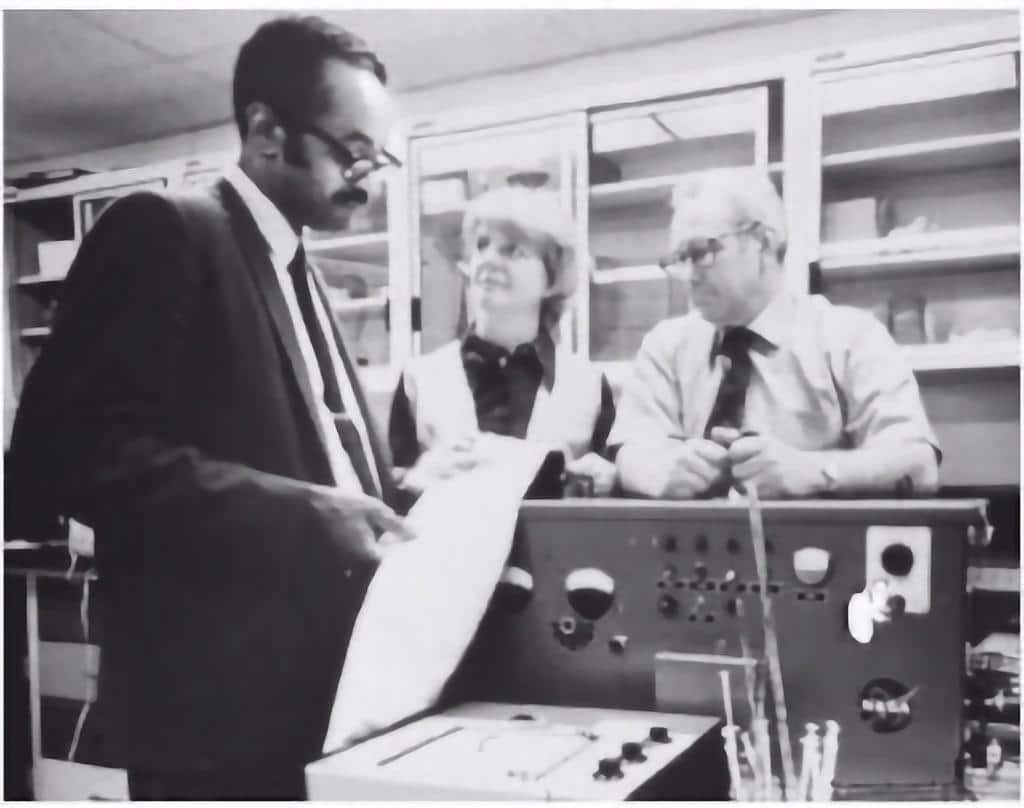
26. **Emmett W. Chappelle (1925–2019)** –
A scientist and researcher who made advancements in the fields of astrochemistry and environmental science.
Emmett W. Chappelle is renowned for his work in bioluminescence and his development of a method for detecting life on Mars, as well as creating techniques that have been integral in the fields of medicine, food safety, and environmental science by using luminescent bacteria to detect ATP as an indicator of microbial contamination.
The feature on Emmett W. Chappelle has been released on February 4th.

25. **Percy Julian (1899–1975)** –
A pioneering chemist who made significant contributions to the field of chemical synthesis of medicinal drugs from plants.
Percy Julian’s groundbreaking synthesis of physostigmine, used to treat glaucoma, and his synthesis of steroids from soybeans marked landmark achievements in medical science, leading to the wide availability of affordable steroid medications and opening doors for future drug development and production.
The feature on Percy Lavon Julian has been released on February 5th.

24. **Frederick McKinley Jones (1893–1961)** –
An inventor who developed refrigeration equipment for long-haul trucks and co-founded Thermo King.
Frederick McKinley Jones was instrumental in revolutionizing the transportation of perishable goods, and his invention significantly improved the food supply chain by enabling fresh produce to be shipped across great distances without spoilage, fundamentally changing food logistics and storage.
The feature on Frederick McKinley Jones has been released on February 6th.
23. **Miriam E. Benjamin (1861–1947)** –
An inventor who patented the Gong and Signal Chair for hotels, which allowed guests to summon a waiter from the comfort of their seats.
Miriam E. Benjamin’s invention, patented in 1888, not only improved the efficiency of service in hotels but also laid the foundation for the development of various call button systems widely used today in transportation, such as in airplanes for flight attendant assistance and in healthcare environments for patient alerts.
22. **Marie Van Brittan Brown (1922–1999)** –
An inventor who co-developed the home security system and the first closed-circuit television security.
Marie Van Brittan Brown’s pioneering work, which she patented in 1966, laid the groundwork for modern home surveillance and security systems, combining video monitoring, two-way communication, and alarm-triggering mechanisms that have become standard in safeguarding residences and businesses globally.
21. **Garrett Morgan (1877–1963)** –
An inventor best known for developing the modern traffic signal and an early model of a gas mask.
Garrett Morgan’s life-saving inventions, such as his 1914 gas mask design, which provided crucial protection during fires and toxic exposures, and his traffic signal patent of 1923, which introduced a warning light to better control vehicle flow, significantly contributed to public safety and paved the way for essential emergency response tools and traffic management systems.
20. **Warren M. Washington (b. 1936)** –
An atmospheric scientist and a pioneer in the development of computer models to simulate Earth’s climate.
Warren M. Washington’s climate modeling has been critical in enhancing our understanding of climate change and variability, providing invaluable tools for researchers and policymakers alike in predicting future environmental conditions and informing global strategies to address climate-related challenges.
19. **Robert Shurney (1921–2007)** –
An engineer who helped develop the tires for the Lunar Roving Vehicle, which was driven on the Moon in several Apollo missions.
Robert Shurney’s ingenuity extended beyond lunar tire technology; he also made notable contributions to safety and efficiency within NASA, including the development of a reverse thrust system for space shuttles and the implementation of ergonomic features in spacecraft design that enhanced astronauts’ comfort and performance during missions.
18. **Kimberly Bryant (b. 1967)** –
An electrical engineer who founded Black Girls Code, a not-for-profit organization that teaches computer coding to African-American girls.
Kimberly Bryant’s visionary leadership in establishing Black Girls Code has not only empowered young African-American girls with digital and technological literacy but has also actively worked towards rectifying the significant underrepresentation of women of color in the tech industry, fostering a new generation of innovators and leaders.
17. **Katherine Johnson (1918–2020)** –
A mathematician whose calculations of orbital mechanics were critical to the success of the first and subsequent U.S. crewed spaceflights.
Katherine Johnson’s exceptional talent for computational mathematics earned her the Presidential Medal of Freedom in 2015, and her pivotal role at NASA included trajectory analysis for Alan Shepard’s historic Freedom 7 mission, as well as calculations that ensured the safe return of the Apollo 13 astronauts, cementing her legacy as a trailblazer in aeronautics and space exploration.
16. **W. Lincoln Hawkins (1911–1992)** –
A chemical engineer who co-invented a plastic to encase telephone cables, thus making universal telephone service more possible.
W. Lincoln Hawkins’s innovation in creating a durable and long-lasting plastic sheath for telephone cables not only drastically reduced the need for frequent replacements due to weathering and environmental stress but also played an essential role in expanding telecommunications infrastructure across diverse terrains, promoting global connectivity.
15. **Aprille Ericsson (b. 1963)** –
An aerospace engineer at NASA and the first African-American woman to receive a Ph.D. in mechanical engineering from Howard University, as well as the first African-American woman to receive a Ph.D. in engineering at the NASA Goddard Space Flight Center.
Aprille Ericsson’s distinguished career has contributed to numerous NASA missions, including her work on the development of flight projects, such as spacecraft design for the Mars missions, and her advocacy for STEM education has been instrumental in inspiring the next generation of engineers and scientists, particularly women and underrepresented minorities.
14. **Neil deGrasse Tyson (b. 1958)** –
An astrophysicist, author, and science communicator who has made frequent appearances on television to educate the public about space and science.
Neil deGrasse Tyson, through his engaging oratory and accessible writing, has become a prominent figure in popularizing astronomy and science literacy, influencing countless individuals with his passion for the cosmos as reflected in his role as the presenter of the acclaimed television series “Cosmos: A Spacetime Odyssey.”
13. **Lisa D. Cook** (Unknown) –
An American economist and economic historian, she is the first African-American woman to have served on the Federal Reserve’s Board of Governors.
Lisa D. Cook’s prominent research on economic growth and development, innovation, and international economics, particularly her analysis of the impact of racial violence on economic disparities, has profoundly shaped discussions on inclusive economic policy and the economic benefits of diversity within the labor force and innovation sectors. Lisa D. Cook took office as a member of the Board of Governors of the Federal Reserve System on May 23, 2022. She was sworn in for her second term on September 13, 2023.
12. **Aissa Wayne Toure** (Unknown) –
An environmental engineer who has pioneered green infrastructure development in West Africa.
Aissa Wayne Toure’s work has been pivotal in promoting sustainable urban planning in West Africa, focusing on renewable energy projects, waste management systems, and water purification technologies to foster environmentally friendly and resilient communities in the face of climate change and rapid urbanization.
11. **Dr. Shirley Ann Jackson (b. 1946)** –
Theoretical physicist and the first African-American woman to have earned a doctorate at MIT. She has been credited with making many advances in science, including research that led to caller ID and call waiting.
Dr. Shirley Ann Jackson’s illustrious career, marked by her tenure as the President of Rensselaer Polytechnic Institute and her role as a former chair of the U.S. Nuclear Regulatory Commission, has seen her break numerous barriers, while her contributions to scientific research have had a lasting impact on telecommunications and the development of technology in everyday life.
10. **Dr. Betty Harris (b. 1940)** –
A chemist who patented a spot test for identifying explosives in a field environment.
Dr. Betty Harris’s invention is a crucial tool in forensic science and counter-terrorism efforts around the world, enabling quick and safe detection of explosive materials, thus safeguarding public spaces and contributing to the development of safer handling and disposal procedures for hazardous substances.
9. **Lewis Howard Latimer (1848–1928)** –
An inventor and draftsman, he drafted the patent drawings for Alexander Graham Bell’s telephone and developed a durable carbon filament for lightbulbs.
Lewis Howard Latimer’s contributions to electrical lighting, particularly through his work on improving the production process of carbon filaments, significantly increased the efficiency and affordability of the early electric light bulb, playing a vital role in its widespread adoption and the eventual electrification of the world.
8. **Granville T. Woods (1856–1910)** –
An inventor who held more than 50 patents, he is also known as the “Black Edison” for his work on the electric railway and other inventions.
Granville T. Woods’ numerous inventions contributed to various industries, including a significant advancement in the safety and efficiency of railway communications through his development of the induction telegraph system, a means to allow moving trains to communicate, reducing accidents and improving the overall railway system.
7. **Dr. Charles Drew (1904–1950)** –
An American surgeon and medical researcher who developed improved techniques for blood storage and set up early blood banks.
Dr. Charles Drew’s pioneering work in blood preservation and transfusion paved the way for large-scale blood banks and saved countless lives during World War II and beyond, also leading him to advocate for the equitable treatment of all blood donors regardless of race.
6. **Shirley Ann Jackson (b. 1946)** –
An American physicist who became the first African-American woman to earn a doctorate at the Massachusetts Institute of Technology (MIT).
Shirley Ann Jackson’s extensive career in scientific research, academia, and public service, including leadership as the President of Rensselaer Polytechnic Institute and former chair of the U.S. Nuclear Regulatory Commission, has reflected not only her dedication to science and education but also her commitment to fostering innovation and diversity within the STEM fields.
5. **Dr. Mark Dean (b. 1957)** –
A computer engineer and inventor, he holds three of IBM’s original nine PC patents and was a co-creator of the IBM personal computer.
Dr. Mark Dean’s contributions to the tech industry extend beyond his work on the early personal computer; he also played a crucial role in the development of the color PC monitor and the first gigahertz chip, consistently pushing the boundaries of computer hardware capability and helping to shape the computing experience for users worldwide.
4. **Mae Jemison (b. 1956)** –
An American engineer, physician, and former NASA astronaut who became the first black woman to travel into space.
Mae Jemison’s historic spaceflight aboard the Space Shuttle Endeavour in 1992 was just one of her many achievements; she is also known for her passionate advocacy for science education, her efforts to expand technology access in developing countries, and her groundbreaking interdisciplinary research at the intersection of science and social sciences through her company, the Jemison Group.
3. **Lonnie G. Johnson (b. 1949)** –
An American inventor and engineer who holds more than 120 patents. He invented the Super Soaker water gun.
Beyond the immensely popular Super Soaker, Lonnie G. Johnson’s ingenuity extends to important contributions in the field of energy technology, including the invention of the Johnson Thermoelectric Energy Converter (JTEC), an engine that converts thermal energy directly into electricity, which has potential applications in sustainable power generation.
2. **Dr. Patricia Bath (1942–2019)** –
An ophthalmologist, inventor, and academic who invented the Laserphaco Probe for cataract treatment.
Dr. Patricia Bath’s groundbreaking work with the Laserphaco Probe revolutionized cataract surgery, making it less painful and more precise, and she also blazed trails as the first African-American female doctor to receive a medical patent while advocating for the eradication of preventable blindness, especially in underserved populations.
1. **George Washington Carver (1864–1943)** –
An American agricultural scientist and inventor known for his work with peanuts and crop rotation.
George Washington Carver’s innovative agricultural methods, including crop rotation and soil improvement, had a profound impact on the sustainability of farming, and his promotion of alternative crops to cotton significantly enhanced the nutritional self-sufficiency and economic prosperity of the American South.

Unveiling the Untold Triumphs: Celebrate Black Genius in February’s Voyage of Discovery!
As we stand on the precipice of a new Black History Month, we do so with an air of anticipation and excitement for the stories we are set to share and the history we are poised to honor. This February, as we spotlight the life and work of each black pioneer on our list, we invite you to join in this celebration of achievement and brilliance.
Each narrative is a thread in the rich tapestry of our shared human history, weaving together tales of ingenuity, courage, and the relentless pursuit of knowledge. This is an opportunity for everyone to witness the power of diversity in driving innovation and excellence, and we encourage you to share these inspiring stories with others, spreading the word of these remarkable lives well beyond the confines of this month.
There’s a palpable joy in being part of a movement that casts a spotlight on such deserving figures, many of whom did not receive their due recognition in their time. As these narratives unfold day by day, let them not just be read but let them resonate within our communities and stir up conversations about the countless contributions of black individuals to science and the betterment of our global society.
Let’s come together not only to reflect but also to revel in the achievements of the past and to sow the seeds for future accomplishments to be nurtured and celebrated. Welcome to Black History Month 2024—a month of remembrance, education, and inspiration. Join us in this journey of exploration and appreciation, and let’s make history together.


