
Today, going green is no longer just a buzzword; it has become a way of life. Sustainable materials are becoming increasingly popular in home design as we strive to reduce our environmental footprint and create healthier living spaces. When it comes to flooring and wall coverings, sustainable tiles offer a perfect blend of style, durability, and eco-friendliness.
More and more homeowners are choosing eco-friendly materials for their construction projects, ideally, ones that use fewer natural resources and energy during the manufacturing and installation processes. In this article, we’ll explore the benefits of sustainable tiles for your home, the various types available, and tips for using them with your interior design.

Why Sustainable Tiles?
Made from various natural materials, sustainable tiles are constructed from materials like clay, stone, and recycled substances. The extraction and manufacturing process typically involves few chemicals, and the resulting tiles are recyclable and renewable. Moreover, most of them are designed to be durable such that they can last for many decades, thereby needing fewer replacements and reducing their carbon footprint. They can be easily purchased from local tile shops and delivered to your door.
Sustainable tiles offer numerous benefits that make them an attractive choice for environmentally-conscious homeowners:
Reduced Environmental Impact:
By utilizing recycled glass, porcelain, ceramic, or natural stone, sustainable tiles help cut down on the use of new resources and lessen environmental waste, offering a greener option for environmentally-conscious consumers.
Energy Efficiency:
Sustainable tile manufacturers prioritize energy-efficient production methods and utilize renewable energy sources, actively lowering the environmental footprint associated with tile manufacturing, a crucial aspect for environmentally aware consumers.
Durability and Longevity:
Opting for sustainable tiles ensures a smart investment in a durable and long-lasting flooring solution for your home. With attentive care, they can endure high foot traffic and remain in top condition for many years to come.
Improved Indoor Air Quality:
Certain artificial flooring options emit noxious volatile organic compounds (VOCs). In stark contrast, sustainable tiles remain non-toxic and refrain from introducing harmful substances into your indoor environment. This distinction contributes to improving the quality of the air you breathe.

Types of Sustainable Tiles
There are several types of sustainable tiles available, each offering unique features and aesthetics:
Linoleum:
Not to be confused with vinyl, linoleum is a very eco-friendly material made from a combination of flax plants, linseed oil, and small amounts of cork dust and pine resin. The tiles can last for 3 to 5 decades and are available as both tiles and planks.
Recycled Glass Tiles:
Made from recycled glass bottles and jars, recycled glass tiles add a touch of elegance and colour to any space. They are highly durable, easy to clean, and resistant to stains and scratches.
Porcelain Tiles:
Porcelain tiles are made from natural clay and minerals, making them an eco-friendly choice for sustainable flooring. They come in a variety of colours, patterns, and textures, allowing you to achieve the desired look for your home. Porcelain tiles are typically dense and durable, making them a great choice for high-traffic areas.
Ceramic Tiles:
Ceramic tiles are made from clay, sand, and other natural materials, making them a sustainable and versatile option for both floors and walls. They are available in a wide range of sizes, shapes, and finishes to suit any design aesthetic. Ceramic tiles are waterproof, require practically zero maintenance, and are a popular choice overall.
Natural Stone Tiles:
Natural stone tiles, such as marble, granite, limestone, and travertine, are sourced from quarries and cut into tiles, offering unique variations in colour and texture. While they require more energy to extract and process, natural stone tiles are durable and long-lasting, making them a sustainable choice for luxury homes. They can be acquired from sources such as Hardscape Solutions or other online shops.
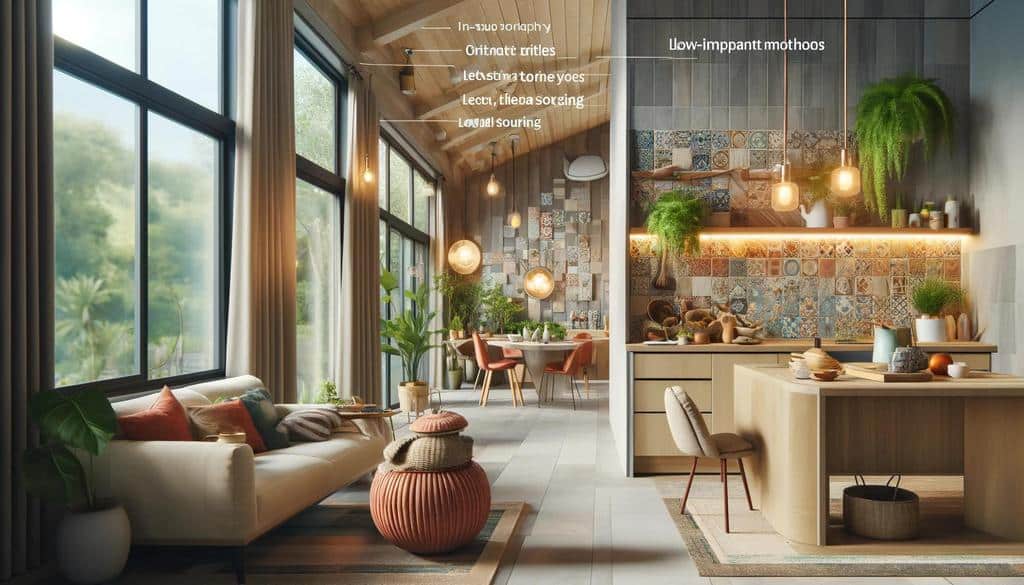
Tips for Incorporating Sustainable Tiles into Your Home
Choose Local Suppliers
Support local tile manufacturers and suppliers who adhere to sustainable practices and use locally sourced materials whenever possible to reduce transportation emissions. Moreover, by shopping closer to home, you’re not only supporting your local community but also helping reduce greenhouse gas emissions.
Opt for Low-Impact Installation Methods
Go for tile adhesives and grouts that are low in VOCs and environmentally friendly. Consider hiring a professional installer who follows eco-friendly installation practices to minimize waste and ensure optimal results.
Consider Recycled Tile
More and more companies are investigating their manufacturing processes, finding ways to reuse materials, and creating more sustainable products. Tiles made from recycled materials provide a cheap, eco-friendly product that also helps manufacturers reduce wastage.
Mix and Match
Get creative with your tile selection by mixing and matching different types, sizes, and colours to create unique patterns and designs. Consider incorporating accent tiles or mosaic tiles to add visual interest and personality to your space.
Consider Eco-friendly Maintenance
Opt for tiles with a knack for shrugging off dirt and grime effortlessly to extend their life and uphold their allure. Adhere to the prescribed care routines from the manufacturers to safeguard the durability of your eco-conscious tile floors or wall adornments.
In most cases, using water and a mop can help you get rid of most dirt and dust, but sometimes, a mild detergent may be required, depending on the type of tile. Be sure to avoid using harsh chemicals as they could degrade the material.

Eco-friendly Home Transformation with Sustainable Tiles
Sustainable tiles offer a perfect combination of style, durability, and eco-friendliness for your home. Choosing sustainable tiles for your flooring and wall coverings means you’re playing your part in reducing your environmental footprint, improving indoor air quality, and creating a healthier and more sustainable living environment for you and your family.
When shopping around for sustainable tiles, consider where they’re made, the material, and the expected lifespan. Durable tiles made from natural materials like ceramics and stone and made closer to home provide an eco-friendly and stylish alternative.


