
Los Angeles based startup company Wright Electric has officially begun developing the propulsion system for the company’s first commercial electric airplane, the Wright 1. The flagship aircraft is scheduled to have a 186-passenger capacity, powered by 10 to 14, 1.5-Megawatt motors, according to CEO Jeffrey Engler.
Engler talked about the electric motors and the propulsion system with Avionics International:
It’s a distributed electric propulsion system, similar to that, for example, of eVTOL companies. If you think of a typical Boeing 737 or [Airbus] A320, it’s got one engine underneath each wing. Ours is going to be a distributed span of between 10 and 14 electric motors. And so what we’re announcing is the development of this is essentially one of these electric motors that then will be duplicated to make our distributed electric propulsion system.
Engler said they intend to conduct ground tests of the motor in 2021 and flight testing in 2023. He went on to tell CleanTechnica: “The motor development program is the next step towards building its narrowbody class aircraft. We will be simultaneously conducting aerodynamic tests on its fuselage, which will inform the propulsion design. The company expects entry of service of its flagship Wright 1 in 2027-2030.”
Wright Electric partnered up with the low-cost European airline company EasyJet back in 2017, who said that an electric jet with a 300-mile range could be used for many domestic and international routes within their network.
EasyJet CEO Johan Lundgren commented about the recent announcement to begin development:
This is another crucial step for our partner Wright Electric to move towards the introduction of commercial electric aircraft and it is exciting to see their ambitious timeline for testing and entry into service. Battery technology is advancing at pace with numerous US government agencies now funding research into electric aviation– all of these developments help us to more clearly see a future of more sustainable operations.
EasyJet has set a goal to reduce its carbon emissions by 38% by 2022, with the long-term goal of providing carbon-free aviation. Lundgren went on to talk about EasyJet’s plans: “We know it is important to our customers that we operate as sustainably as possible – our carbon offsetting program has been positively received by our customers and we have now offset more than nine million passenger journeys – but we are clear this is an interim solution until new technologies become available and we can see more clearly than ever a future that is not exclusively reliable on jet fuel.”
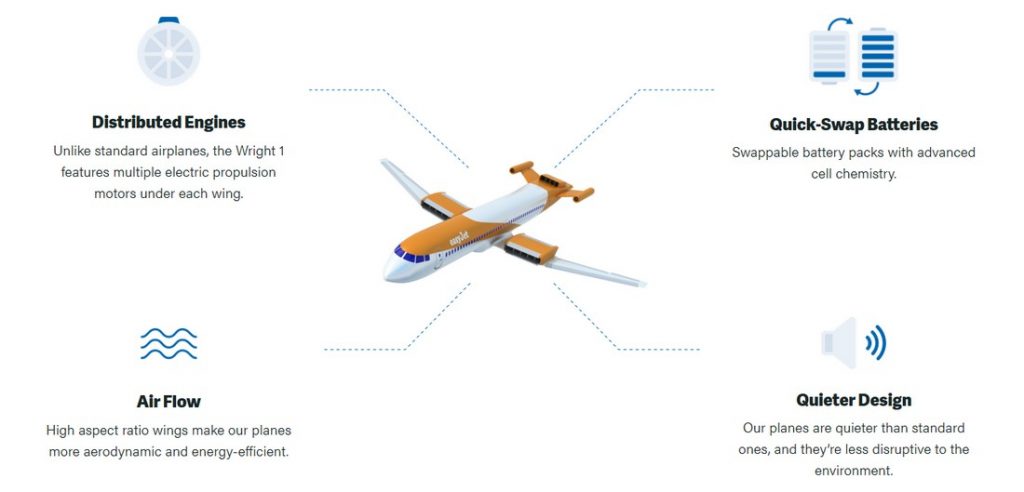
Wright Electric’s partnership with EasyJet to build the Wright 1 will hopefully get the first electric commercial aircraft into operation. However, Wright Electric wants to develop an aircraft that can be used by any airline.
The advancement of this technology could be crucial to the entire airline industry, as new research by the International Council on Clean Transportation found emissions from global air travel to be increasing up to 1.5 times faster than the U.N. previously estimated. At our current rate, they expect the numbers to triple.
Wright Electric’s ability to make commercial electric aviation a reality on a large scale would greatly help this global problem. Some people love to travel and for others, it’s a necessity. Jeffrey Engler on the company mission:
Wright Electric is dedicated to bringing low-emissions 186 seat electric planes systems to market. Wright Electric’s mission is to make commercial aviation greener, and our megawatt engine program is the next step in making our mission a reality.
Wright Electric will be moving its operations to Albany, New York.


