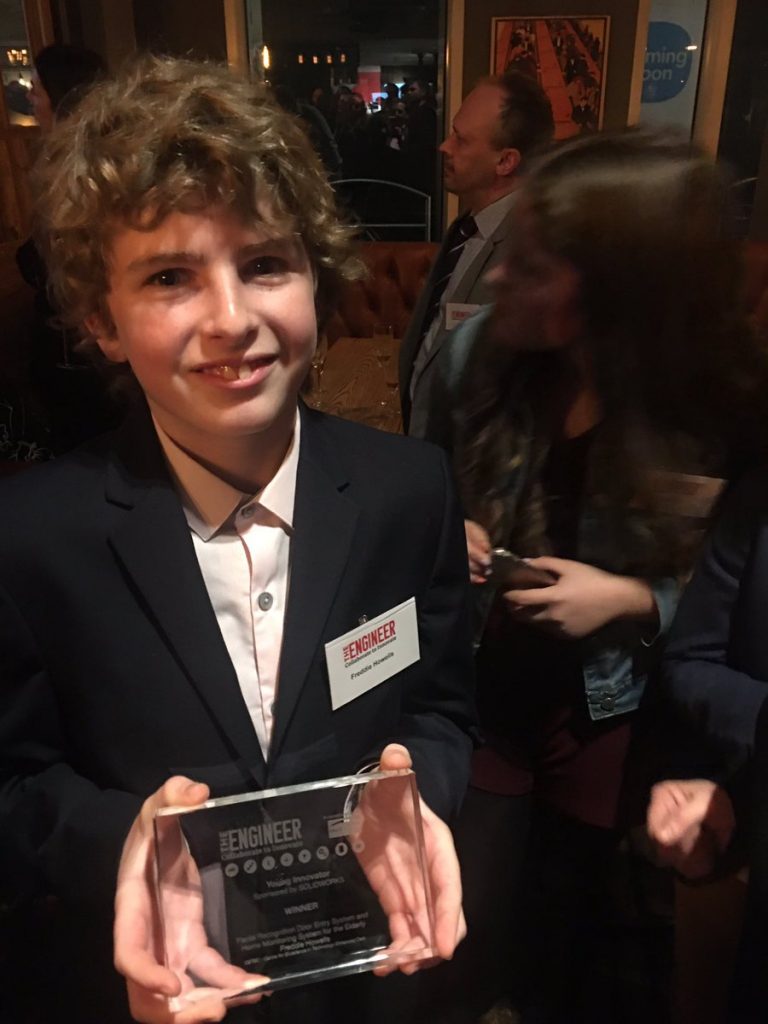
The Young Innovator category for the “Collaborate to Innovate 2019” saw the winning entry with a system aimed at helping older people live safely in their homes by Freddie Howells and CETEC. This system provided the Collaborate to Innovate judging panel with an optimistic glimpse of the future pipeline of engineering talent.
Freddie was motivated and inspired to help his great Aunt Pat through challenges since she suffers from dementia and lives alone at home. He developed a facial recognition door entry system to keep her safe from unwanted visitors and a home monitoring system to check on her welfare.
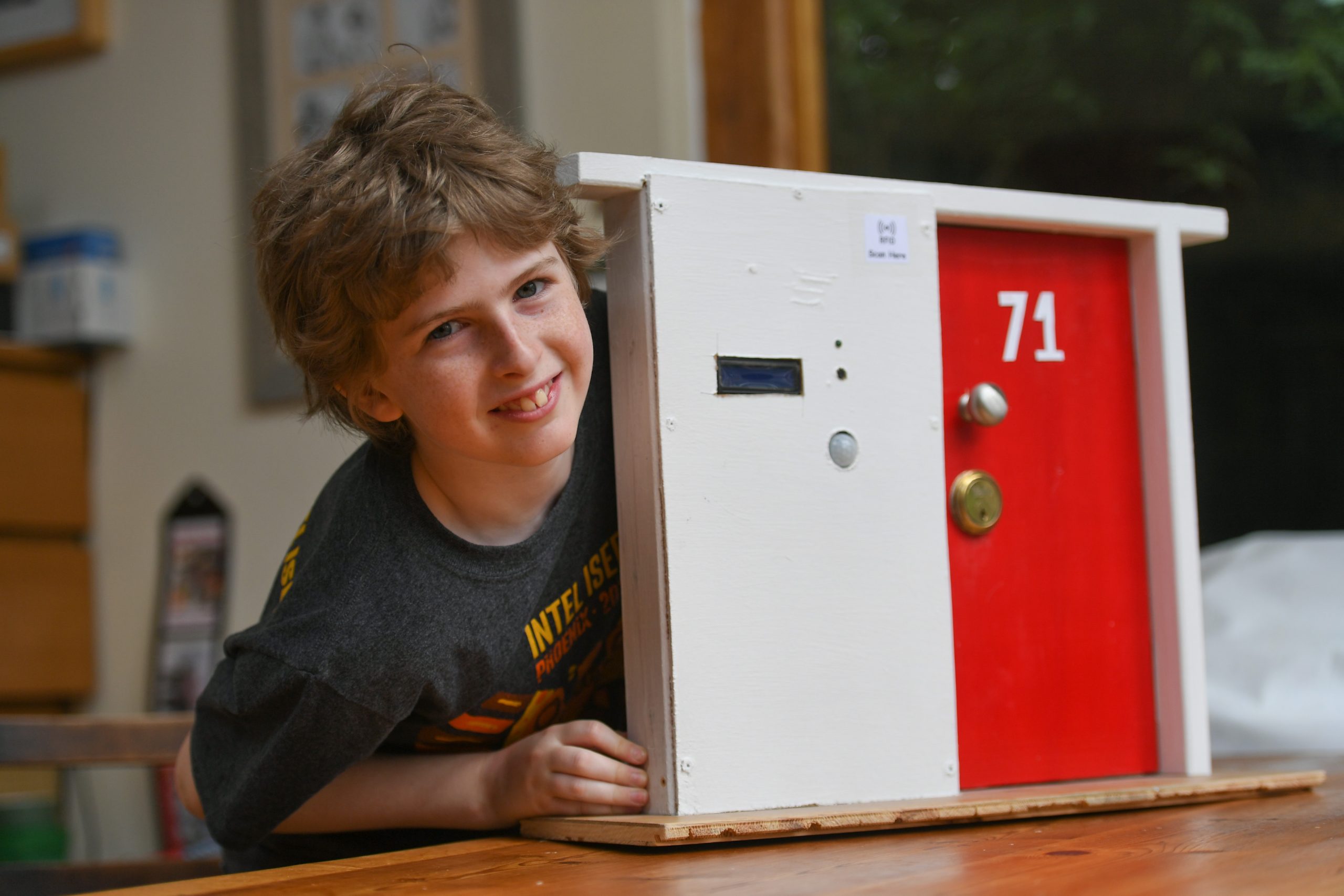
Freddie turned 14 at the end of 2019, he developed this system at the age of 12. He used a Raspberry Pi microcomputer to create the entire system. At the front doors, a PIR (passive infrared) motion sensor triggers a camera to take a photo when motion is detected. Once the picture is made, it gets compared to known faces in a database, and if the face is recognized, the visitor must scan an ID tag for 2-factor authentication. Then, if the face and ID tag match, the door opens. However, if the photo is not recognized or the id doesn’t match, then the visitor has to call a number to obtain access.
Once the visitor has gained access, a text message is sent to the family, letting them know who visits and when they visit. Meanwhile, at the same time, an audio recording of the visitor’s voice is played on a speaker in the older person’s room, so they know who’s visiting.
In addition to the visitor’s security system, Freddie also installed numerous monitoring systems in the home and a motion sensor that sends an alert if there’s no movement for some time. He put temperature and humidity sensors around, which automatically turns on a fan if the temperature is too hot. Finally, he installed a webcam that can function as remote monitoring and a voice-activated intercom system that enables a two-way communication without needing to use a phone.
Around 1 in 6 people over 80 years old suffer dementia, of which one third live alone. Freddie believes his system could help improve the quality and safety of their lives.

Freddie explained:
These people are vulnerable and often the cause of huge concern to family members who may well live great distances from their loved ones. If we are to enable individuals to live independently at home for longer, then there is a need to embrace technology to support them.
Throughout the project, Freddie had support from Firas Sarhan, director of CETEC at Barnet Southgate College in London. He expressed gratitude towards working with CETEC and said that they were particularly helpful in developing the systems for monitoring and controlling the temperature and humidity of the home. This temperature control feature is especially crucial for housebound or older people who are susceptible to infections in the chest. “Working with someone like Firas, who is a leader in my project field, has provided me with the insight as to how this project could potentially be utilized in homes across the UK,” Freddie added.
Sarah Howells, Freddie’s mother, said that he picked up an interest in engineering and creativity at a very young age. He also got very inspired when he was introduced to Scratch, a block-based visual programming language aimed at children by Dr. James Osborne, from Cardiff University’s National Software Academy.
Sarah said:
Freddie quickly moved on to coding in Python and started exploring the world of Physical Computing, which is really where his passion lies.
Now, Freddie is exploring the world of how he can help people with dementia and Parkinson’s with wearable assistive technology.