
After successful large-scale trials, the resource management company Veolia has demonstrated a new method of treating the 25% (30K tonnes) of green waste that winds up being sent for re-composting or disposal.
This new process required a £1M (US$1.4M) investment to install fixed cleaning lines to remove the contamination from the 30K tonnes of compost oversize ascending annually across four of its organic recycling facilities in the south of England.
Compost oversize is the more significant, woody fraction of material leftover after the composting process, once the valuable compost material is screened out. Removing contamination from the composting sites enhances the quality of composts spread to land.
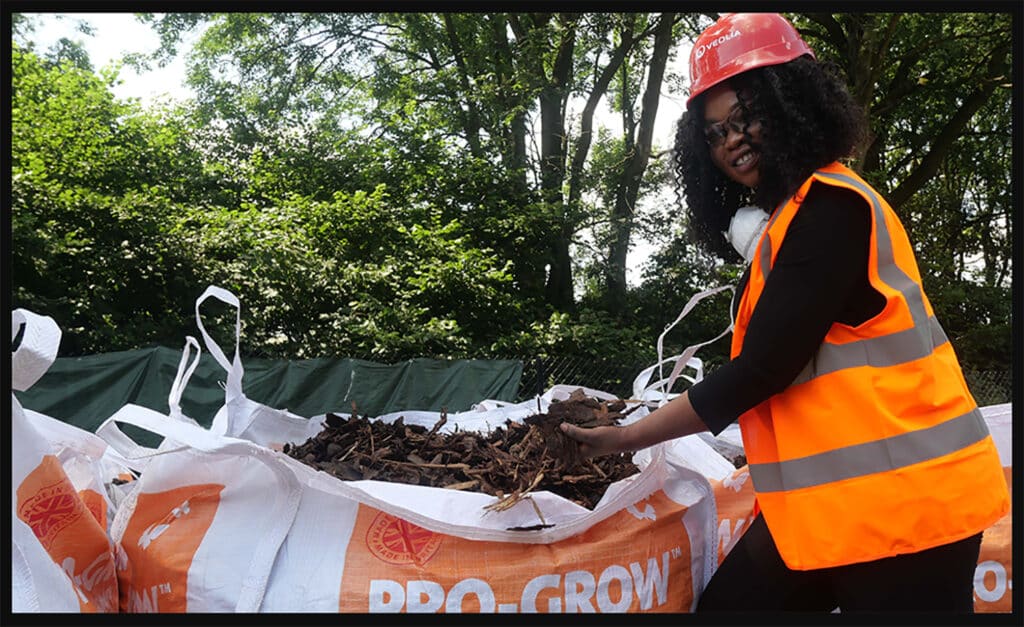
At these sites, the compost material is transformed into a clean wood product similar to PAS100 approved gardening mulch or renewable biomass fuel for electricity and heating, which replaces virgin alternatives like bark and woodchip. Using this efficient process can result in a reduced number of trees cut down for wood products.
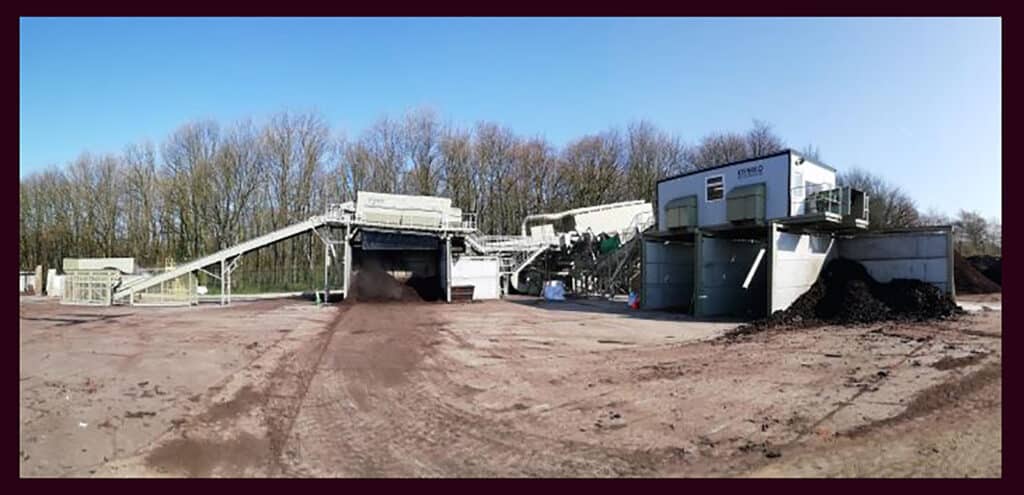
According to Veolia, the effectiveness of the cleaning lines means that composting sites will be more efficient, disposal costs considerably lowered, and greenhouse gas impact minimized. So far, over 55K tonnes of contaminated compost oversize has been processed in this way. In addition, the plant aims to find alternative uses for all contaminants removed to achieve a zero-waste landfill.
Veolia currently processes more than 500K tonnes of green and food waste per year derived from 11 composting sites across the nation that generate over 250K tonnes annually, the equivalent to approximately 12 million bags. Previously roughly 30K tonnes of green waste ended up as oversize after composting, as some green waste bins contain contaminants like metal and plastic, mistakenly discarded by people.
However, even after cautious processing, this contamination ends up in the compost oversize. The problem with this is that if the oversize is too contaminated to re-circulate, or if a site runs out of storage space, there are landfilling costs that contribute to greenhouse gas emissions.
Donald Macphail, Veolia’s Chief Operating Officer of Treatment, explained:
“Composting sites provide the perfect example of a circular economy, and the need to efficiently process this material is likely to increase with the prospect of green waste becoming free to collect and on a more regular basis, as pledged in the government’s Resources and Waste Strategy.
By backing this innovation, we have increased the effectiveness of operations and will provide additional high-quality, sustainable wood mulch and renewable fuels. This will help horticulture and renewable energy generation and is another key step that we are taking to reduce environmental impact and advance towards a lower-carbon economy.”
Last year, Veolia partnered with the University of the Sunshine Coast (USC) in Queensland, Australia, to build a giant three-story-high water battery. USC also installed 6K solar panels across the car parks and rooftops. The project was designed to help the university reach its goal to be carbon neutral by 2025.


