
The California condor, one of the world’s rarest birds, almost went extinct 30 years ago. However, now it seems the species could be saved.
Scientists have discovered two male condor chicks hatched from unfertilized eggs, indicating a form of asexual reproduction, a phenomenon called parthenogenesis or “virgin birth.” This phenomenon has never been recorded in California condors before and is highly uncommon in birds.
The California condor’s breeding habits are of keen interest to scientists. In 1987, the critically endangered bird was down to only 27 individuals. At that time, the last wild specimens were all captured and held in a managed breeding program. Since then, numbers have gradually increased to over 500, with various birds released back into the wild.

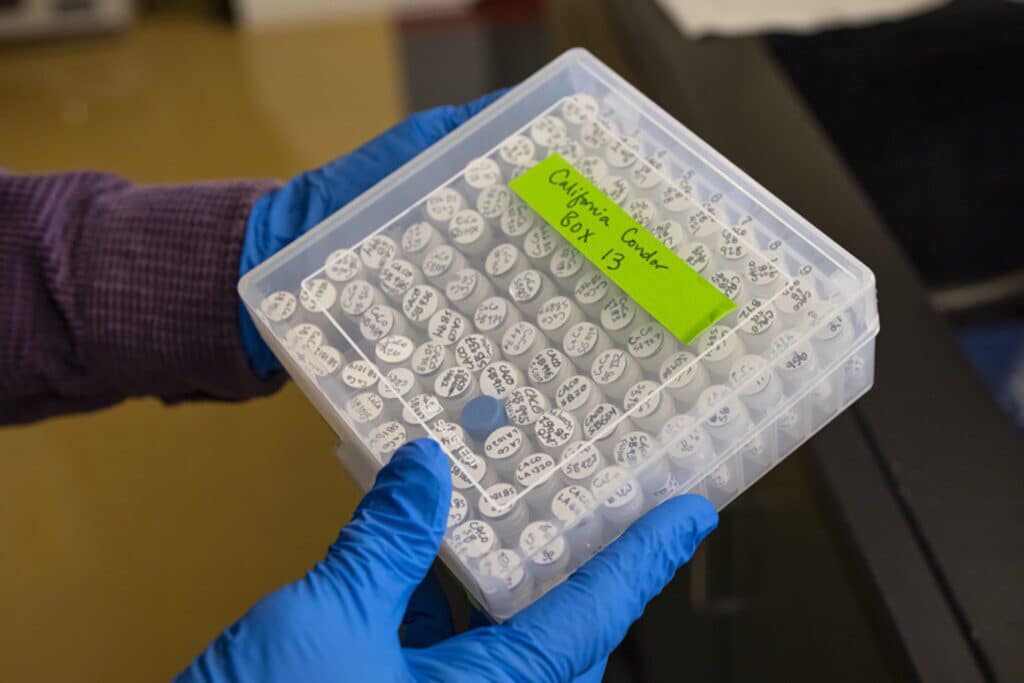
The scientists closely monitored the birds in the breeding program. They kept records of who mated with whom, how many babies they had, and when those babies were released into the wild. All of this is recorded in the “California Condor North American Studbook.”
While scientists were conducting DNA tests as part of their routine research, they were shocked to find two male condors with unexpected paternity. These two birds—known by their studbook numbers as SB260 and SB517—were fatherless. Instead, they had hatched from unfertilized eggs, meaning a complete 100% of their DNA had come from their respective mothers.
Oliver Ryder, the study’s co-author, said:
This is truly an amazing discovery. We were not exactly looking for evidence of parthenogenesis; it just hit us in the face. We only confirmed it because of the normal genetic studies we do to prove parentage. Our results showed that both eggs possessed the expected male ZZ sex chromosomes, but all markers were only inherited from their dams (mothers), verifying our findings.
Parthenogenesis is well documented in some species of bees, cockroaches, crayfish, sharks, snakes, lizards, and even 24,000-year-old multicellular invertebrates called Bdelloid rotifers. In addition, studies have suggested that it can occur in some bird species, such as chickens, turkeys, pigeons, and finches, but it was challenging to verify before genetic testing.

Here’s another twist to this story: female animals usually resort to parthenogenesis when there aren’t any males around to mate. However, these condors lived with viable males for years and even had chicks with those males via sexual reproduction both before and after the parthenogenesis.
According to the team, more genotype studies will be conducted to see other examples of virgin births in California condors. “These findings now raise questions about whether this might occur undetected in other species,” added Ryder.
The study was published on October 28 in the Journal of Heredity.


