
Minimizing food waste may be all it takes to tackle one of the world’s most urgent problems; feeding the planet’s growing population, which is expected to hit 9.8 billion by 2050, and 11.2 billion in 2100. In rich countries, most food waste occurs in homes, restaurants, or supermarkets. In contrast, food is often lost between the farmer and the market due to unreliable transportation and storage in developing countries.
Unfortunately, that food waste ends up in landfills to rot, releasing greenhouse gases (GHG). When this is combined with the amount of energy it takes to harvest, manufacture, transport, and store this food, it contributes up to 3 billion tonnes of carbon dioxide to the planet. To put that into perspective, if food waste was a country – it would be the third-highest emitter of GHG in the world, after the U.S. and China.
People in the developed world could reduce waste by serving smaller portions, eating leftovers, and encouraging supermarkets, restaurants, and cafeterias to create waste-reducing measures. Consumers can also use anti-food waste apps to give away unwanted food for free and others that let you buy whatever food your favorite restaurant has left when it’s near closing time. Overall, tackling waste is one of the most effective ways to boost food availability.
Thankfully, some scientists and companies turn that food waste into valuable products, from robust construction material and renewable energy to vegan food and fresh water.
Food Waste Into Robust Construction Materials
A large proportion of global industrial and household food waste, which amounts to hundreds of billions of pounds per year, comprises edible scraps, like fruit and vegetable peels. In May, scientists at the University of Tokyo developed a method to reduce food waste by recycling discarded fruit and veggie scraps into robust construction materials.
Yuya Sakai, the study’s senior author, said:
Our goal was to use seaweed and common food scraps to construct materials that were at least as strong as concrete. But since we were using edible food waste, we were also interested in determining whether the recycling process impacted the flavor of the original materials.
The team used a “heat pressing” method generally used to produce construction materials from wood powder, except they used vacuum-dried, pulverized food scraps, including cabbage leaves, seaweed, pumpkin, banana peels, oranges, and onion as the fundamental powders.
The process involves mixing the food powder with seasonings and water, then pressing the concoction into a mold at high temperatures. Finally, the researchers tested the resulting materials’ bending strength and assessed their smell, taste, and appearance.

Kota Machida, a senior collaborator, explained:
With the exception of the specimen derived from the pumpkin, all of the materials exceeded our bending strength target. We also found that Chinese cabbage leaves, which produced a material over three times stronger than concrete, could be mixed with the weaker pumpkin-based material to provide effective reinforcement.
The resulting material had a bending strength higher than concrete and retained the original vegetable or fruit’s color, taste, and flavor. In addition, when adding salt or sugar, the materials’ taste improved without reducing their strength.
Furthermore, the durable and robust material resisted rot, fungi, and insects and experienced no noticeable changes in appearance or flavor after exposure to air for up to four months. Without water-resistant treatment, the material is edible, and the flavor can be altered with seasoning.
Food waste is a global problem, financial burden, and environmental concern, so developing new ways to recycle food scraps is crucial. In addition, using food waste to produce strong enough materials for construction projects while maintaining their edible nature and flavor opens new avenues to a wide range of creative applications.
Food Waste Into Renewable Energy
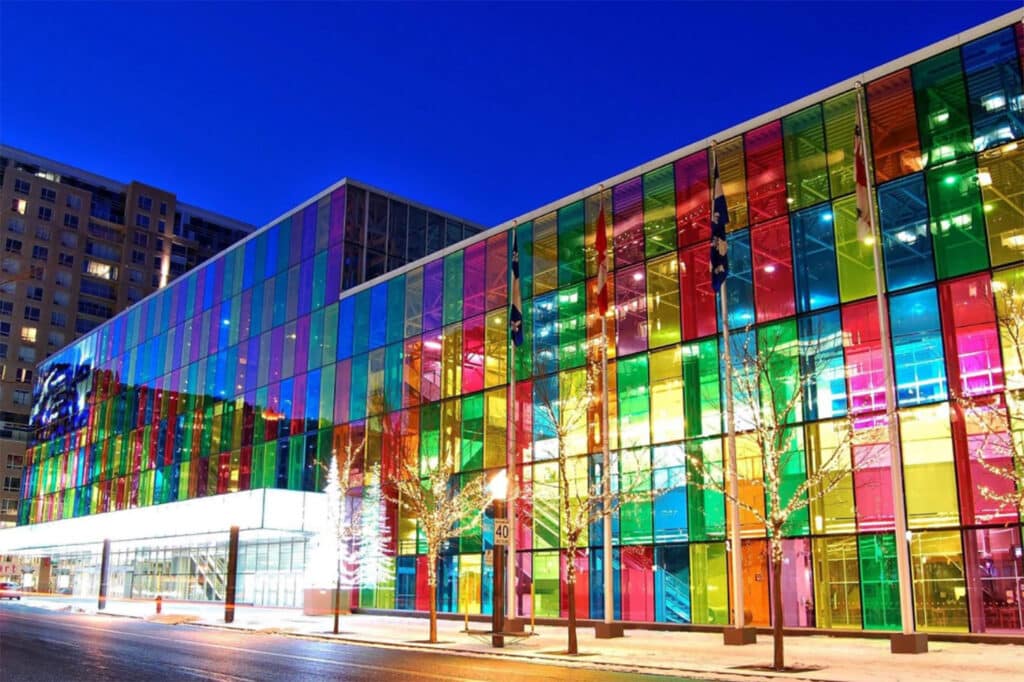
Last year, Carvey Maigue, an electrical engineering student at Mapua University in the Philippines, won the 2020 James Dyson Sustainability Award for his creation, called AuREUS (Aurora Renewable Energy and U.V. Sequestration.)
AuREUS uses luminescent particles from vegetable and fruit waste that absorb U.V. light and convert it into visible light. This visible light is then converted into sustainable electricity via a solar film. “It’s similar to how we breathe in oxygen, and we exhale carbon dioxide. First, it takes in ultraviolet light, and then after some time, it would shed it as visible light,” explained Maigue.
The project summary details how AuREUS is designed to increase people’s access to solar energy, help lessen climate change, support the local agricultural sector, and prevent food waste.

Food Waste Into Vegan Meat And Dairy
A project called Prominent aims to reduce food waste by changing how we look at it. It involves researchers from the VTT Technical Research Center of Finland analyzing the protein levels in rice and wheat side-streams (trails of waste from food production). The team extracts RuBisCO proteins from these side-streams, which could be used as alternatives for dairy and meat.
RuBisCO is the world’s most abundant protein. It’s found in sugar beet, corn leaves, spinach, alfalfa, carrot leaves, pea pods, and more. In addition, these plant-based substances could be used in cakes, biscuits, cereals, yogurts, drinks, sauces, pasta, and so much more.
According to Prominent team leader Emilia Nordlund, the shift from animal products to vegan foods could drastically help the planet. “Cattle farming is a big issue in climate change. So, if we can move to more using plant-based foods and not feed the crops to animals, there is no doubt that it would benefit the whole planet. Indeed, there are many calculations that show that plant-based food is much more sustainable when we think about the environmental issues,” she explained.
Another project, dubbed REFRESH, shares Prominent’s goal. The team is extracting fibers from chicory, an edible plant of the dandelion family, to fortify bread, yogurts, and drinks. The REFRESH team is also creating fiber ingredients with the juice and peel waste from the carrot manufacturing industry, which throws away 50 to 60% of the vegetable.
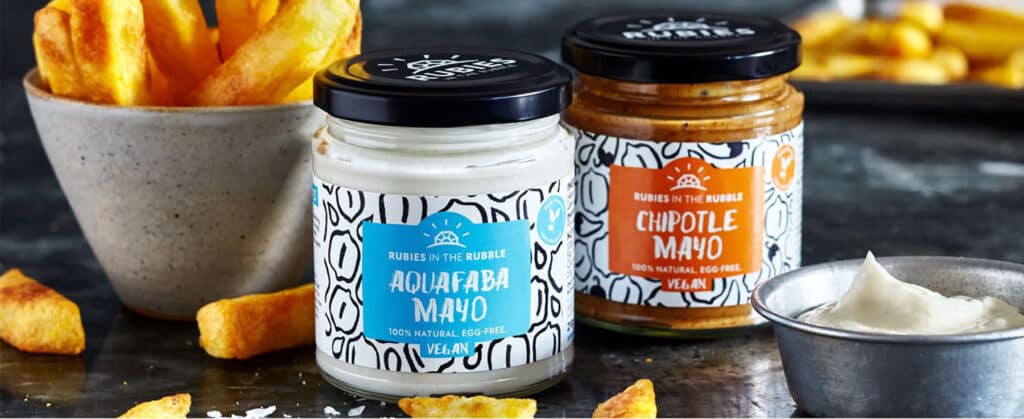
Meanwhile, vegan brand Rubies in the Rubble turns food waste into plant-based products. For example, the company uses produce that would otherwise be discarded to make condiments like mayonnaise, relish, and spreads. In 2017, Rubies in the Rubble saved 198 tonnes of fruit and vegetables from the landfills, which would have turned into methane.
Also, UK-based company Nutrapharma produces protein-rich powder for supplements from otherwise discarded surplus fruits and veggies. Nutrapharma CEO, Dr. Eric Hilton, was motivated to create the powder after observing the immense amount of waste generated by the food industry.
Likewise, in 2018 U.K. supermarket giant Tesco launched ‘Waste NOT,’ a series of cold-pressed juices made entirely from fruit and vegetable waste. In 2020, Tesco launched a partnership with a renewable energy organization Green Generation to convert all unsold food into renewable gas to power six of its stores in Ireland.
Finally, there’s a partnership between 16 groups across seven E.U. member states dubbed the Pro-Enrich project that is also devising how to recover food standard proteins from crop wastes, including fruits, veggies, and seeds. They plan to make the protein for industrial human food, pet food, cosmetics, and adhesives. They’ve already conducted large-scale trials, producing multi-kilogram batches of protein powder from rapeseed/canola meal that industrial partners are currently evaluating.

Food Waste Into Fresh Drinking Water
Last year, award-winning Australian beverage brand Aqua Botanical developed a novel way to “grow water,” unlocking a sustainable and renewable water source from fruits and veggies. “After many years of extensive research, Aqua Botanical’s inventor, Dr. Bruce Kambouris, found a way to harvest the naturally occurring water found in fruit and vegetables,” said Terry Paule, the Executive Chairman of Aqua Botanical.
Every year, farmers in Australia grow abundant amounts of fresh produce, but not all of it makes it to the market. Instead, some are sent to juice companies, which press the fruit and vegetables to extract their juice, leaving behind pulp and water, typically discarded as a byproduct of the process.
Paule commented:
What many people don’t realize is that 90% of plants are made of water, meaning that when they are pressed to extract the juice and then evaporated to make a concentrate, they produce a large volume of water in parallel.
Aqua Botanical’s patented water technology is a solution to this problem. The water doesn’t go to waste anymore. Instead, the aqueous liquid is “harvested,” then filtered, mineralized, and bottled in the Australian countryside.
Impressively, each bottle of botanical water contains up to 74 plant-derived minerals, including Zinc, Magnesium, Potassium, and Iron. It can be produced from any fruit or vegetable that’s juiced, organic, or non-organic. The “harvesting” process removes any present toxins, resulting in fresh, clean, pure drinking water. In addition, Aqua Botanical adds subtle carbonation to its sparkling water array.
Paule added:
Until recently, this aqueous liquid from juice was discarded with environmental detriment. Dr. Bruce, as we love to call him, combined intuition with science to produce natural water made from plants and in so doing coined the term ‘Botanical Water’ to reflect its new sustainable source.
The Conversation states that this liquid waste from the juice-making process is frequently released into the environment and sometimes used for irrigation. However, the practice can lead to several environmental issues, such as nutrient imbalance, oxygen loss, overgrowth of algae, and the death of aquatic animals, including amphibians, crustaceans, and fish.
Aqua Botanical’s innovative process saves the aqueous liquid created by the juice industry. The result is crystal-clear water with a fresh, clean taste and a silky-smooth finish. Paule described the water as having “body and finesse without the salty or acidic after-taste found in most mineral waters.” As a bonus, Aqua Botanical’s botanical water has a lower environmental impact than other bottled varieties.

Paule added:
Discovering a new plant-based source of natural drinking water is a remarkable and transformational gift to the world!
National Geographic points out that while nearly 70% of the planet is covered with water, only 2.5% of it is drinkable. On top of that, most of that freshwater is inaccessible, frozen in snowfields and glaciers, leaving only .007% of the world’s water for up to 6.8 billion people. What’s more, “some of the world’s largest aquifers are now polluted and over-used and are drying up faster than they are being replenished,” Paule explained.
According to the U.N., roughly one-fifth of the world’s population (approximately 1.2 billion people) suffer from water scarcity, and 500M are approaching a similar situation. An additional 1.6 billion people face economic water shortages due to their country’s lack of infrastructure to extract water from aquifers and rivers. Water isn’t only vital to survival but also energy, the environment, socio-economic development, and food production.
Water scarcity is an issue that’s already affecting several countries, including China, India, Indonesia, and Latin America. Also, in the United States, Flint, Michigan, and several rural towns suffer from a lack of clean drinking water. In addition, water scarcity is expected to affect more in Australia and the European Union in the years to come.
Paule pointed out:
Botanical Water taps into an otherwise unused and often discarded new source of water, making it the world’s most sustainable, cost-effective, and environmentally friendly water source.
Water With A Humble Mission
Aqua Botanical’s ultimate mission is to help other nations gain access to fresh, clean drinking water. “In the poorest nations on Earth, access to water often involves long and arduous treks to an open well to source water which is often contaminated. As a result, it’s estimated that every 90 seconds, a child under five years old dies because of a lack of access to clean water and sanitation. This must change, and we need to find new ways to fix this tragic problem,” Paule explained.
It’s estimated that 1,800 million people will be living in countries with absolute water scarcity, and two-thirds of the world population may be living under stress conditions by 2025. This is mainly because water use has increased more than twice the population growth rate in the last century. “With this in mind, we have established our Botanical Water Foundation with a mission to gift our Botanical Water technology to the world’s poorest people at no cost,” Paule stated.
The first project will involve producing 50K liters of botanical water daily in India’s Tamil Nadu region, home to 17.5% of the world’s population but just 4% of the world’s water. The initiative would use India’s more than 200 sugar mills, which can produce “billions” of liters of botanical water for underprivileged communities for free. “We invite NGOs, charities, governments, beverage companies, or even individuals to work with us in their local communities to bring our Botanical Water to them by building processing capabilities around the world,” Paule added.
Paule highlighted:
It may, in fact, be up to three trillion liters in the future once the world embraces our new technology and truly understands its importance. That’s an enormous amount of natural drinking water from a new sustainable and renewable source currently being discarded. So we are clearly now at a tipping point as the world starts to make this discovery.
Aqua Botanical is available online in Australia and Woolworths’s supermarkets nationally.


