
For people on a weight loss journey, the most difficult battle is the one they fight in the kitchen. They can muster up the strength to endure a difficult training session, they can even build up the discipline to get up and go for a walk every morning, but when they see that pizza or have the ingredients for a chocolate milkshake lying around at home, they relapse.
What’s worse is that you are weakest when you are already hungry. A lot of fitness experts and self-management gurus highly suggest that you have a good meal before you go out shopping, especially for groceries. When you are hungry, and you are in the middle of a thousand different food options, you tend to buy a lot more than you actually need because you are buying based on what you feel in that moment – hunger.
When you have a full belly, it is much easier to resist temptations and stay on your diet. The problem is that getting a full belly also adds calories to your diet. That’s why you need some techniques that will help you suppress hunger, so you can eat less in each meal and still maintain the ability to wait till your next meal without indulging in your favorite foods and drinks. Here are a few effective strategies that are completely natural and work incredibly well for your overall fitness as well.
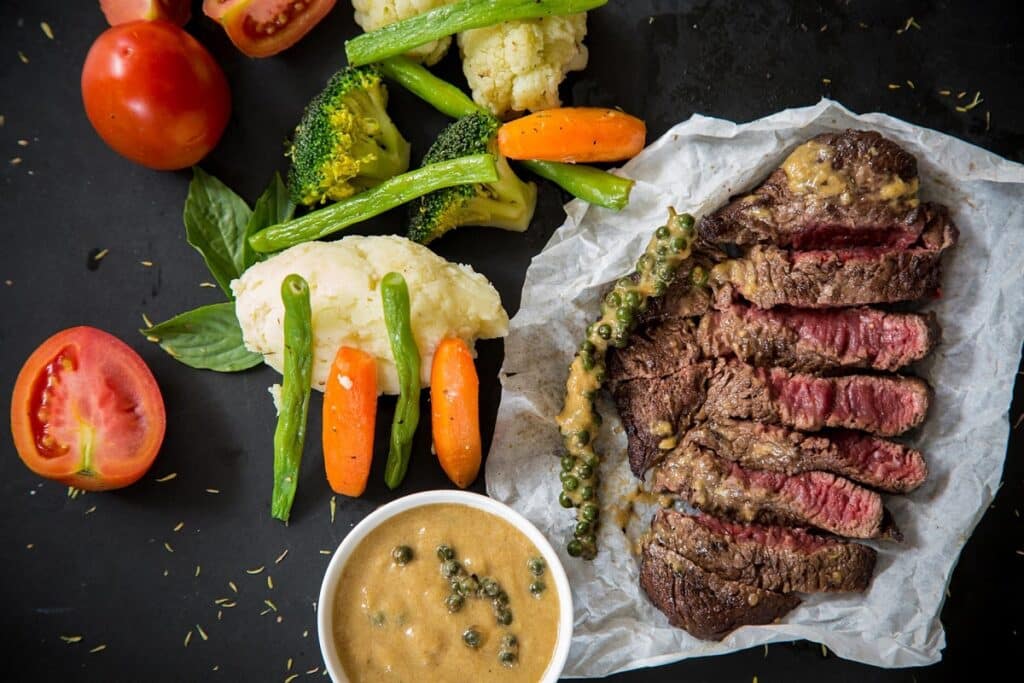
1. Eat More Protein
Unlike simple carbs, protein requires a lot of energy to process, and it takes a lot longer for your digestive system to process a high-protein meal than it does to process a few donuts and coffee. Protein has a very high satiety level. Also, in the same way, some of the best fat burners can boost metabolism protein provides you with plenty of energy that will increase your metabolism which will, in turn, increase the number of calories you are burning. Therefore, eating more protein helps burn fat and also helps you stay fuller for longer.
2. Drink Water
Our brain is wired in such a way that both hunger and thirst trigger the same signals in our brain. If you have ever had several glasses of water in quick succession on a hot day, you might have noticed that you feel quite full after that. In the same way, when you are dehydrated, you will sometimes eat instead of drink. Having more water and having it more frequently throughout your day will help you fight off cravings and keep you feeling full.
It is also excellent for your digestive system to have plenty of water since it benefits the entire body in general. Ideally, you should be drinking at least 2-3 liters of water per day. If you can manage more, that is even better, and if you can manage to drink half a liter or a full liter of water first thing in the morning on an empty stomach, that is excellent.
3. Food Supplements
If you don’t enjoy eating your calories, you can look into taking some supplements to control your appetite. This is especially helpful when it comes to getting in enough protein, since eating a lot of meat is not easy on the digestive system and some people just don’t enjoy eating that much protein. You can also get specialized supplements that help you eat less, and you can pair this with protein, fish oil, or a pre-workout drink. This way you are consuming what you need, and you also are fueling yourself with supplements that will help you stay satiated longer.
4. High-Volume Low-Calorie Foods
If you enjoy vegetables, then you can easily fight off hunger with foods that have a high mass but are close to zero in their calorie count. For instance, cabbage, lettuce, cucumbers, carrots, and a number of other vegetables are extremely low in calories and as such are quite beneficial when you eat them in large quantities.
You could eat a large bowl of lettuce and barely get 25 calories from the lettuce alone. If you throw in some chicken, some olives, a bit of cheese, and maybe some seasoning, it’s a complete meal with all the protein and fat that you need with a fraction of the calories. The best part is that the high fiber content in the lettuce will have your system processing the meal for several hours, all the while keeping you feeling full.
5. Mindful Eating
In the past, people were busy watching TV when they were eating. Today, people are watching their tablets or just staring at the smartphone screen. Studies have proven that when you are eating and watching something else, your stomach doesn’t send the signals to your brain to tell it that it’s full. With this increased appetite, you end up eating a lot more, and you don’t usually feel as good about it. Mindful eating is all about paying attention to what you eat. Studies have found that people that pay attention to their food when they eat end up only eating a small fraction of their meals, and they feel very satiated.
6. Exercise
Exercise itself is an appetite suppressant. When you work out, especially after high-intensity interval training (HIT) your body suppresses the hunger hormones that make you want to eat. At the same time, the body is producing plenty of the fullness hormone that makes you feel satiated. It will be helpful to schedule your workout during the part of the day in which you feel the hungriest. You can still have a little pre-workout meal, but after that workout, you won’t feel like binging on some junk food, and you can easily wait till your next proper meal.

Suppressing your appetite is important, but it is just as useful to structure your day correctly. Most people barely have breakfast and the heaviest meal of the day is dinner, after which they don’t spend enough time awake to digest the meal. This upsets the pattern in which hunger hormones in the body are released, and it also upsets your metabolism. High metabolism is very useful when you want to lose weight. If you are trying to manage your diet, then start by having a better eating routine by predetermining select times that you eat every day. Sporadic eating habits make it very difficult to maintain consistency in your eating schedule.


