
Some are starting to use facial expression technology alongside artificial intelligence to identify the best candidates in job interviews in the UK.
Applicants get filmed by phone or laptop while asked a set of job-related questions. The AI technology is then used to analyze the response in terms of the language, tone and facial expressions of the applicant.
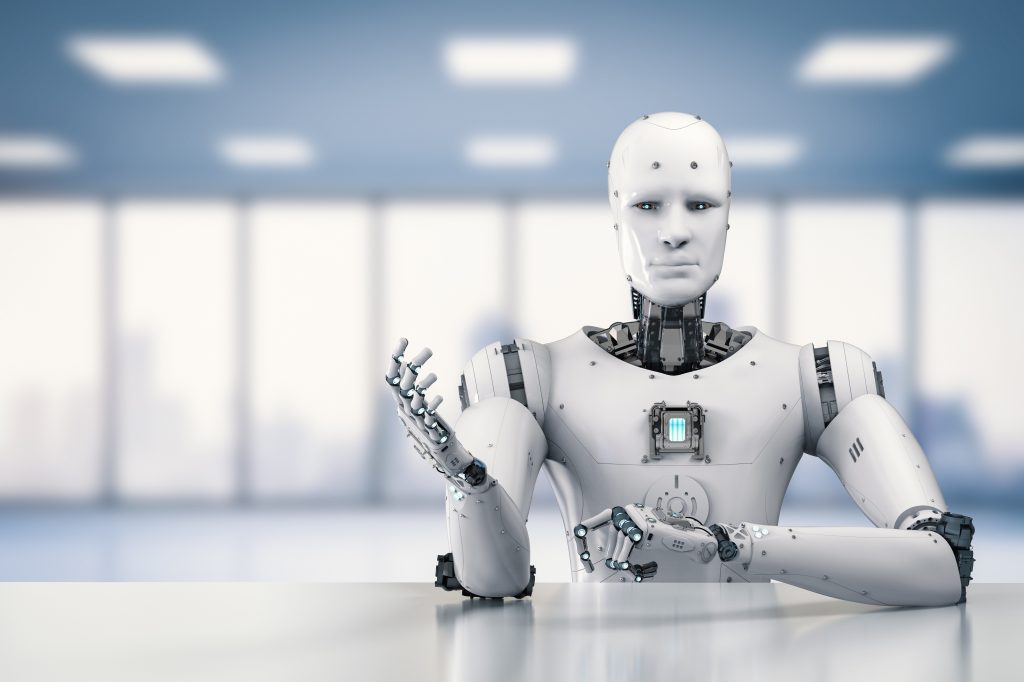
Interview Technology
AI algorithms choose the best candidate. It compares candidate performance in the video against some 25,000 pieces of facial and linguistic information that they compile from previous interviews. They match the attributes of candidates who prove that they are good for the position.
Hirevue, a US company that has developed the technology, claims that it enables hiring firms to interview more candidates in the initial stage rather than relying on CVs. Free of human bias, the automated method provides a reliable way of revealing any candidate’s potential for future performance.
However, experts warn that any AI or facial recognition technology would inevitably have biases built into its databases. These could discriminate against certain candidates and exclude talented applicants who might not conform to the norm.
Anna Cox, professor of human-computer interaction at UCL said: “It will favour people good at doing interviews on video and any data set will have biases in it which will rule out people who actually would have been great at the job,”
The AI Job Interview
Loren Larsen, the chief technology officer at Hirevue, told The Telegraph that 80 to 90% of the predictive assessment of the algorithms’ analysis is of the candidates’ use of language and verbal skills.

“There are around 350 features that we look at in language: Do you use passive or active words? Do you talk about ‘I’ or ‘We.’ What is the word choice or sentence length? In doctors, you might expect a good one to use more technical language,” Larsen said and continued:
Then we look at the tone of voice. If someone speaks really slowly, you are probably not going to stay on the phone to buy something from them. If someone speaks at 400 words a minute, people will not understand them. Empathy is a piece of that.
The technology differs from facial recognition technology. The algorithm assesses facial expressions like brow furrowing, brow-raising, eye-widening, or closing. Other features include smiling, chin raising and lip tightening, which are all important in sales or other jobs dealing with the public.
“Facial expressions show certain emotions, behaviours and personality traits,” said Nathan Mondragon, Hirevue’s chief psychologist.
“We get about 25,000 data points from 15 minutes of video per candidate. The text, the audio, and the video come together to give us a very clear analysis and provide a rich data set of how someone is responding, the emotions, and cognitions they go through.” Mr. Larson continued.
They rank candidates on a scale from 0 to 100. Then they compare them against the traits of previous successful candidates in the database. The process takes days rather than weeks or months. One firm claims a 15% increase in sales thanks to candidates selected by the system.
“I would much prefer having my first screening with an algorithm that treats me fairly rather than one that depends on how tired the recruiter is that day,” said Mr. Larsen.
Unconventional Applicant Selection
The Legal and Policy Officer for Big Brother Watch, Griff Ferris, says: “Using a faceless artificial intelligence system to conduct tens of thousands of interviews has some chilling implications for jobseekers.”
The AI Job Interview algorithm will attempt to recognize and measure the extreme complexities of human speech, body language, and expression. These aspects will inevitably have a detrimental effect on unconventional applicants.
“As with many of these systems, unless they have trained the algorithm on a diverse dataset there’s a very high likelihood that the outcome is biased. This will cause candidates from certain backgrounds to be excluded and discriminated against.” Ferris concluded.
So is this a step towards fairer interview processes, or just towards a more impersonal system? The answer, it seems, depends on the programming behind the AI and how it is applied, but the current context seems to indicate that it can be used to save time and seems to provide better results.


