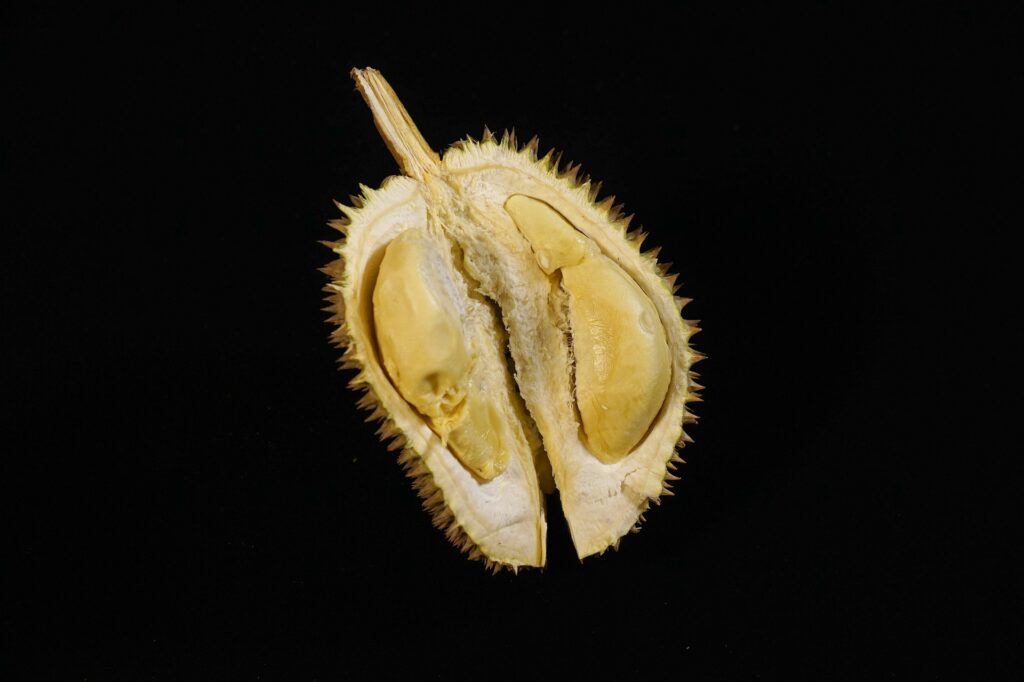
Durian fruit is famous for its pungent smell, so much so, it has been banned from some public transportation systems. While it may not be a massive seller in western countries, it is extensively consumed in Asia. Scientists from Singapore have developed a new method that uses otherwise-discarded durian husks to produce eco-friendly, low-cost, wound-healing, antibacterial hydrogel bandages.
Hydrogel bandages are typically applied directly to post-surgical wounds to reduce scarring by keeping the wound site hydrated during the healing process’s early stages. By contrast, ordinary gauze dressings allow the area to dry out.
Hydrogels are generally made from synthetic polymers, with copper or silver ions added to give them antibacterial properties. However, these polymers are made from non-renewable resources and aren’t biodegradable. On top of that, the addition of the metal ions makes the bandages more expensive.
Researchers at Nanyang Technological University (NTU) turned to durian husks – which would generally end up in landfills or composting facilities – to create an eco-friendly alternative.
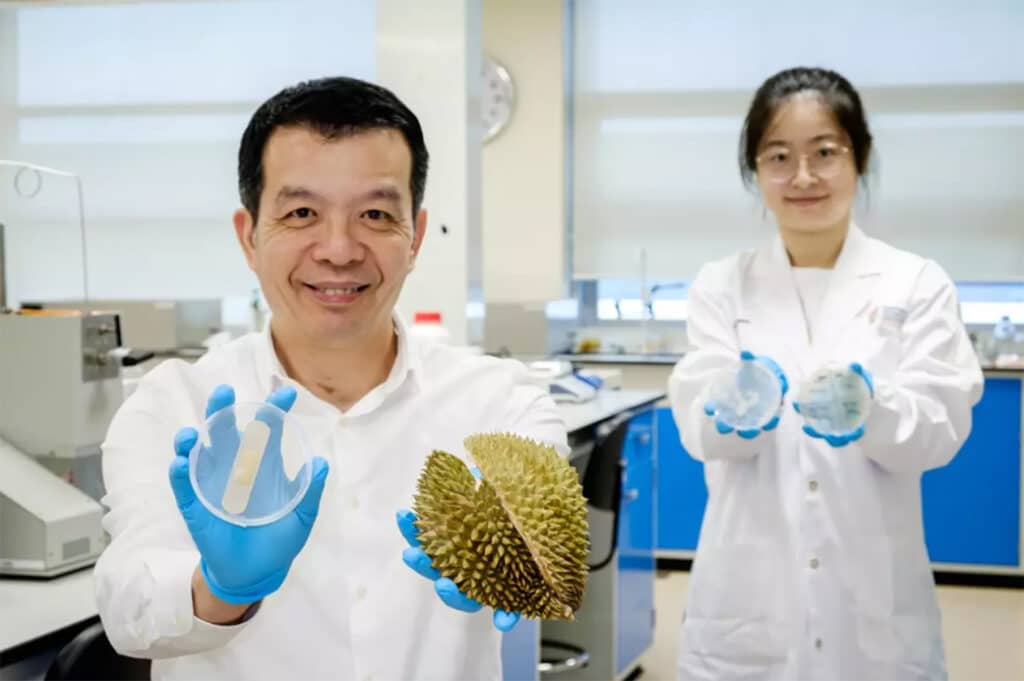
The team, led by Prof. William Chen, extracted high-quality cellulose from the husks, then mixed it with two ingredients: a baker’s yeast-derived antibacterial chemical called natural yeast phenols and glycerol leftover from soap and biodiesel production. The resulting substance was a soft, antibacterial gel with a comparable texture to silicone that could be sliced into sheets.
When the scientists tested the bandage on animal skin in the laboratory, it showed “good antimicrobial effects” for two days after application. As a bonus, the durian hydrogel bandages should be significantly cheaper than their conventional counterparts, plus they will naturally biodegrade when discarded.

Prof. Chen said:
By using waste products that are currently discarded in large quantities – durian husks and glycerol – we could turn waste into a valuable biomedical resource that can enhance the speedy recovery of wounds and reduce chances of infections.
The NTU team published their research in the journal ACS Sustainable Chemistry & Engineering.
Durian waste could also be used to charge electronics. Last year, researchers from the University of Sydney developed a way to transform durian waste into a super-capacitator that can charge laptops, phones, and more.