
Over the years, scientists worldwide have been working to bioengineer blood vessels that could help us study diseases, replace blocked vessels in patients suffering from cardiovascular disease, or treat kidney failures. Now, scientists in Switzerland and China have joined forces to develop an implantable medical device that imitates blood vessels’ primary function but goes beyond its natural counterparts’ capabilities.
For the study, the researchers demonstrated on rabbits how these electronic blood vessels could be used to facilitate blood flow, assist in drug delivery, gene therapy, and wound healing. The electronic blood vessels are composed of a metal-polymer conductor membrane rolled up in a cylinder rod. The devices are also flexible, biodegradable, and can coordinate with other electronic devices to take on tasks, including drug delivery, via its built-in circuitry.
In lab experiments, the scientists showed how the blood vessel could build new tissue by electrically stimulating the device in a wound-healing model to boost the proliferation and migration of endothelial cells. These cells line the interior surface of natural blood vessels. In another experiment, the team connected the electronic blood vessel to a device that produces an electrical field to create more permeable cells. This allows the team to deliver green protein DNA into three different types of blood vessel cells.
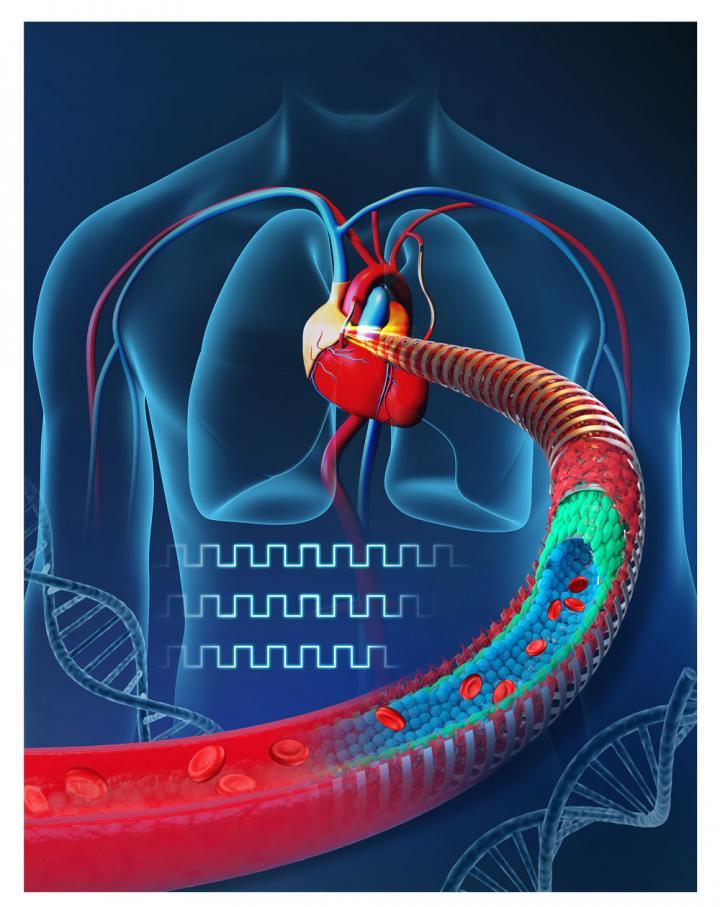
Through in vivo studies, the researchers used the electronic blood vessel to replace a key artery in rabbits that supply blood to their face, neck, and brain. Over three months, the device was monitored, with the team reporting a consistent and sufficient blood flow. After the implants were removed from the rabbits, an analysis was conducted, revealing no inflammation signs.
The team plans to build on these early results with more studies on rabbits to verify the device’s long-term safety. They are also looking into miniaturizing the other electronic devices paired with the electronic blood vessel, to be used in humans.
Xingyu Jiang, the study’s lead author, said:
In the future, optimizations need be taken by integrating it with minimized devices, such as minimized batteries and built-in control systems, to make all the functional parts fully implantable and even fully biodegradable in the body.
The researchers published their findings on October 1, in the journal Matter.


