
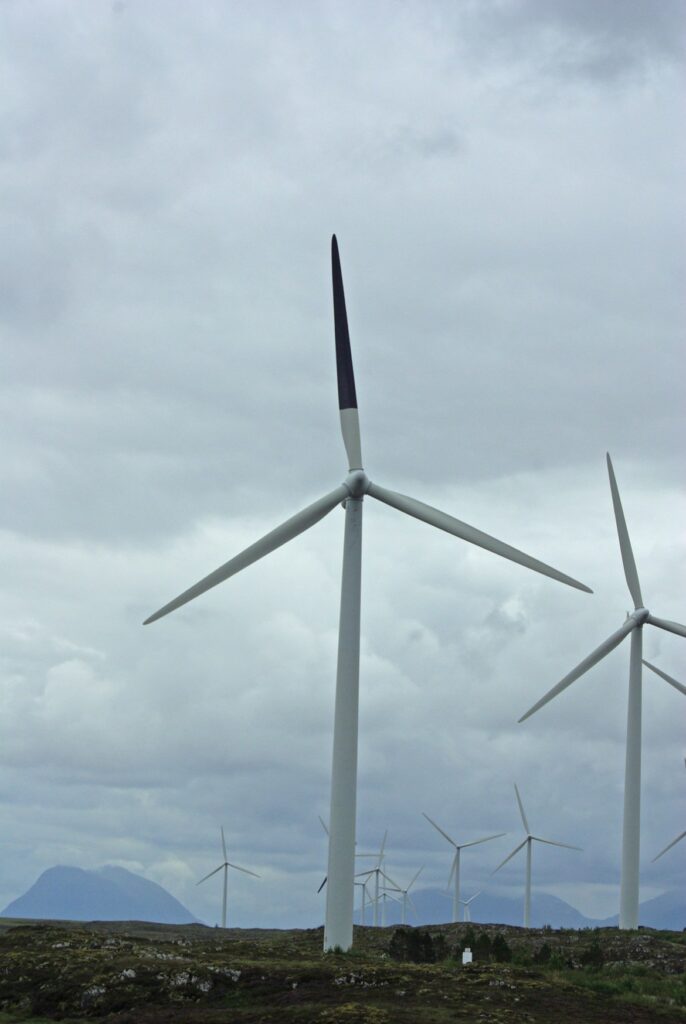
Scientists at the Norwegian Institute for Nature Research (NINA) have discovered that painting one of the three blades on a wind turbine black minimizes avian deaths by 72%. This “contrast painting” could lessen public disapproval, speed up permitting procedures, and allow wind farms to be constructed in areas previously thought to be too dangerous for birds.
The study, published in the journal Ecology and Evolution, examined bird death data collected from 2006 to the end of 2016 at Statkraft’s 152.4MW Smøla wind farm on the bird-rich island located off Norway’s west coast in Smøla Municipality in Møre og Romsdal county. Smola has Norway’s densest population of birds, which isn’t a good combination with such a large concentration of wind turbines.
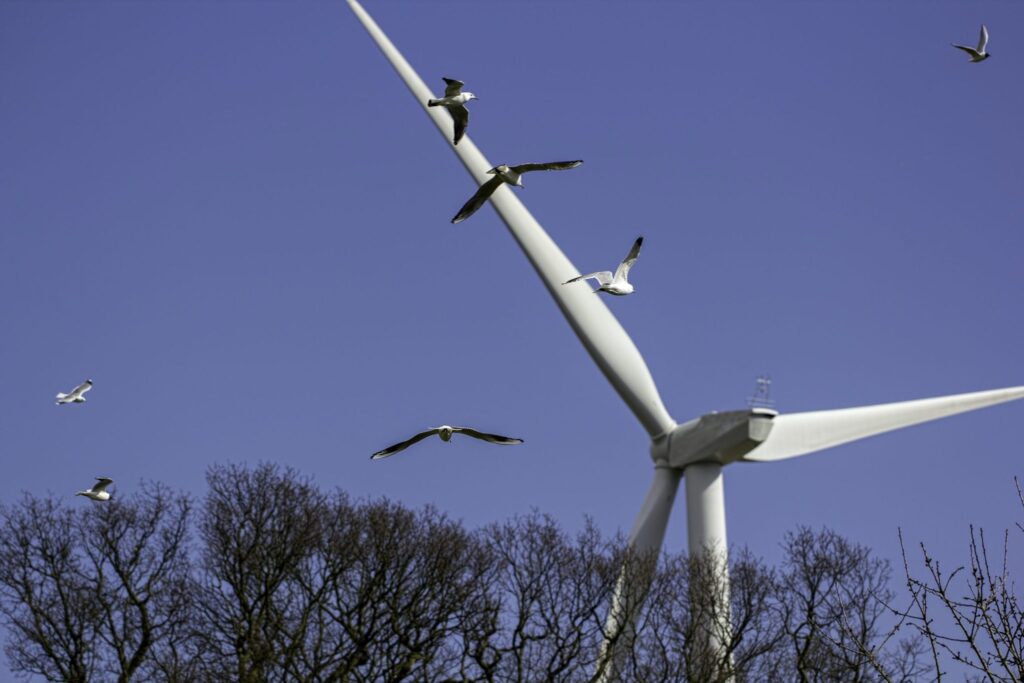
In August 2013, four wind turbines at the Smøla project had a single blade painted black. This means that before the painting, avian fatalities were recorded for 7 ½ years and 3 ½ years afterward. Bird carcasses and feathers were found by trained sniffer dogs, wind farm employees, and bystanders, at the bottom of turbines at the Smøla wind farm.
The results showed “an average 71.9% reduction in the annual fatality rate after painting at the painted turbines relative to the control [i.e., unpainted] turbines.” However, the team highlights that the number of deaths varied significantly from year to year, “stressing the necessity of a long-term study” to confirm their findings.
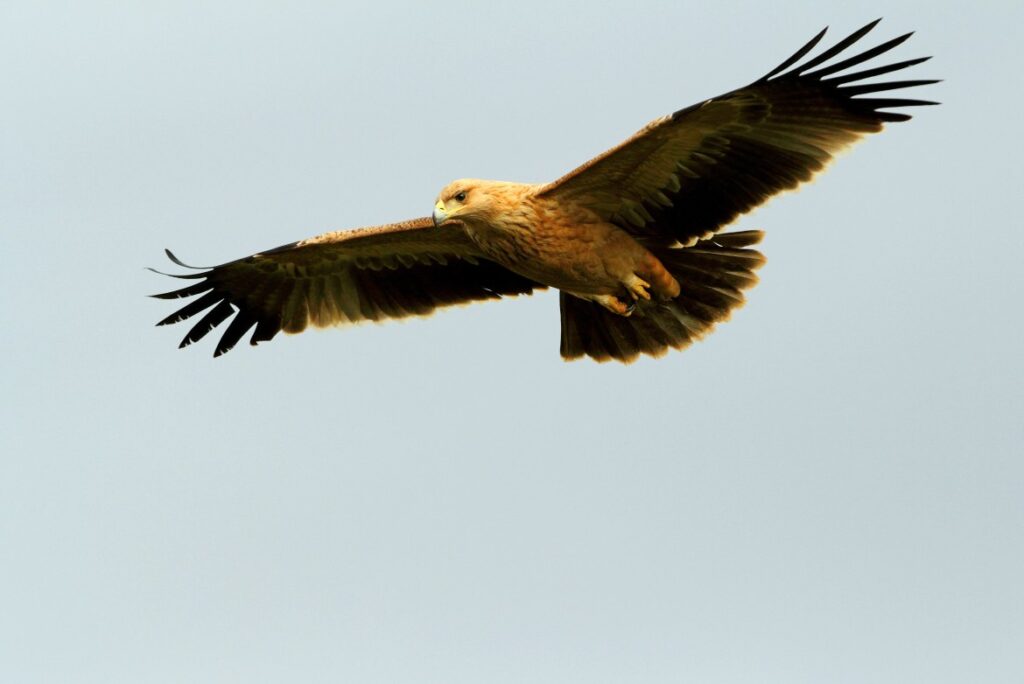
Why Do Birds Fly Into Rotating Turbine Blades?
The authors explained, “Relative to humans, birds have a narrow binocular [e.g., using both eyes to focus on one object] frontal field of view and likely use their monocular [using each eye independently] and high‐resolution lateral fields of view [i.e., having eyes on opposite sides of their heads] for detecting predators, conspecifics [i.e., birds of the same species], and prey. Within an assumed open airspace, birds may, therefore, not always perceive obstructions ahead, thereby enhancing the risk of collision. To reduce collision susceptibility, the provision of ‘passive’ visual cues may enhance the visibility of the rotor blades, enabling birds to take evasive action in due time.”
How Does A Single Black Blade Help?
It’s believed that birds perceive rotating white blades as a “motion smear,” similar to the blur effect humans see when moving a hand quickly in front of their faces. However, the birds don’t know this blur as a moving object. When a single blade is painted black, it can create motion smear patterns that the bird recognizes as a moving object, “as the frontal vision in birds may be more tuned for the direction of movement.”
The team concluded, “We recommend to either replicate this study, preferably with more treated turbines or to implement the measure at new sites and monitor collision fatalities to verify whether similar results are obtained elsewhere, to determine to which extent the effect is generalizable. It is of the utmost importance to gain more insights into the expected efficacy of promising mitigation measures through targeted experiments and learning by doing, to successfully mitigate impacts on birdlife and to support the sustainable development of wind energy worldwide.”
In 2003, a study with American kestrels at the University of Maryland tested the effect of a variety of blade patterns, including staggered, striped, colored, and entirely black, to see which stood out the most to birds. In the end, the whole black pattern proved to be the most visible. Since this study was published, global replication trials across four continents have confirmed the technique’s effectiveness — from South Africa’s red-striped blades to the largest test yet in Wyoming — detailed in our updated coverage of the painted turbine blade solution.


